
AMD Announces hipThreads For Easier Porting Of C++ Code To GPUs
AMD Unleashes HIP Threads: A Revolutionary Leap for C++ Developers in GPU Computing
In a groundbreaking move that’s set to redefine the landscape of GPU computing, AMD has unveiled HIP Threads (“hipThreads”), a cutting-edge C++ concurrency library designed specifically for AMD GPUs. This innovative tool promises to bridge the gap between traditional CPU programming and the complex world of GPU acceleration, potentially ushering in a new era of high-performance computing accessibility.
The Game-Changing Introduction of HIP Threads
AMD’s latest addition to its ROCm/HIP portfolio is nothing short of revolutionary. HIP Threads is poised to democratize GPU computing by leveraging the familiar syntax and concepts of C++ std::thread patterns, making it significantly easier for developers to port their existing codebases to AMD GPUs. This approach represents a paradigm shift in how we think about GPU programming, moving away from the traditional, often intimidating model of kernel configuration and grid/block semantics.
A Seamless Transition to GPU Computing
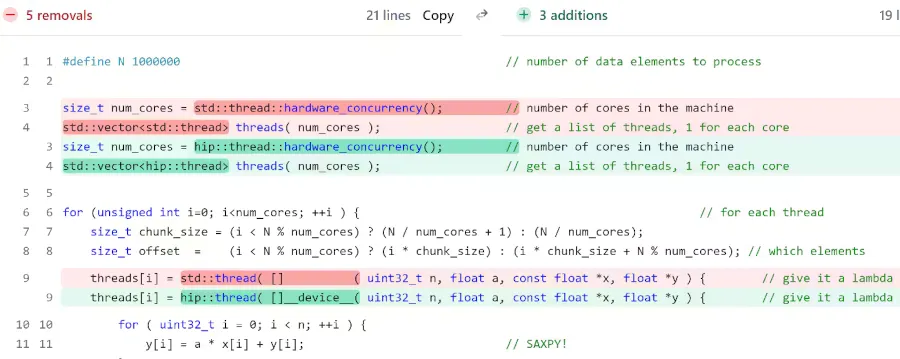
The brilliance of hipThreads lies in its ability to allow for incremental porting of code. Developers no longer need to face the daunting task of a complete code overhaul when transitioning to GPU computing. Instead, they can gradually adapt their existing C++ concurrency regions, replacing std::thread with hip::thread and adjusting synchronization where necessary. This incremental approach significantly reduces the barrier to entry for GPU programming, making it accessible to a much broader range of developers.
Reducing Cognitive Load for Newcomers
For those new to GPU programming, hipThreads offers a gentler learning curve. By allowing developers to experiment with parallelism using concepts they’re already familiar with, it reduces the cognitive load typically associated with learning GPU-specific programming models. This means that developers can start leveraging the power of GPU computing without having to dive deep into the intricacies of HIP specifics right away. They can focus on the logic and structure of their code, only delving into GPU-specific optimizations as needed.
Aligning with Modern C++ Practices
HIP Threads is designed to be more than just a tool for GPU programming; it’s a step towards making AMD GPU compute more aligned with modern C++ concurrency practices. This alignment ensures that code written using hipThreads is not only performant but also maintainable and easy to understand for C++ developers. It represents AMD’s commitment to creating tools that integrate seamlessly with existing development workflows and best practices.
A Boon for Various Developer Profiles
AMD is positioning HIP Threads as a versatile tool that caters to a wide range of developers:
-
C++ Teams with CPU Bottlenecks: For teams struggling with CPU performance issues, hipThreads offers a straightforward path to leveraging GPU acceleration without a complete rewrite of their codebase.
-
Developers Lacking GPU Expertise: Those who have been hesitant to dive into GPU programming due to its perceived complexity will find hipThreads a welcoming entry point.
-
Tool Vendors: HIP Threads provides a simple way for tool vendors to integrate GPU acceleration into their products without requiring deep expertise in ROCm or CUDA parallel programming models.
Open Source and Linux-First Approach
In keeping with the open-source ethos of the developer community, AMD has made hipThreads available under the Apache 2.0 license on GitHub. This move ensures that the library is accessible to all developers and can benefit from community contributions and improvements.
Currently, hipThreads requires ROCm 7.0 or higher and supports Linux. While this Linux-first approach might limit its immediate adoption in some Windows-centric development environments, it aligns well with the preferences of many high-performance computing and data science communities.
The Future of HIP Threads
As with any new technology, the true test of hipThreads’ success will be its adoption by the developer community. The ease of use and the ability to leverage existing C++ knowledge could make it an attractive option for many developers looking to tap into GPU computing power. However, its success will also depend on how well it performs in real-world scenarios and how quickly it can evolve to support more platforms and features.
AMD’s introduction of HIP Threads is more than just a new tool; it’s a statement about the future of GPU computing. By making GPU programming more accessible and aligned with familiar programming paradigms, AMD is potentially opening the door for a new wave of innovation in high-performance computing. As developers begin to explore and adopt hipThreads, we may see a surge in GPU-accelerated applications across various domains, from scientific computing to machine learning and beyond.
The coming months and years will be crucial in determining the impact of HIP Threads on the broader landscape of GPU computing. If successful, it could mark the beginning of a new era where the power of GPU acceleration is within reach of every C++ developer, regardless of their prior experience with parallel programming or GPU architectures.
Tags: AMD, ROCm, HIP Threads, GPU Computing, C++ Concurrency, Parallel Programming, High-Performance Computing, Open Source, Linux, Software Development, Code Porting, Developer Tools, AMD GPUOpen
Viral Sentences:
- “AMD just made GPU programming as easy as writing C++ threads!”
- “Say goodbye to complex GPU kernels – HIP Threads is here to revolutionize your code!”
- “HIP Threads: The bridge between your C++ skills and GPU superpowers!”
- “AMD’s latest move could democratize GPU computing for millions of developers!”
- “HIP Threads: Because not everyone wants to be a CUDA expert!”
- “The future of high-performance computing is now accessible to C++ developers everywhere!”
- “AMD’s HIP Threads might just be the game-changer the GPU computing world needed!”
- “Incremental GPU porting? Yes, please! HIP Threads makes it possible!”
- “HIP Threads: Where your C++ knowledge meets the power of AMD GPUs!”
- “AMD is lowering the barrier to entry for GPU programming – and developers are going to love it!”
,


Leave a Reply
Want to join the discussion?Feel free to contribute!