
‘We’re no longer attracting top talent’: the brain drain killing American science | US news
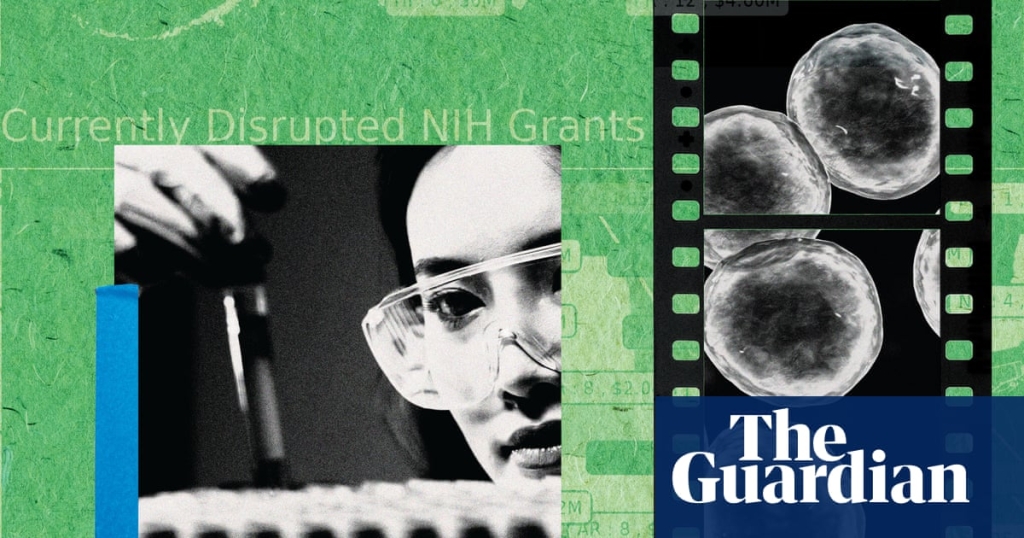
The War on Superbugs: How Trump’s NIH Cuts Are Threatening America’s Scientific Future
By Dr. Alan Reeves, Science Correspondent
In a shocking turn of events that could reshape the landscape of American medicine, the Trump administration’s aggressive cuts to the National Institutes of Health (NIH) are creating a perfect storm that threatens to derail decades of progress in the fight against antibiotic-resistant bacteria, or “superbugs.”
A Crisis in the Making
Less than three months into his second term, President Trump’s administration has already begun implementing sweeping changes to the nation’s scientific infrastructure. The latest CDC report, released in April 2025, paints a grim picture: over 3 million antibiotic-resistant infections occur annually in the United States, claiming up to 48,000 lives each year. Globally, these superbugs contribute to nearly 5 million deaths annually, with experts warning they could surpass cancer as the leading cause of death by 2050.
“We’re in a war against bacteria,” says Ian Morgan, a postdoctoral fellow at the NIH, who works on the frontlines of this battle. “But right now, we’re losing ground.”
The Brain Drain Begins
The cuts have hit young scientists particularly hard. Morgan, 33, describes the current situation as “wave after wave of disruptions” that have fundamentally altered the trajectory of American scientific research. Since Trump’s return to office, billions have been slashed from research budgets, nearly 8,000 grants have been canceled at NIH and the National Science Foundation, and over 1,000 NIH employees have been fired.
For early-career scientists like Morgan, the future has suddenly become uncertain. In normal circumstances, he would be planning to establish his own laboratory and conduct groundbreaking research. However, with an ongoing hiring freeze at NIH, his options have evaporated.
“The talent pool is developed by letting young people flourish among like-minded, excited scientists,” explains John Prensner, a pediatric brain cancer doctor at the University of Michigan. “If that ceases, then that intellectual discovery, that drive to make the next great insight into cancer or other challenges, will be planted in another country’s soil.”
The Exodus of American Talent
The impact is already visible. Emma Bay Dickinson, a 27-year-old postgraduate researcher specializing in infectious diseases, represents a growing trend of American scientists leaving the country. Dickinson, who studies Zika virus and its potential to cause birth defects, was initially planning to build her career in the United States. However, when funding cuts began affecting her field last year, she found herself unable to secure positions despite her qualifications.
“My classmates applying in the US were getting rejected, and were being told that the funding cuts meant there was too much uncertainty to offer them jobs,” Dickinson explains. The administration’s hostility toward diversity, equity, and inclusion initiatives, combined with the censorship of scientific proposals through banned keyword lists, pushed her to look abroad.
She ultimately accepted a position at a prestigious infectious disease research institution in Barcelona, Spain. “It’s important for me to feel I can be myself in my science, and that’s just not possible right now in the US,” she says.
European universities have been quick to capitalize on this exodus, with institutions like Aix-Marseille University launching programs specifically designed to attract American researchers fleeing the Trump administration’s policies. The response has been overwhelming, with hundreds of applications flooding in from early-career researchers seeking what some are calling “scientific asylum.”
The Long-Term Consequences
The damage extends beyond individual careers. The NIH drives scientific progress globally across biomedical and behavioral sciences, including defenses against infectious diseases and possible future pandemics. It pushes at the frontier of new therapies geared to the genetic makeup of individual patients and can claim numerous breakthroughs in cancer treatment, vaccinations, and much more.
Without the NIH driving innovation at its core, the US would cease to have the largest biomedical ecosystem in the world. The cuts to training programs act as a breeding ground for the nation’s future top scientists, with at least 50 programs targeted at undergraduates through early-career lab researchers being shut down under the Trump administration.
An NIH program officer, speaking anonymously for fear of reprisal, describes the situation: “Trainees are the most vulnerable people in science. They are the ones with new ideas, where a lot of our hope resides. Now they are losing their minds with worry about what comes next.”
The international reputation of US science has been damaged in ways that could take years to repair. Jennifer Jones, director for the Center for Science and Democracy at the Union of Concerned Scientists, notes that the US is no longer attracting top talent from around the world. “Why would you want to come to a place where you know you could be threatened with deportation at any moment?”
Economic Implications
The consequences extend to the US economy as well. NIH funding supports basic biomedical research out of which new drugs and other commercial spin-offs emerge, providing the foundations for the almost trillion-dollar US pharmaceutical industry. A 2018 study of the 210 new drugs approved by the Food and Drug Administration (FDA) in the six years to 2016 found that all of them had been developed out of early basic research funded by NIH.
“We are leaving discoveries on the table,” warns Donna Ginther, an economics professor at the University of Kansas who is an authority on the science labor market. “Those discoveries are the ones that in 10, 20 years will contribute to economic growth, improved health, human longevity. That’s what we are choking off.”
The Department of Health and Human Services, through press secretary Emily Hilliard, disputes these concerns, stating that NIH is “deeply committed to providing opportunities for early career scientists” and calling claims about reduced talent pipelines “baseless and intended to fearmonger.”
However, the reality on the ground tells a different story. Jenna Norton, a program director at NIH who was placed on indefinite paid leave without explanation in November, has filed a whistleblower complaint alleging unlawful retaliation for criticizing the administration’s cuts to grants, funding, and staffing.
The Road Ahead
As the Trump administration continues to implement its vision for American science, the consequences of these policies will likely reverberate for decades. The loss of young scientists, the exodus of established researchers, and the damage to international collaboration networks represent a fundamental shift in the landscape of American scientific research.
The war on superbugs, which requires sustained, long-term investment in basic research, faces an uncertain future. As Ian Morgan puts it, “We’re making progress, we have a lot of really cool new innovations that could defeat the infections. But if we stop doing the work, we lose the war.”
The question now is whether America can reverse course before the damage becomes irreversible, or whether the nation that once led the world in biomedical innovation will watch from the sidelines as other countries seize the mantle of scientific leadership.
ScienceUnderAttack #NIH #TrumpAdministration #Superbugs #AntibioticResistance #BrainDrain #ScientificExodus #ResearchCuts #AmericanScience #MedicalResearch #InnovationCrisis #ScienceFunding #FutureOfScience #TrumpCuts #NIHcrisis #ScientificTalent #MedicalBreakthroughs #ResearchExodus #SciencePolicy #HealthcareInnovation
Viral phrases:
- “We’re in a war against bacteria”
- “The talent pool is developed by letting young people flourish”
- “Scientific asylum”
- “Leaving discoveries on the table”
- “We’re making progress… But if we stop doing the work, we lose the war”
- “Why would you want to come to a place where you know you could be threatened with deportation at any moment?”
- “The next generation of scientists”
- “The intellectual discovery… will be planted in another country’s soil”
- “Trainees are the most vulnerable people in science”
- “The war on superbugs”
,
Leave a Reply
Want to join the discussion?Feel free to contribute!