
NASA’s report into troubled Starliner flight makes for uncomfortable reading
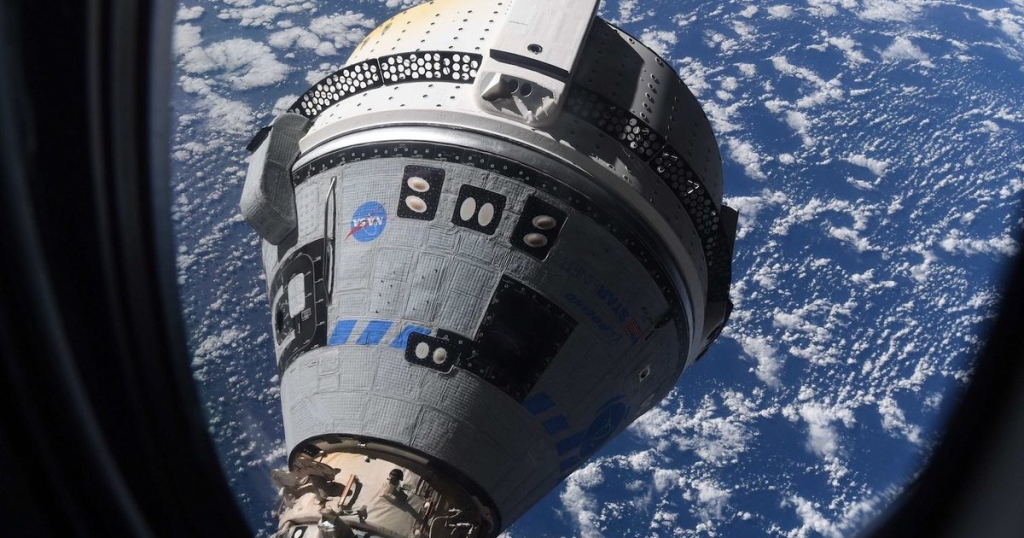
NASA’s Starliner Mission Deemed “Type A Mishap” in Explosive New Report
In a stunning development that has sent shockwaves through the aerospace industry, NASA has officially classified Boeing’s troubled Starliner mission as a “Type A mishap” – the agency’s most severe designation reserved for events that pose a direct threat to human life. The revelation comes from a comprehensive investigation report released Thursday by NASA’s Program Investigation Team (PIT), which was established specifically to examine the unprecedented events surrounding the spacecraft’s first crewed flight in June 2024.
The mission, which was supposed to be a routine eight-day test flight to the International Space Station, quickly spiraled into a nine-month ordeal that left NASA astronauts Suni Williams and Butch Wilmore stranded in orbit. What should have been a triumphant moment for Boeing’s Commercial Crew program instead exposed critical design flaws, leadership failures, and a toxic work environment that insiders describe as “the ugliest I’ve ever been in.”
The Mission That Almost Ended in Disaster
When Williams and Wilmore launched aboard Starliner on June 5, 2024, they expected to spend just over a week at the ISS before returning home. However, problems began almost immediately. As the spacecraft approached the space station, multiple thrusters failed, and for a terrifying period, Starliner lost its ability to maintain proper orientation in space.
“The spacecraft experienced issues with its thrusters on approach to the International Space Station (ISS) just over two years ago, and for a brief period of time lost the ability to safely orient itself,” the report reveals. Engineers on the ground scrambled to diagnose the problem, but their efforts proved futile.
After successfully docking with the ISS, the situation only worsened. Despite weeks of analysis and troubleshooting, Boeing engineers couldn’t guarantee the spacecraft’s safety for the return journey. In a decision that would have profound consequences, NASA opted to bring Starliner home empty, leaving Williams and Wilmore to remain aboard the station for an additional nine months.
The astronauts finally returned to Earth on March 18, 2025, aboard a SpaceX Dragon capsule – a bitter pill for Boeing, which had hoped to establish itself as NASA’s primary partner for crewed missions to low Earth orbit.
“We Almost Had a Really Terrible Day”
NASA Associate Administrator Amit Kshatriya didn’t mince words when discussing the incident at Thursday’s press conference. “This was a really challenging event in our recent history,” Kshatriya stated. “We almost did have a really terrible day.”
The classification of the mission as a “Type A mishap” places it in the same category as the space shuttle Challenger disaster in 1986 and the Columbia tragedy in 2003 – both of which resulted in the loss of entire crews. While no lives were lost in the Starliner incident, the report makes clear that the situation came perilously close to catastrophe.
Newly appointed NASA chief Jared Isaacman, who attended the press conference alongside Kshatriya, delivered a scathing assessment of both the technical and cultural failures that led to the debacle. “The Starliner has design and engineering deficiencies that must be corrected,” Isaacman declared. “But the most troubling failure revealed by this investigation is not hardware. It’s decision-making and leadership that, if left unchecked, could create a culture incompatible with human space flight.”
Isaacman’s comments suggest that the problems with Starliner extend far beyond technical glitches. The investigation uncovered a deeply dysfunctional organizational culture at Boeing, where dissenting voices were silenced and safety concerns were routinely dismissed.
“If you weren’t aligned with the desired outcome, your input was filtered out or dismissed,” one anonymous source told investigators. Another described meetings where “there was yelling” and the atmosphere was “emotionally charged and unproductive.”
The Road Ahead: Uncertain Future for Starliner
In the wake of the report’s release, Isaacman announced that Starliner will not carry crew again “until technical causes are understood and corrected, the propulsion system is fully qualified, and appropriate investigation recommendations are implemented.” This effectively puts the program on indefinite hold, leaving NASA completely dependent on SpaceX for crewed missions to the ISS.
The timing couldn’t be worse for Boeing, which had positioned Starliner as its flagship project in the commercial space race. The company had already fallen years behind schedule and billions over budget compared to SpaceX’s Crew Dragon program. Now, with its reputation in tatters and its future uncertain, Boeing faces an existential crisis in the commercial space sector.
However, the company isn’t ready to concede defeat. In a statement posted on its website, Boeing acknowledged the findings while emphasizing its commitment to reform. “In the 18 months since our test flight, Boeing has made substantial progress on corrective actions for technical challenges we encountered and driven significant cultural changes across the team that directly align with the findings in the report,” the statement read.
Boeing and NASA had previously modified their Commercial Crew contract last November, announcing plans for an uncrewed Starliner cargo mission as early as April 2025, followed by up to three crewed rotations before the ISS is retired in 2030. But Isaacman’s comments suggest that these plans may be scrapped entirely if Boeing cannot demonstrate that it has addressed the fundamental issues identified in the investigation.
A Watershed Moment for Commercial Spaceflight
The Starliner debacle represents more than just a setback for Boeing – it’s a watershed moment for the entire commercial spaceflight industry. When NASA first awarded contracts to Boeing and SpaceX in 2014 as part of its Commercial Crew program, the agency hoped to foster competition that would drive down costs and accelerate innovation. Instead, the program has highlighted the stark differences between the two companies’ approaches to safety, engineering, and organizational culture.
SpaceX, under the leadership of Elon Musk, has embraced a philosophy of rapid iteration and willingness to fail fast. The company has conducted dozens of test flights, many of which ended in spectacular explosions, but each failure provided valuable data that informed subsequent improvements. Boeing, by contrast, has struggled to adapt its traditional aerospace culture to the fast-paced world of commercial spaceflight.
The investigation’s findings suggest that Boeing’s hierarchical, risk-averse culture may have actually increased the likelihood of catastrophic failure by discouraging open communication and suppressing dissenting opinions. This paradox – that an overemphasis on safety can sometimes lead to unsafe outcomes – is a sobering lesson for the entire aerospace industry.
Accountability and the Path Forward
Isaacman promised that the investigation’s findings would not be ignored. “There will be accountability,” he stated firmly at the press conference. While he didn’t specify what form this accountability would take, his comments suggest that significant changes are coming to both NASA’s oversight processes and Boeing’s internal operations.
For NASA, the Starliner incident has exposed vulnerabilities in the agency’s ability to monitor and manage its commercial partners. The investigation revealed that NASA officials were often kept in the dark about critical technical issues and internal conflicts at Boeing. Moving forward, the agency will likely implement more rigorous oversight mechanisms and demand greater transparency from its contractors.
For Boeing, the path forward is even more challenging. The company must not only fix the technical problems with Starliner but also undergo a complete cultural transformation. This will require leadership changes, new safety protocols, and a fundamental shift in how the company approaches risk and decision-making.
The stakes couldn’t be higher. Beyond the immediate financial implications, Boeing’s ability to remain competitive in the commercial space sector hangs in the balance. If the company cannot demonstrate that it has learned from the Starliner debacle and implemented meaningful reforms, it may find itself permanently relegated to a secondary role in human spaceflight.
The Human Cost of Technical Failure
While much of the discussion surrounding Starliner has focused on technical specifications and organizational culture, it’s important not to lose sight of the human element. Suni Williams and Butch Wilmore, the two astronauts who found themselves unexpectedly stranded in orbit, displayed remarkable professionalism and resilience throughout their ordeal.
Williams, who had previously spent 322 days in space across two missions, became something of a folk hero during her extended stay at the ISS. Videos of her floating through the station’s modules, conducting scientific experiments and maintaining the station’s equipment, captivated audiences around the world. But behind the scenes, the psychological toll of the situation was significant.
Being unexpectedly separated from family and friends for nine months, with an uncertain return date, would be challenging for anyone. The astronauts had to cope not only with the physical effects of prolonged spaceflight but also with the emotional strain of knowing that their return depended on the resolution of complex technical and organizational problems far beyond their control.
Their experience serves as a powerful reminder that human spaceflight is not just about rockets and spacecraft – it’s about people. The decisions made by engineers and managers on the ground have direct, profound impacts on the lives of the men and women who risk everything to push the boundaries of human exploration.
Conclusion: A Defining Moment for Space Exploration
The classification of Boeing’s Starliner mission as a “Type A mishap” marks a defining moment in the history of commercial spaceflight. It exposes the challenges and risks inherent in transitioning from government-led space programs to private-sector initiatives, while also highlighting the importance of organizational culture in ensuring mission success and crew safety.
As Boeing works to address the issues identified in the investigation, the entire aerospace industry will be watching closely. The company’s response to this crisis will not only determine the future of Starliner but also shape perceptions of its ability to compete in the commercial space sector for years to come.
For NASA, the incident represents both a setback and an opportunity. While the agency must now rely exclusively on SpaceX for crewed missions to the ISS, it also has the chance to implement the lessons learned from the Starliner debacle and strengthen its oversight of commercial partners.
Most importantly, the investigation’s findings underscore the fundamental truth that space exploration is inherently risky and that ensuring crew safety must always be the highest priority. As humanity continues to push the boundaries of what’s possible in space, the Starliner incident serves as a sobering reminder of the vigilance, humility, and commitment to excellence required to explore the final frontier safely.
The coming months and years will reveal whether Boeing can rise to this challenge and whether NASA can effectively guide the commercial space industry toward a future where innovation and safety go hand in hand. One thing is certain: the lessons learned from the Starliner mission will shape the future of human spaceflight for generations to come.
Tags
Starliner, NASA, Boeing, space mission failure, Type A mishap, Suni Williams, Butch Wilmore, International Space Station, SpaceX, commercial spaceflight, aerospace safety, organizational culture, Jared Isaacman, Amit Kshatriya, space exploration, crewed missions, propulsion system failure, NASA investigation, space shuttle Challenger, space shuttle Columbia, Commercial Crew program
Viral Sentences
“We almost did have a really terrible day” – NASA Associate Administrator Amit Kshatriya
“The most troubling failure revealed by this investigation is not hardware. It’s decision-making and leadership” – NASA Chief Jared Isaacman
“There was yelling in meetings. It was emotionally charged and unproductive.”
“If you weren’t aligned with the desired outcome, your input was filtered out or dismissed.”
“It was probably the ugliest environment I’ve been in.”
“There will be accountability.”
“Design and engineering deficiencies that must be corrected”
“Culture incompatible with human space flight”
“Nine months stranded in orbit”
“Boeing’s reputation in tatters”
“Existential crisis in the commercial space sector”
“SpaceX now NASA’s only ride to space”
“Challenger and Columbia territory”
“Leadership changes coming at Boeing”
“Human spaceflight’s highest priority”
“Commercial space race turned sour”
“NASA completely dependent on SpaceX”
“Boeing’s hierarchical, risk-averse culture”
“Suppressing dissenting opinions increased risk”
“Williams and Wilmore’s remarkable resilience”
“Psychological toll of unexpected separation”
“Space exploration’s sobering reminder”
“Lessons learned will shape generations”
“Innovation and safety must go hand in hand”
,


Leave a Reply
Want to join the discussion?Feel free to contribute!