
Weston 15.0 Wayland Compositor Released With Vulkan Renderer, New Protocols
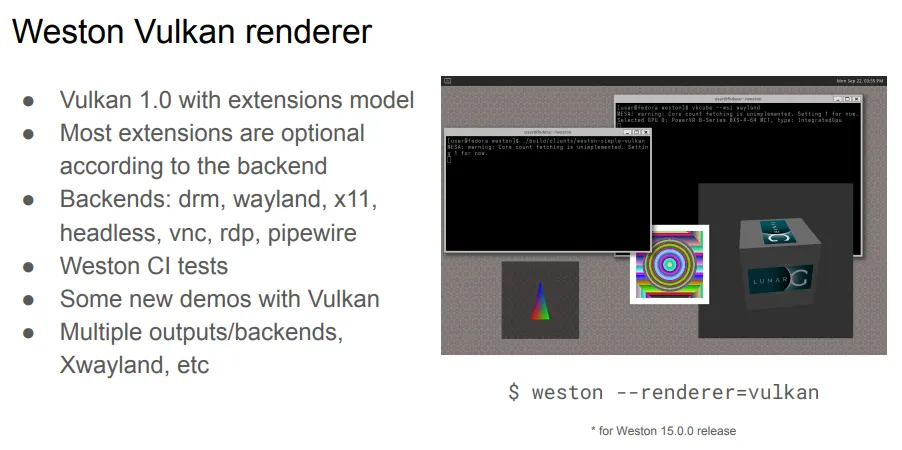
Weston 15.0 Arrives With Experimental Vulkan Renderer, HDR Support, and Lua Shell
After a long and winding development cycle marked by multiple delays and five release candidates, Weston 15.0 has finally landed as the latest major update to the reference Wayland compositor. This release is not just a routine maintenance update—it’s a substantial leap forward packed with new features, experimental technologies, and protocol enhancements that signal where the Wayland ecosystem is headed.
A Rocky Road to Release
Originally slated for a smoother rollout, Weston 15.0 faced an unexpected three-month delay to accommodate additional features. What was initially expected to ship in January ultimately required five release candidates before the final 15.0.0 version was deemed stable and ready for the public. This extended development period underscores the ambitious scope of the update and the community’s commitment to delivering a polished, feature-rich compositor.
The Headline Feature: Experimental Vulkan Renderer
Perhaps the most talked-about addition in Weston 15.0 is the experimental Vulkan renderer. For years, Weston has relied on OpenGL for rendering, but with the growing popularity and performance advantages of Vulkan—especially in gaming and high-performance graphics—the developers have introduced Vulkan as an alternative backend.
This experimental Vulkan renderer is not just a drop-in replacement; it represents a significant architectural shift. Vulkan offers lower overhead, better CPU performance, and more explicit control over the GPU, making it an attractive option for modern compositors. While still labeled as experimental, its inclusion in Weston 15.0 is a clear signal that the Wayland project is future-proofing its rendering stack.
The state of the Vulkan renderer was detailed in a November preview, which highlighted its potential and the challenges faced during implementation. Early adopters and developers are encouraged to test and provide feedback, as the renderer’s stability and feature completeness will be refined in subsequent releases.
HDR Display Support: Brighter, More Vivid Visuals
Another major enhancement in Weston 15.0 is enhanced support for High Dynamic Range (HDR) displays. HDR technology allows for a wider range of colors and greater contrast between light and dark areas, resulting in more lifelike and immersive visuals. This is particularly important as HDR-capable monitors and TVs become increasingly common.
The new HDR support in Weston means that Wayland compositors can now better handle HDR content, providing users with richer, more vibrant displays. This is a significant step forward for Linux desktop environments, which have historically lagged behind in HDR support compared to other operating systems.
New Wayland Protocols: FIFO and Commit-Timing
Weston 15.0 also introduces support for new Wayland protocols, specifically FIFO (First In, First Out) and commit-timing. These protocols are designed to improve the efficiency and predictability of buffer management and frame presentation, which are critical for smooth, tear-free graphics.
FIFO ensures that frames are presented in the order they are submitted, preventing visual glitches and improving the overall user experience. Commit-timing, on the other hand, allows for more precise control over when frames are committed to the display, which can help reduce latency and improve responsiveness—especially important for gaming and interactive applications.
Lua-Based Shell: Flexibility and Customization
In a move that will delight tinkerers and power users, Weston 15.0 introduces a new Lua-based shell. Lua is a lightweight, embeddable scripting language known for its simplicity and flexibility. By adopting Lua for the shell, Weston opens the door to easier customization and rapid prototyping of new shell features.
This change means that users and developers can script and modify shell behavior without needing to recompile the entire compositor. It’s a significant step toward making Weston more adaptable and user-friendly, especially for those who want to experiment with new interface ideas or tailor the compositor to their specific needs.
A Compositor Reborn: The Significance of Weston 15.0
Taken together, these features make Weston 15.0 one of the most significant updates in the compositor’s history. The introduction of an experimental Vulkan renderer, robust HDR support, new Wayland protocols, and a Lua-based shell all point to a project that is evolving rapidly to meet the demands of modern computing.
For Linux users, this means a more capable, flexible, and future-ready compositor. For developers, it offers new tools and opportunities to push the boundaries of what’s possible on the Linux desktop. And for the broader open source community, Weston 15.0 is a testament to the ongoing innovation and collaboration that drives the Wayland project forward.
Getting Weston 15.0
The official release announcement and download links are available on the Wayland mailing list, where the community is already buzzing with excitement and early impressions. As always, users are encouraged to test the new features, report bugs, and contribute to the ongoing development of this critical piece of the Linux graphics stack.
Tags & Viral Phrases:
Vulkan renderer, Wayland compositor, HDR display support, Lua shell, experimental features, Linux desktop, graphics innovation, open source graphics, FIFO protocol, commit-timing, high performance rendering, Wayland 15.0, Weston update, gaming on Linux, tear-free graphics, customizable shell, future of Wayland, Linux graphics stack, developer tools, immersive visuals, Linux gaming, graphics performance, Wayland ecosystem, compositor evolution, Linux innovation, cutting-edge graphics, Wayland community, experimental tech, next-gen compositor, Linux desktop future.
,
Leave a Reply
Want to join the discussion?Feel free to contribute!