
A $10K+ bounty is waiting for anyone who can unplug Ring doorbells from Amazon’s cloud
Breaking Free from Big Tech: The $10,000 Challenge to Liberate Your Ring Doorbell Footage
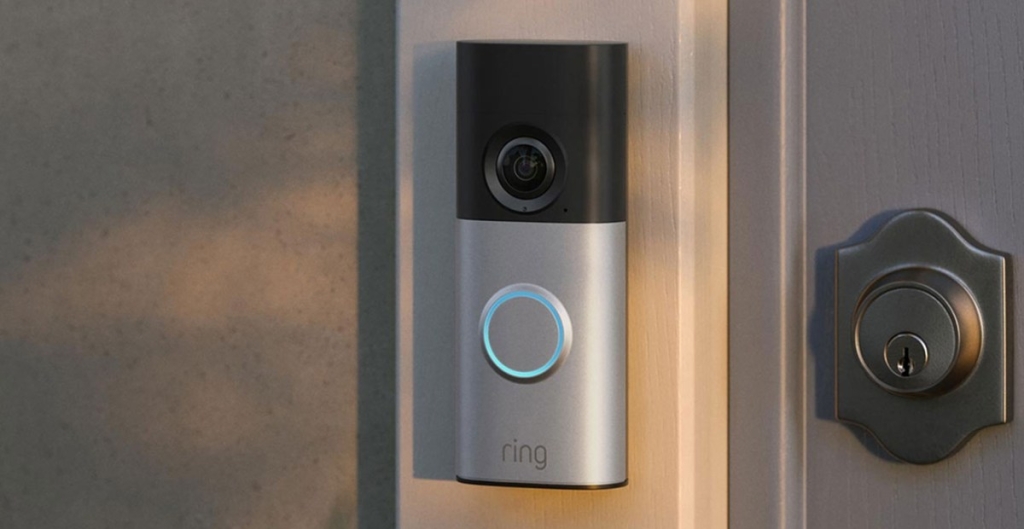
In a bold move that’s sending shockwaves through the smart home security industry, the Fulu Foundation—co-founded by tech repair advocate and YouTube personality Louis Rossmann—has launched an audacious $10,000 bounty program aimed at breaking Ring doorbells free from Amazon’s cloud ecosystem.
The timing couldn’t be more critical. Ring, Amazon’s ubiquitous smart doorbell brand, is currently weathering intense criticism over its controversial “Search Party” feature, which allows law enforcement to request footage from multiple Ring users in specific geographic areas. Privacy advocates have denounced the feature as a surveillance overreach that normalizes corporate-facilitated police monitoring of residential neighborhoods.
Now, the Fulu Foundation is betting that developers can outmaneuver Amazon’s cloud dependency with a clever workaround that puts control back in homeowners’ hands.
The Cloud Prison: How Ring Keeps You Locked In
Currently, Ring operates on a business model that essentially holds your security footage hostage. While users own the physical doorbell hardware, accessing and storing the video recordings requires paying subscription fees to Amazon for cloud storage. Even Ring’s “local storage” option through Ring Edge isn’t truly local—it only works with the premium Ring Alarm Pro system and still demands a subscription.
For privacy-conscious users, there’s an end-to-end encryption option that theoretically prevents Ring or third parties from viewing your footage. However, this encrypted data still resides on Amazon’s servers, meaning your videos are technically under Amazon’s control even if they can’t be easily accessed.
“It’s the illusion of privacy with the reality of dependency,” notes one security researcher familiar with Ring’s architecture.
The $10,000 Liberation Challenge
The Fulu Foundation’s bounty program sets forth a clear mission: create a method to integrate Ring doorbells (specifically models released in 2021 or later) with users’ personal computers or servers, completely severing the connection to Amazon’s infrastructure.
The technical requirements are stringent and specific:
- Must work with Ring doorbells from 2021 onward
- Footage must be redirected to the user’s own computer or server
- Must eliminate all data transmission to Amazon servers
- Must function without requiring Amazon hardware connectivity
- Must be a working, demonstrable solution
The initial bounty stands at $10,000, with the Foundation pledging to match additional donations from supporters up to another $10,000. This means the total prize pool could reach $20,000 for the developer or team that cracks the code.
The Legal Minefield
However, the bounty comes with a significant caveat that underscores the complex relationship between hardware ownership and software control in the modern tech landscape. Fulu Foundation’s O’Reilly explicitly warns that solutions will be constrained by the Digital Millennium Copyright Act (DMCA).
“The DMCA means distributing a tool or mechanism for other security-minded Ring owners to circumvent those locks and assert their ownership over their video remains a copyright crime,” O’Reilly explains. This means the bounty likely rewards a proof-of-concept or personal solution rather than a widely distributable tool that could help average consumers escape Amazon’s ecosystem.
This legal limitation highlights a broader issue in consumer technology: the gap between owning a physical device and controlling the software that makes it functional. While you might own your Ring doorbell outright, the software locks and cloud dependencies effectively limit what you can do with your own property.
Why This Matters Now
The bounty arrives at a pivotal moment for consumer privacy and digital autonomy. As smart home devices become increasingly ubiquitous, questions about data ownership, corporate surveillance partnerships, and the right to modify purchased hardware have moved from niche tech circles to mainstream concern.
Ring’s Search Party controversy has amplified these concerns, with critics arguing that the feature normalizes corporate-facilitated neighborhood surveillance. The Fulu Foundation’s bounty represents a direct challenge to this model, offering both a practical solution and a symbolic statement about user autonomy.
For consumers, the implications are significant. A successful solution could mean:
- Elimination of ongoing subscription fees for video storage
- Complete control over where and how security footage is stored
- Freedom from potential law enforcement access through corporate partnerships
- The ability to integrate doorbell footage with existing home automation systems
- True ownership of both the hardware and the data it generates
The Technical Challenge Ahead
Developers taking on this bounty face a formidable technical challenge. Ring doorbells are designed from the ground up to communicate with Amazon’s cloud infrastructure. Creating a bridge to local storage requires reverse-engineering proprietary communication protocols, potentially bypassing digital locks, and ensuring the modified system remains stable and secure.
The 2021 model cutoff suggests Fulu believes these devices may have vulnerabilities or architectural features that make them more amenable to modification than earlier or later models. However, the specifics of why these particular models were chosen remain unclear.
The Broader Movement
The Fulu Foundation’s bounty is part of a growing movement advocating for the “right to repair” and digital self-determination. Led by figures like Louis Rossmann, who gained prominence fighting Apple’s repair restrictions, this movement argues that consumers should have the right to modify, repair, and control the technology they purchase.
This philosophy directly challenges the current paradigm where software restrictions and cloud dependencies effectively limit what users can do with their own devices, regardless of physical ownership.
What Happens Next
The clock is now ticking for developers. The first individual or team to submit a qualifying solution claims the bounty, creating a competitive race to liberate Ring doorbells from Amazon’s cloud. The tech community will be watching closely to see if this challenge yields a breakthrough solution or reveals just how deeply entrenched the cloud dependency model has become.
Regardless of the outcome, the Fulu Foundation’s $10,000 bounty has already succeeded in sparking a crucial conversation about ownership, privacy, and control in the smart home era. As one observer noted, “This isn’t just about Ring doorbells—it’s about who really owns our digital lives.”
The next chapter in the battle for digital autonomy may be written by a developer with a soldering iron, a laptop, and a $10,000 incentive to break the chains of cloud captivity.
Tags: Ring doorbell, Amazon cloud, privacy, security, Fulu Foundation, Louis Rossmann, smart home, right to repair, DMCA, digital autonomy, surveillance, local storage, end-to-end encryption, tech freedom, consumer rights, cloud dependency, smart security, data ownership, digital liberation, tech bounty
Viral Sentences:
- “Your doorbell footage isn’t really yours—it’s just rented from Amazon”
- “Breaking free from Big Tech’s cloud prison, one doorbell at a time”
- “The $10,000 question: Who really owns your security footage?”
- “Ring’s Search Party feature is surveillance by subscription”
- “Louis Rossmann strikes again: This time he’s coming for your doorbell”
- “The Digital Millennium Copyright Act: Protecting corporations from your own devices”
- “Smart home, dumb restrictions: Why your doorbell is holding your data hostage”
- “The tech repair movement just declared war on cloud captivity”
- “Your security camera works for Amazon, not for you”
- “The race to jailbreak the internet-connected doorbell”
- “Privacy advocates offer cash to break Ring’s cloud chains”
- “The doorbell that spies on you—and charges you for the privilege”
- “Tech liberation: When hacking becomes consumer advocacy”
- “The $20,000 question that could change smart home security forever”
- “Your front door shouldn’t have a corporate middleman”
,


Leave a Reply
Want to join the discussion?Feel free to contribute!