
WoW dev was surprised that players ‘like being jumped’ by the upcoming Prey system—even on its hardest difficulty, where ‘going AFK might get you killed’
World of Warcraft: Midnight’s “Prey” System Promises to Shake Up the MMO Grind with Surprise Boss Fights
World of Warcraft: Midnight is generating massive buzz in the gaming community, and one feature stands out as potentially revolutionary: the Prey system. This innovative mechanic promises to transform the way players experience outdoor content in Azeroth by introducing dynamic, challenging encounters that break the monotony of routine questing.
Breaking the MMO Monotony
For years, MMOs have struggled with a fundamental problem: how to keep outdoor world content engaging after players have mastered the basic mechanics. The daily quest grind, while essential for progression, often devolves into a repetitive cycle that can feel more like work than play. World of Warcraft: Midnight’s Prey system directly addresses this issue by injecting moments of genuine challenge and excitement into what would otherwise be routine activities.
Senior game designer Kim Flak explained the core philosophy behind Prey during an exclusive interview. “It’s easy to get into a flow state when you’re just doing your routine,” Flak noted. “You’re doing your world quests, your rares, your treasures, you slouch down in your chair…” The Prey system shatters that complacency by ambushing players with powerful boss enemies at inopportune moments, forcing them to stay alert and engaged.
How the Prey System Works
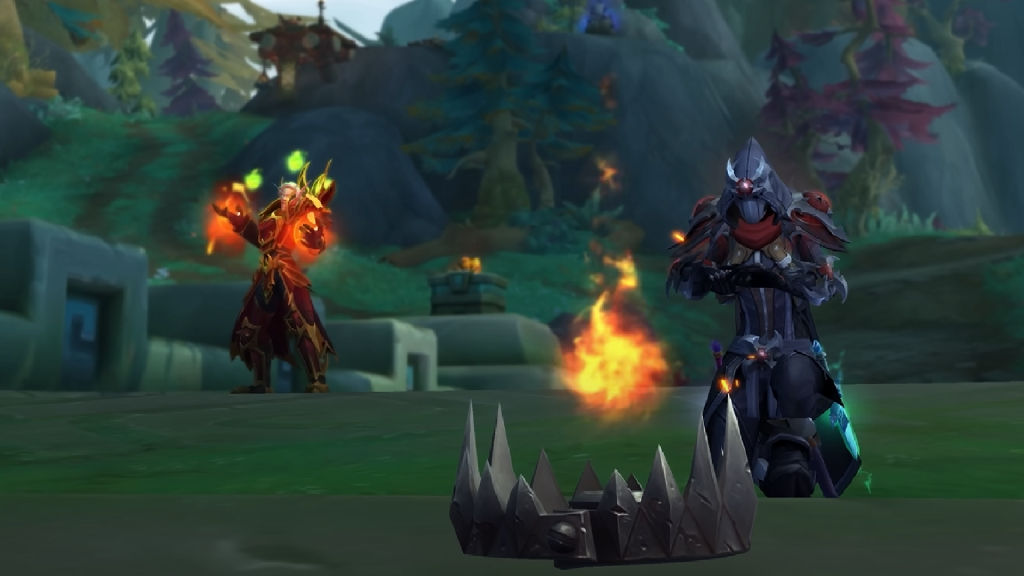
The Prey system operates on a simple but brilliant premise: players voluntarily sign up for the system, then hunt specific boss enemies across the outdoor world. As you travel between objectives or complete world quests, your chosen Prey target can ambush you, creating an unexpected 1v1 confrontation. This transforms what would be a straightforward journey into a tense, skill-testing encounter.
What makes this system particularly clever is how it scales difficulty. Prey features three distinct tiers, each with its own rules and challenges. Lower difficulties ensure ambushes only occur during active combat, preventing frustrating deaths while AFK or near safe zones. The highest difficulty, appropriately named “Nightmare mode,” removes these protections entirely—if you need to step away from the game, you’d better find a safe spot first.
Skill Expression in the Open World
Flak emphasized that Prey isn’t simply about making content “harder” in the traditional sense. Instead, it’s about creating opportunities for skill expression in environments where such moments are typically rare. Players must think strategically about their preparations: Do they have the right crowd control abilities? Are their talents optimized for the encounter? Do they have sufficient health and resources?
This approach represents a significant evolution in MMO design philosophy. Rather than simply increasing enemy health pools or damage output, Prey challenges players to think dynamically and adapt to changing circumstances. It’s the difference between a predictable workout routine and an unpredictable sparring session with a skilled opponent.
Player Reception: Surprisingly Positive
Perhaps the most encouraging aspect of Prey’s development is how players have responded to the system during testing phases. Flak admitted initial concerns about potential frustration: “I was a little afraid that players might see these as moments of friction that felt a little unfair. Like ‘I pulled that mob, and I would’ve lived if that guy hadn’t ambushed me!'”
However, the actual player response has been overwhelmingly positive. Testers have embraced the surprise element, finding genuine enjoyment in the unpredictability and challenge. “Players overall were like, ‘I like being jumped. I like that experience. It’s fun, it’s surprising, and it’s a moment for me to, all of a sudden, shift how I’m thinking about what I’m doing,'” Flak shared.
The Future of Open World Content
The Prey system represents more than just a new feature—it signals a potential shift in how MMOs approach outdoor content design. By making the world feel truly alive and dangerous, Blizzard is creating an environment where players must remain engaged and alert, rather than simply following predetermined paths to objectives.
This approach could influence future MMO development, encouraging other studios to think beyond traditional quest design and explore ways to create more dynamic, player-driven experiences. The success of Prey could validate the idea that players want genuine challenges and surprises in their open-world adventures, not just checkboxes to complete.
Technical Implementation and Balance
From a technical standpoint, implementing a system that can reliably trigger boss encounters during various player activities presents significant challenges. The Prey system must account for numerous variables: player level, group size, current health, available abilities, and environmental factors. Getting this balance right is crucial to ensuring the system feels challenging but fair.
Blizzard’s approach appears to involve careful tuning and extensive playtesting. The tiered difficulty system allows players to choose their comfort level, while the rules governing when and how ambushes can occur prevent the system from becoming frustrating or unfair. This thoughtful implementation suggests Blizzard has learned from past MMO design mistakes and is applying those lessons to create something truly innovative.
Community Impact and Social Dynamics
The Prey system also has interesting implications for community interaction. Since players can choose different Prey targets, there’s potential for shared experiences and discussions about particularly challenging encounters. Players might help each other strategize for specific Prey fights, creating new social dynamics within the game.
Additionally, the system could encourage exploration and cooperation. Players hunting the same Prey might naturally group up to tackle particularly difficult encounters, fostering the kind of organic social interactions that make MMOs special. The unpredictability of ambushes could also lead to memorable shared experiences and stories within the community.
Why This Matters for MMO Evolution
World of Warcraft has always been at the forefront of MMO innovation, and the Prey system continues this tradition. By addressing the fundamental issue of outdoor content engagement, Blizzard is showing that even well-established game genres can evolve and improve. This willingness to experiment and take risks has kept World of Warcraft relevant for nearly two decades.
The success of Prey could influence how future MMOs approach open-world design, potentially leading to a new generation of games that prioritize dynamic, engaging content over static quest chains. This represents an exciting direction for the genre as a whole.
Tags and Viral Phrases
-
WoWMidnight #PreySystem #MMOInnovation
- “Revolutionizing the open world grind”
- “Surprise boss fights that keep you on your toes”
- “The end of MMO autopilot mode”
- “Blizzard’s boldest outdoor content experiment yet”
- “From chore to challenge: how Prey transforms questing”
- “Nightmare mode: for players who dare to stay alert”
- “The system that makes AFK dangerous again”
- “Open world content that actually feels alive”
- “MMO players finally get the challenge they’ve been craving”
- “Breaking the flow state: Prey’s genius design philosophy”
- “Why every MMO should steal this idea”
- “The ambush mechanic that’s got everyone talking”
- “From routine to revolution: how one system changes everything”
- “Skill expression in the open world, finally”
,

Leave a Reply
Want to join the discussion?Feel free to contribute!