
UAE’s G42 teams up with Cerebras to deploy 8 exaflops of compute in India
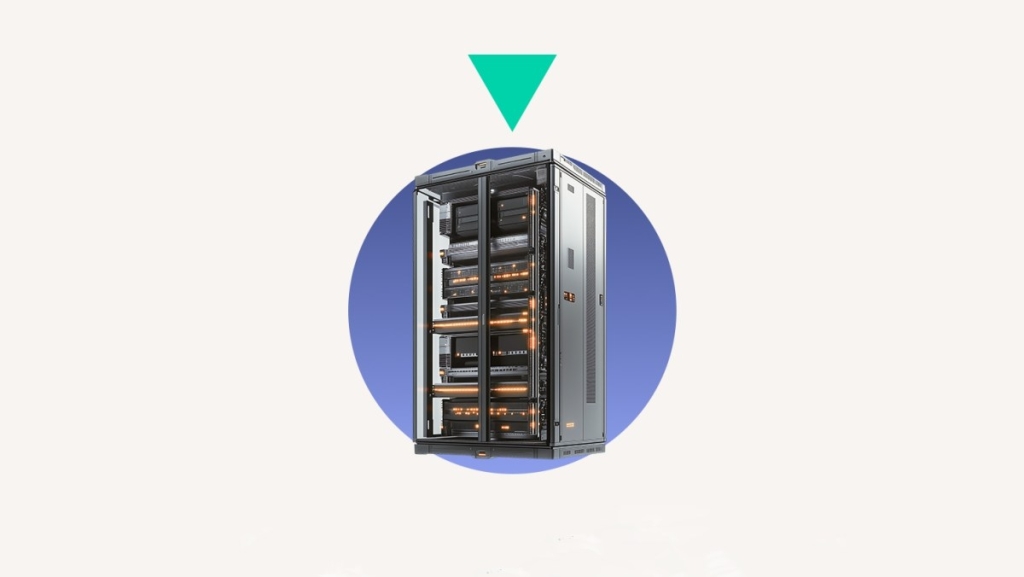
G42 and Cerebras to Deploy 8 Exaflops Supercomputer in India, Powering Next-Gen AI Innovation
Abu Dhabi-based technology powerhouse G42 has joined forces with Cerebras Systems, the U.S. pioneer in AI supercomputing, to deliver a groundbreaking 8 exaflops computing system in India — a move set to dramatically reshape the nation’s AI landscape.
Announced on the sidelines of the India AI Impact Summit in New Delhi, the collaboration signals a major leap forward in India’s ambition to become a global leader in artificial intelligence. The new supercomputer will be hosted entirely within India, adhering strictly to local data residency, security, and compliance standards — a crucial factor as governments worldwide prioritize digital sovereignty.
A National-Scale AI Infrastructure for India’s Future
According to Manu Jain, CEO of G42 India, this initiative is about more than just raw computing power:
“Sovereign AI infrastructure is becoming essential for national competitiveness. This project brings that capability to India at a national scale, enabling local researchers, innovators, and enterprises to become AI-native while maintaining full data sovereignty and security.”
The deployment will provide cutting-edge AI computing resources to a broad range of users, including educational institutions, government entities, and small and medium enterprises. This democratization of high-performance AI infrastructure is expected to accelerate research, innovation, and commercial AI applications across sectors.
Strategic Academic and Research Partnerships
Adding academic heft to the initiative, Mohamed bin Zayed University of Artificial Intelligence (MBZUAI) from Abu Dhabi and India’s Centre for Development of Advanced Computing (C-DAC) are integral partners in the project. MBZUAI has already demonstrated its commitment to AI collaboration with India, having previously released Nanda 87B, a Hindi-English large language model built on Meta’s Llama 3.1 70B architecture. Nanda 87B is designed to understand casual speech in both Hindi and English, making it a culturally relevant tool for India’s diverse linguistic landscape.
Accelerating AI Research with Unprecedented Compute Power
Andy Hock, Chief Strategy Officer at Cerebras, emphasized the transformative potential of the system:
“Deploying this system in India marks a significant step forward in the country’s computational capacity and sovereign AI initiatives. It will accelerate training and inference for large-scale models, enabling researchers and developers to build AI tailored to India’s needs.”
Cerebras’ cutting-edge Wafer-Scale Engine technology is expected to deliver unmatched performance for AI workloads, enabling faster training of massive models and more efficient inference at scale. This positions India to compete globally in AI model development, moving beyond mere consumption to becoming a creator of frontier AI systems.
India’s AI Infrastructure Gold Rush
The G42-Cerebras announcement comes amid a broader AI infrastructure boom in India. At the same summit, Adani Group pledged a staggering $100 billion to build up to 5 gigawatts of data center capacity by 2035. Not to be outdone, Reliance Industries announced plans to invest $110 billion over the next seven years for gigawatt-scale AI data centers.
Tech giants are also making massive commitments: Amazon ($35 billion by 2030), Google ($15 billion for an AI infrastructure hub), and Microsoft ($17.5 billion by 2029) have already pledged around $70 billion collectively to expand AI and cloud infrastructure in India.
OpenAI, as part of its ambitious Stargate project, has partnered with Tata Group to secure 100 megawatts of AI compute in India initially, with plans to scale to 1 gigawatt. Meanwhile, India’s technology minister Ashwini Vaishnaw revealed that the country aims to attract over $200 billion in AI infrastructure investment over the next two years through a combination of tax incentives, state-backed venture capital, and policy reforms.
Why This Matters: AI Sovereignty and Global Competitiveness
The G42-Cerebras partnership is more than a technical milestone — it’s a strategic move in the global AI arms race. By building sovereign AI infrastructure, India reduces its dependence on foreign cloud providers and ensures that sensitive data remains within national borders. This aligns with a growing global trend where countries see AI capabilities as critical to economic competitiveness, national security, and technological independence.
With 8 exaflops of computing power, India will be able to train some of the world’s largest AI models, conduct advanced research in areas like climate modeling, healthcare, and autonomous systems, and foster a vibrant AI startup ecosystem. The ripple effects could position India not just as a consumer of AI, but as a creator and exporter of AI solutions tailored to both local and global markets.
Tags: G42, Cerebras, India AI, exaflops, supercomputer, sovereign AI, AI infrastructure, Nanda 87B, MBZUAI, C-DAC, Adani, Reliance, OpenAI, Tata, Stargate, Ashwini Vaishnaw, AI summit, data centers, AI compute, AI research, digital sovereignty
Viral Sentences:
- India’s AI ambitions just got a massive boost with 8 exaflops of computing power!
- G42 and Cerebras are bringing sovereign AI to India at a national scale.
- India aims to attract $200 billion in AI infrastructure investment by 2028.
- Adani pledges $100 billion, Reliance commits $110 billion — India’s AI gold rush is on!
- OpenAI partners with Tata for 1 gigawatt of AI compute in India’s Stargate project.
- Nanda 87B: India’s first Hindi-English LLM built for casual speech understanding.
- Cerebras’ Wafer-Scale Engine to supercharge India’s AI research and innovation.
- India moves from AI consumer to AI creator with cutting-edge supercomputing.
- Tech giants commit $70 billion to expand AI and cloud infrastructure in India.
- AI sovereignty is the new frontier of national competitiveness.
,

Leave a Reply
Want to join the discussion?Feel free to contribute!