
Leading US Research Lab Appears to Be Squeezing Out Foreign Scientists
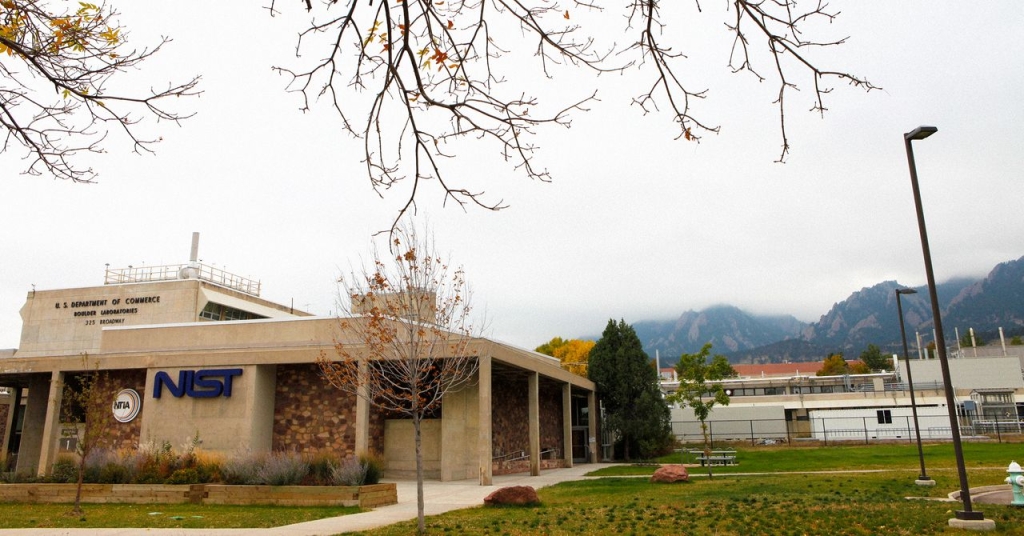
Exclusive: Trump Administration’s New Restrictions on Foreign Scientists at NIST Spark Fears of U.S. Innovation Exodus
In a move that could fundamentally alter America’s scientific landscape, the National Institute of Standards and Technology (NIST) is implementing controversial new restrictions on foreign researchers that experts warn may trigger a devastating brain drain from one of the nation’s most critical research institutions.
The National Institute of Standards and Technology, a cornerstone of American scientific advancement that helps establish the foundational frameworks for everything from cutting-edge cybersecurity protocols to next-generation semiconductor manufacturing, is now at the center of a political firestorm that threatens to undermine decades of international scientific collaboration.
Sources within the agency, speaking to WIRED on condition of anonymity due to lack of media authorization, reveal that the Trump administration has begun implementing measures that would severely limit the ability of foreign-born researchers to conduct their vital work at NIST facilities. These changes come despite the fact that thousands of the agency’s employees, postdoctoral scientists, contractors, and guest researchers are specifically recruited from around the globe for their specialized expertise that is often unavailable domestically.
The controversy erupted after the Boulder Reporting Lab broke the story on February 12, revealing that international graduate students and postdoctoral researchers would face a draconian three-year cap on their tenure at NIST facilities—a timeline that directly conflicts with the five to seven years typically required to complete meaningful research projects in their respective fields.
“This isn’t just about bureaucratic red tape,” explains one NIST employee who spoke under condition of anonymity. “We’re talking about canceling entire research programs because we can’t guarantee that foreign researchers will be able to complete their work under these new restrictions. The uncertainty is paralyzing our ability to plan and execute critical scientific initiatives.”
The timing couldn’t be worse for American scientific competitiveness. NIST has been at the forefront of establishing crucial guidelines for securing artificial intelligence systems, identifying serious health concerns with consumer products like air purifiers and firefighting equipment, and maintaining the measurement standards that underpin trillions of dollars in economic activity.
Congressional Democrats are sounding the alarm. Zoe Lofgren, the ranking Democrat on the House Committee on Science, Space, and Technology, sent a blistering letter to acting NIST director Craig Burkhardt on Thursday, obtained exclusively by WIRED. Lofgren, joined by fellow Democrat April McClain Delaney, expressed grave concerns about the administration’s actions.
“For weeks now, rumors of draconian new measures have been spreading like wildfire, while my staff’s inquiries to NIST have gone unanswered,” Lofgren wrote. “What we have confirmed through unnamed sources is that the Trump administration has begun taking steps to limit the ability of foreign-born researchers to conduct their work at NIST.”
The restrictions appear to be expanding beyond just employment limitations. The Colorado Sun reported Thursday that “noncitizens” have already lost after-hours access to NIST laboratories, with speculation mounting that they could soon be banned from facilities entirely. This represents a dramatic departure from the open, collaborative scientific environment that has characterized American research institutions for generations.
NIST spokesperson Jennifer Huergo defended the proposed changes, telling WIRED that they are aimed at protecting U.S. science from theft and abuse. “These measures are necessary to safeguard American intellectual property and prevent foreign adversaries from exploiting our research institutions,” Huergo stated, echoing similar comments made to other media outlets this week.
However, the justification rings hollow to many in the scientific community. While preventing foreign adversaries from stealing valuable American intellectual property has been a bipartisan priority, with NIST receiving Congressional scrutiny in recent years about the adequacy of its background checks and security policies, the current measures appear to go far beyond what is reasonable and appropriate.
Just last month, Republican lawmakers renewed calls to put restrictions in place preventing Chinese nationals from working at or with national labs run by the Department of Energy. But Lofgren’s letter contends that the rumored restrictions on non-U.S. scientists at NIST go beyond “what is reasonable and appropriate to protect research security.”
The potential consequences extend far beyond NIST’s walls. The loss of research talent would add to a series of other Trump administration policies that some U.S. tech industry leaders have warned will dismantle the lives of immigrant researchers already living in the United States and severely hamper economic growth.
The administration has implemented a multi-pronged assault on international scientific collaboration. H-1B tech visa fees have been hiked dramatically, creating financial barriers for companies seeking to hire specialized foreign talent. Thousands of student visas have been revoked, creating an atmosphere of fear and uncertainty among international students. Legally dubious mass deportations have been carried out, further destabilizing immigrant communities.
Perhaps most concerning for the future of American innovation, the Trump administration has announced plans to limit post-graduation job training for international students, effectively closing off a critical pipeline of talent that has historically flowed into American research institutions and technology companies.
The economic implications are staggering. International students and researchers contribute billions of dollars to the U.S. economy annually, not just through their direct spending but through the innovations and startups they create. Many of America’s most successful technology companies were founded or co-founded by immigrants who came to the country for educational opportunities.
The scientific community is particularly alarmed because the restrictions come at a time when American leadership in critical technologies like artificial intelligence, quantum computing, and advanced manufacturing is already being challenged by international competitors. By making it harder for the world’s best and brightest to work in the United States, the administration may be inadvertently accelerating the transfer of technological leadership to other nations.
“The irony is that while we’re trying to protect American innovation, we’re actually making it easier for our competitors to attract the very talent we’re trying to keep out,” notes one quantum computing researcher who requested anonymity due to ongoing grant applications.
The situation at NIST represents a microcosm of a larger debate about the role of immigration in American innovation. For decades, the United States has benefited enormously from its ability to attract top international talent. The current restrictions threaten to reverse that advantage at precisely the moment when global competition for scientific leadership has never been more intense.
As the February 26 deadline approaches for NIST to respond to Congressional demands for transparency, the scientific community waits with bated breath. The decisions made in the coming weeks could determine whether America maintains its position as the world’s premier destination for scientific research and technological innovation, or whether it begins a long, slow decline into scientific mediocrity.
The stakes couldn’t be higher. America’s future economic prosperity, national security, and global leadership in science and technology all hang in the balance as policymakers grapple with the complex challenge of protecting American interests while maintaining the open, collaborative scientific environment that has driven American innovation for generations.
tags
nist #foreignresearchers #scientificbrain drain #trumpadministration #usinnovation #immigrationpolicy #technologyresearch #nationalinstituteofstandardsandtechnology #scientificcollaboration #americancreativity #researchsecurity #internationaltalent #technologicalleadership #sciencepolicy #brainstorm #innovationcrisis #researchrestrictions #globalcompetition #scientificexodus #technologicaladvantage
viralphrases
“NIST’s three-year cap could trigger scientific exodus”
“Foreign researchers face new barriers at America’s top research lab”
“Trump’s policies threaten to drain America’s scientific brain trust”
“International talent restrictions could cost US billions in innovation”
“America’s scientific leadership hangs in the balance”
“Research security vs. scientific progress: the NIST dilemma”
“Foreign scientists: America’s secret weapon in global innovation race”
“Trump administration’s restrictions spark fears of technological decline”
“NIST employees speak out: ‘Uncertainty is paralyzing our research'”
“Congressional Democrats demand transparency on foreign researcher policies”
“Scientific community warns: America risks losing its competitive edge”
“International students: The backbone of American technological advancement”
“Research restrictions could accelerate transfer of tech leadership abroad”
“NIST’s controversial new policies threaten decades of scientific collaboration”
“America’s innovation engine faces new roadblocks under Trump administration”
,


Leave a Reply
Want to join the discussion?Feel free to contribute!