
Stablecoin A7A5 Grows Parallel System for Sanctioned Companies
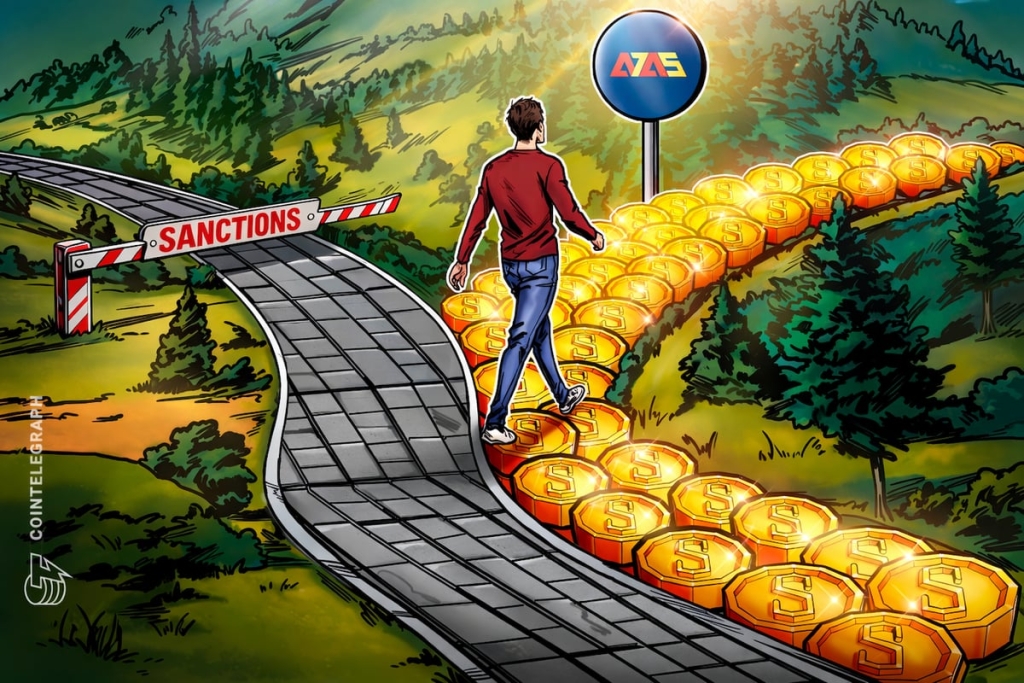
Cryptocurrency’s Shadow Economy: How A7A5 Became Russia’s $39 Billion Sanctions-Busting Stablecoin
In the murky intersection of cryptocurrency and global finance, a startling transformation has taken place. What began as a niche experiment in digital assets has evolved into a parallel financial universe—one that operates outside traditional banking systems and increasingly serves as a lifeline for sanctioned nations and illicit actors alike.
According to a January 2026 report from blockchain analytics firm TRM Labs, the scale of this shadow economy has reached unprecedented heights, with illicit cryptocurrency transactions surging to an all-time high of $158 billion in 2025. At the center of this financial revolution sits a seemingly innocuous Russian stablecoin that has quietly become one of the world’s most significant non-USD digital currencies.
The Rise of A7A5: Russia’s Digital Ruble Revolution
When Russia invaded Ukraine in February 2022, Western nations responded with a barrage of economic sanctions designed to isolate Moscow from the global financial system. Visa and Mastercard suspended operations in Russia, cutting off millions of cardholders from international commerce. Russian banks were disconnected from SWIFT, the backbone of international banking communications. The message was clear: Russia would be frozen out of the global economy.
But where traditional financial systems saw a barrier, cryptocurrency pioneers saw an opportunity.
Enter A7A5, a Russian ruble-backed stablecoin launched in February 2025 by Moscow-based financial technology company A7. What makes A7A5 remarkable isn’t just its rapid adoption—it’s the sheer scale of its operations. According to TRM Labs, wallet clusters associated with the A7 network alone accounted for at least $39 billion in transactions, making it one of the largest non-USD stablecoins by trading volume.
“This isn’t just criminal experimentation,” says Ari Redbord, global head of policy at TRM Labs. “State-aligned actors, professional criminals, and sanctions evaders are no longer experimenting with crypto—they’re operating durable financial infrastructure on-chain.”
The Architecture of Evasion
The story of A7A5 begins with its founders: Moldovan oligarch Ilan Shor and Promsvyazbank (PSB), a state-owned Russian financial institution with deep ties to the country’s defense industry. Shor, himself sanctioned and residing in Russia, partnered with PSB to create a financial ecosystem that could operate beyond the reach of Western sanctions.
The stablecoin launched on multiple exchanges, including the now-sanctioned Garantex platform and its successor, Grinex, based in Kyrgyzstan. Despite OFAC sanctions targeting these platforms, A7A5’s growth has been explosive. Chainalysis data shows that token growth spiked dramatically after trading began on Bitpapa, with daily trading volumes revealing a pattern that suggests institutional rather than retail use.
“These trading patterns suggest that A7A5 is primarily being used by businesses operating Monday through Friday,” notes Chainalysis in its analysis. “This would align with Russia’s legislative goals of facilitating cross-border transfers for Russian businesses via cryptocurrency.”
Beyond Sanctions: Building a Parallel Financial System
What makes A7A5 particularly significant is that it represents more than just sanctions evasion—it’s the foundation of an entirely new economic framework. While Western financial institutions remain closed to Russian businesses, A7A5 has facilitated billions of dollars in legitimate commercial transactions, effectively creating a shadow economy that operates alongside the traditional financial system.
Andrew Firman, head of national security at Chainalysis, describes it as “Russia’s next logical step in efforts to develop alternative payment systems to circumvent sanctions.” The implications extend far beyond Russia’s borders, suggesting a future where cryptocurrency serves as the backbone for entire national economies operating outside Western financial control.
The stablecoin’s success has attracted attention from major Russian financial institutions. In July 2025, A7A5 announced that PSB cardholders would be able to purchase tokens directly with their bank cards, with plans to extend this service to other Russian banks. This integration with traditional banking infrastructure represents a significant evolution in how cryptocurrencies interface with conventional finance.
The New Face of Illicit Finance
The rise of A7A5 signals a fundamental shift in how illicit financial activities are conducted. Gone are the days when cryptocurrency crime was limited to darknet markets and ransomware attacks. Today’s illicit crypto economy operates as a sophisticated, parallel financial system complete with its own infrastructure, compliance mechanisms, and institutional backing.
State coordination with A7A5 and its integration with Russia’s broader financial market are evidenced by trading patterns that mirror traditional business hours. This isn’t the chaotic, underground activity of cryptocurrency’s early days—it’s a coordinated, state-aligned financial infrastructure built for long-term operations.
TRM Labs emphasizes that A7A5 volumes don’t just represent sanctions evasion but “sanctioned activity more broadly, including state-aligned economic flows.” This distinction is crucial: A7A5 isn’t just helping individuals evade sanctions; it’s enabling an entire economic strategy backed by state resources.
The Global Implications
The success of A7A5 raises profound questions about the future of global finance. If a sanctioned nation can build a $39 billion stablecoin ecosystem in less than a year, what does this mean for the effectiveness of economic sanctions? How will traditional financial institutions compete with cryptocurrency systems that operate outside their regulatory frameworks?
The answer may lie in the growing sophistication of these systems. A7A5’s operators claim to conduct Know Your Customer and Anti-Money Laundering procedures, maintain audits, and comply with Financial Action Task Force principles. While skeptics question these claims, the fact that such assertions are made at all demonstrates how far cryptocurrency-based financial systems have come from their Wild West origins.
Looking Forward: The Future of Financial Sovereignty
As A7A5 continues to grow, it represents more than just a Russian financial innovation—it’s a blueprint for how nations might achieve financial sovereignty in an increasingly fragmented global economy. The stablecoin’s success suggests that cryptocurrency can serve as more than just an investment vehicle or payment system; it can be the foundation for entirely new economic structures.
The question isn’t whether these parallel financial systems will continue to grow—the data suggests they will—but rather how traditional financial institutions and regulatory bodies will respond. Will they adapt to incorporate cryptocurrency innovations, or will they double down on efforts to maintain control over the global financial system?
One thing is certain: the shadow economy built on cryptocurrency is no longer a fringe phenomenon. It’s a $158 billion reality that’s reshaping how nations conduct commerce, how businesses operate across borders, and how individuals access financial services. The rise of A7A5 isn’t just a story about sanctions evasion—it’s a glimpse into the future of global finance.
Tags & Viral Phrases
- $39 billion sanctions-busting stablecoin
- Russia’s shadow financial system
- Cryptocurrency as economic warfare
- The end of SWIFT dominance?
- How A7A5 is breaking the West’s financial blockade
- The $158 billion illicit crypto economy
- Moldovan oligarch Ilan Shor’s crypto empire
- Promsvyazbank’s secret weapon
- Kyrgyzstan becomes crypto sanctions haven
- The new face of state-sponsored financial crime
- Why traditional sanctions are becoming obsolete
- The parallel economy that’s beating Western banks
- From darknet to Davos: Crypto’s institutional evolution
- The geopolitical game-changer nobody saw coming
- How Russia built a $39B financial bypass in 12 months
- The stablecoin that’s rewriting the rules of global commerce
- When cryptocurrency becomes national security infrastructure
- The $158B question: Can the West control crypto?
- A7A5: The digital ruble that’s outsmarting sanctions
- The future of finance is being built in Moscow
,


Leave a Reply
Want to join the discussion?Feel free to contribute!