
Something Strange Altered Earth’s Magnetic Field 40 Million Years Ago : ScienceAlert
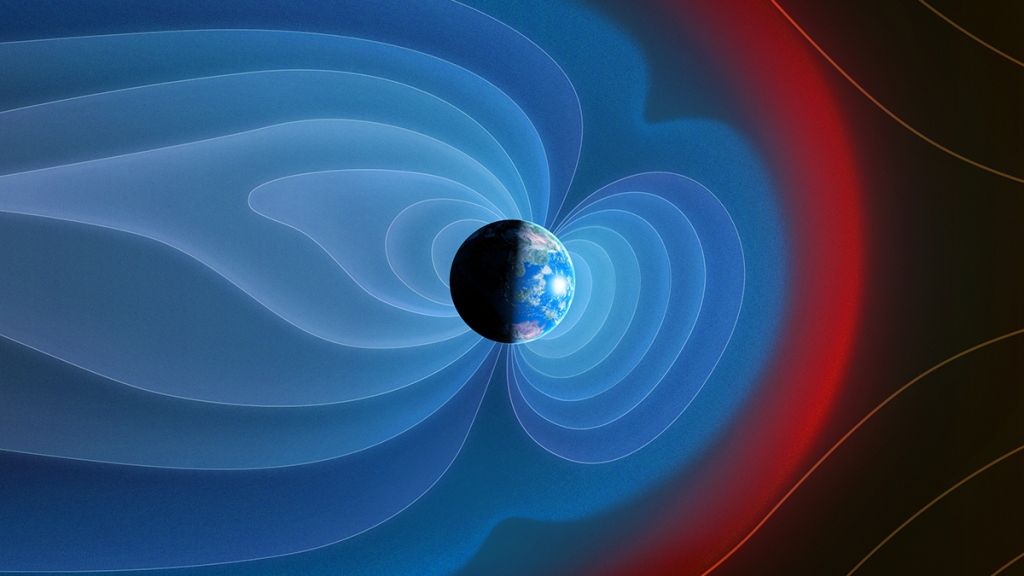
Earth’s Magnetic Field Reversal: A Slower, Messier Process Than We Thought
In a groundbreaking discovery that challenges long-held assumptions about our planet’s magnetic behavior, scientists have uncovered evidence that Earth’s magnetic field reversals can take far longer than previously believed—potentially stretching across tens of thousands of years rather than the assumed 10,000-year timeline.
The research, led by paleomagnetist Yuhji Yamamoto from Kochi University in Japan, reveals that approximately 40 million years ago during the Eocene era, Earth experienced magnetic field reversals that lasted an astonishing 18,000 and 70,000 years respectively. This finding, published in Communications Earth & Environment, suggests that these fundamental planetary processes are far more complex and variable than scientists previously understood.
A Geological Detective Story
The team’s discovery emerged from meticulous analysis of a sediment core extracted from the ocean floor off Newfoundland’s coast. Within this 8-meter-long core, researchers identified clear magnetic signals locked in tiny crystals that revealed the direction of Earth’s magnetic field across vast time periods.
What they found was extraordinary: not just one, but two magnetic field reversals occurring in close succession, each lasting significantly longer than the standard model would predict. Computer modeling even suggests that under certain conditions, these reversals could potentially extend to 130,000 years—though such extreme cases haven’t yet been observed in the geological record.
The Chaotic Nature of Magnetic Reversals
Perhaps even more surprising than the duration was the “messy” nature of these reversals. The research revealed multiple “rebounds” where the magnetic field appeared uncertain about which direction to take, oscillating between orientations before finally settling. This chaotic behavior mirrors findings from Earth’s most recent reversal—the Brunhes-Matuyama event that occurred approximately 775,000 years ago.
“The occurrence of multiple rebounds is not unprecedented,” the researchers note. “We suggest that it may be more common and that polarity reversals are inherently complex, if not somewhat chaotic, events.”
This chaotic pattern suggests that magnetic reversals aren’t the clean, straightforward processes scientists once imagined, but rather turbulent periods of magnetic instability that can last far longer than anticipated.
The Engine Behind Earth’s Magnetic Field
These reversals are driven by shifts in Earth’s liquid iron and nickel outer core, a layer approximately 2,200 kilometers thick that surrounds our planet’s solid inner core. This outer core is in constant motion, generating Earth’s magnetic field through what’s known as the geodynamo process.
Occasionally, this system becomes unstable enough that the magnetic poles physically swap positions—not by tipping the planet over, but by the magnetic north becoming magnetic south and vice versa. During this transition, which can span thousands of years, compasses would point in increasingly confused directions before eventually settling on the opposite orientation.
Implications for Modern Civilization
The discovery of these prolonged reversals carries significant implications for our understanding of planetary processes and potential future events. When Earth’s magnetic field weakens during a reversal, the planet loses much of its protection against cosmic radiation and solar particles.
“It’s basically saying we are exposing higher latitudes in particular, but also the entire planet, to greater rates and greater durations of this cosmic radiation,” explains paleomagnetist Peter Lippert from the University of Utah. “Therefore, it’s logical to expect that there would be higher rates of genetic mutation. There could be atmospheric erosion.”
During these extended periods of magnetic weakness, everything from satellite communications to power grids could be vulnerable to increased radiation exposure. Animal species that rely on magnetic navigation might experience confusion, and climate systems could potentially be affected by changes in atmospheric chemistry.
A Pattern of Prolonged Reversals
The Eocene findings align with evidence from Earth’s most recent reversal. A 2019 study examining the Brunhes-Matuyama event found it took approximately 22,000 years to complete—already suggesting that prolonged reversals might be more common than the 10,000-year standard would indicate.
This pattern of extended reversals challenges the conventional understanding of Earth’s magnetic behavior and suggests that future reversals could pose longer-term challenges than previously anticipated. While magnetic reversals occur on geological timescales—happening roughly every few hundred thousand years—understanding their true duration and complexity is crucial for preparing for future events.
The Road Ahead
This research opens new questions about the fundamental dynamics of Earth’s interior and the processes that govern our planet’s protective magnetic shield. The variability in reversal duration revealed by this study reflects the intrinsic dynamical properties of Earth’s geodynamo, providing empirical evidence that geomagnetic reversals can last significantly longer than the widely assumed 10,000-year duration.
As scientists continue to study Earth’s magnetic history through sediment cores, volcanic rocks, and other geological records, our understanding of these fundamental planetary processes will undoubtedly continue to evolve. The discovery that magnetic reversals can be both longer and messier than previously thought represents a significant shift in our understanding of Earth’s magnetic behavior—one that could have profound implications for how we prepare for future geomagnetic events.
The research serves as a reminder that even processes we thought we understood well can reveal surprising complexity when examined closely, highlighting the ongoing importance of geological research in understanding our dynamic planet.
Tags: Earth’s magnetic field, geomagnetic reversal, paleomagnetism, geodynamo, Eocene era, magnetic pole reversal, cosmic radiation, planetary science, geology, Earth’s core, magnetic field chaos, sediment core analysis, Brunhes-Matuyama reversal, magnetic navigation, atmospheric erosion
Viral Sentences: Earth’s magnetic field flips take WAY longer than we thought, Magnetic chaos: Earth’s poles get confused for thousands of years, Ancient rocks reveal magnetic field took 70,000 years to flip, Prepare for cosmic radiation exposure during magnetic reversal, Earth’s core is a turbulent engine of magnetic chaos, Your compass would be VERY confused during a magnetic flip, Genetic mutations and atmospheric erosion during magnetic reversal, Scientists shocked by messy, prolonged magnetic field reversals, The geodynamo process is way more complex than we imagined, When Earth’s magnetic shield weakens: What happens next?
,


Leave a Reply
Want to join the discussion?Feel free to contribute!