
SpaceX rocket fireball linked to plume of polluting lithium
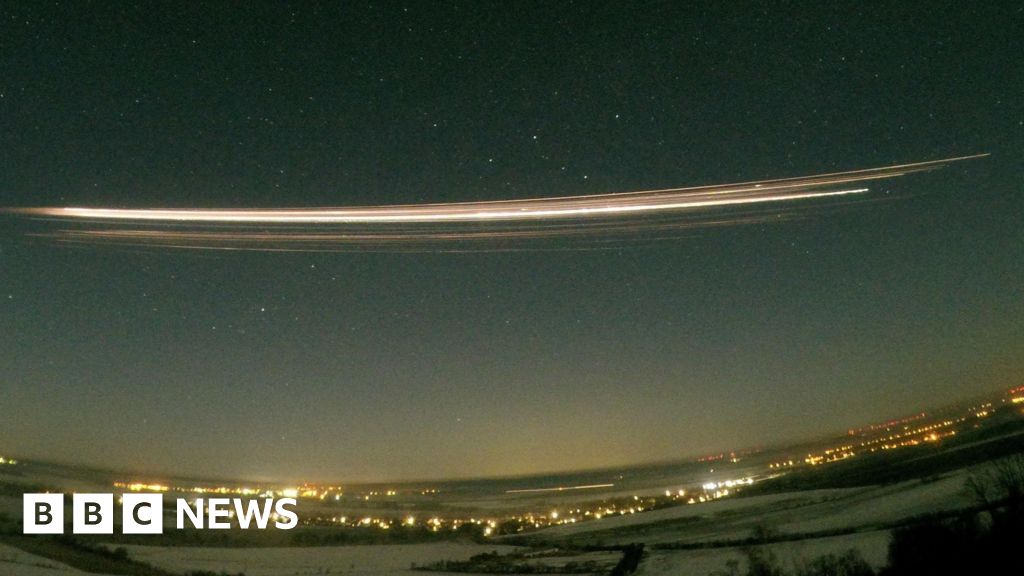
In 2023, a SpaceX Falcon 9 rocket stage re-entered Earth’s atmosphere uncontrolled, ultimately crashing into the Indian Ocean. While such events have become increasingly common as the number of satellite launches and rocket deployments rises, this particular incident has drawn the attention of scientists for a different reason: the measurable environmental impact it left behind.
The rocket, part of a Starlink mission, had delivered its payload to orbit and was left to drift. Unlike many other rocket stages that are guided to safe disposal over remote ocean areas, this one was not actively de-orbited. As a result, its return was unpredictable, and it eventually burned up and broke apart over the Indian Ocean. Although no injuries or property damage were reported, the incident has sparked a wave of scientific inquiry into the atmospheric and environmental consequences of such uncontrolled re-entries.
A team of researchers, led by atmospheric scientists from the University of Southern California and other institutions, has now quantified the pollution caused by this event. Their findings, published in a recent scientific journal, reveal that the Falcon 9’s re-entry injected a significant amount of aerosols and metallic particles into the upper atmosphere. These particles, including aluminum oxides and other compounds from the rocket’s structure, can linger in the stratosphere and mesosphere for months or even years.
The scientists used a combination of satellite data, ground-based observations, and atmospheric modeling to track the dispersion of these particles. Their analysis showed that the re-entry produced a plume of debris that spread across a vast area, potentially affecting atmospheric chemistry and even contributing to ozone depletion. While the immediate impact on the ozone layer appears to be minimal, the long-term effects are still uncertain, especially as the frequency of such events increases.
This incident has reignited debates about the sustainability of the current space industry model. With SpaceX and other companies planning to launch thousands more satellites in the coming years, the cumulative effect of rocket re-entries on the atmosphere is a growing concern. The researchers emphasize that while the pollution from a single rocket may seem negligible, the aggregate impact of hundreds or thousands of re-entries could be significant.
In response to these findings, some experts are calling for stricter regulations on rocket disposal and the development of more sustainable launch technologies. Proposals include designing rockets with materials that produce less harmful byproducts upon re-entry, as well as implementing controlled de-orbiting procedures for all rocket stages.
The Falcon 9 incident also highlights the need for better international cooperation in monitoring and mitigating space debris. As more countries and private companies enter the space race, the risk of uncontrolled re-entries and their environmental consequences will only grow. Scientists and policymakers are now faced with the challenge of balancing the benefits of space exploration with the need to protect Earth’s atmosphere and climate.
In the meantime, the data from this event will serve as a crucial reference point for future studies. Researchers hope that by understanding the full scope of pollution caused by rocket re-entries, they can inform better practices and technologies that minimize harm to the environment.
As the space industry continues to expand at an unprecedented pace, incidents like the Falcon 9 crash serve as a stark reminder that our activities beyond Earth’s atmosphere have real and measurable consequences here at home. The challenge now is to ensure that the next chapter of space exploration is written with sustainability and responsibility at its core.
Tags and Viral Phrases:
SpaceX Falcon 9 crash, rocket pollution, atmospheric aerosols, ozone depletion, space debris, uncontrolled re-entry, Starlink mission, environmental impact, sustainable space exploration, rocket disposal, metallic particles, upper atmosphere pollution, space industry sustainability, international space regulations, atmospheric modeling, satellite launches, space race, climate protection, responsible space exploration, space debris monitoring, rocket technology, environmental consequences, space exploration challenges, future of space travel, space industry growth, rocket re-entry effects, atmospheric chemistry, space debris mitigation, sustainable launch technologies, space exploration responsibility.
,


Leave a Reply
Want to join the discussion?Feel free to contribute!