
“Million-year-old” fossil skulls from China are far older—and not Denisovans
Ancient Hominins May Have Ventured Beyond Africa Earlier Than We Thought—Rewriting Human History
In a groundbreaking revelation that challenges long-held assumptions about early human migration, new archaeological evidence suggests that our ancient hominin relatives may have ventured beyond the African continent far earlier than previously believed. This discovery not only reshapes our understanding of human evolution but also raises profound questions about the adaptability and resilience of our ancestors.
For decades, Homo erectus has been hailed as the pioneering hominin species that first expanded beyond Africa, traversing vast and varied landscapes to colonize new territories. This species, which lived between 2 million and 110,000 years ago, was long considered the first hominin capable of adapting to diverse environments, from tropical forests to arid savannas. However, recent findings from two archaeological sites in China are forcing scientists to reconsider this narrative.
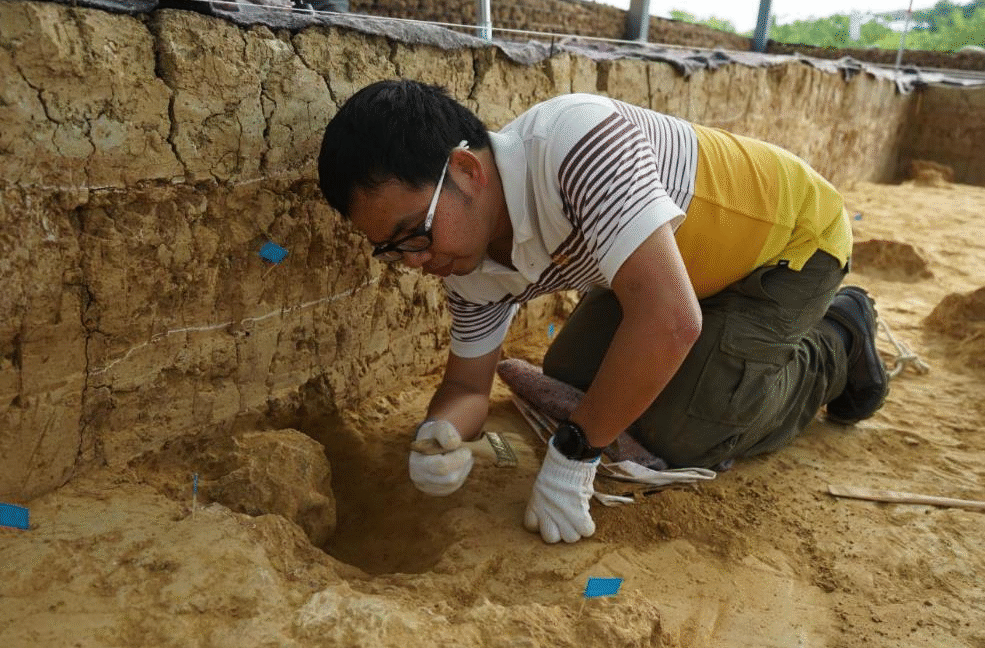
At Shangchen, located on the southern edge of China’s Loess Plateau, researchers have unearthed stone tools embedded in sediment dating back 2.1 million years. Even more astonishingly, at the Xihoudu site in northern China, stone tools have been dated to an incredible 2.43 million years ago. These discoveries predate the earliest known Homo erectus fossils by nearly half a million years, prompting a seismic shift in our understanding of early human migration.
“If you have a site in China that’s 2.43 million years old, and the origin of Homo erectus is 1.9 million years ago, either you need to push the origin of Homo erectus back to 2.5 or 2.6 million years, or we need to accept that we need to be looking at other hominins that may have actually moved out of Africa,” explains Christopher Bae, a paleoanthropologist at the University of Hawai’i at Manoa and a co-author of the groundbreaking study.
But who were these mysterious toolmakers? The absence of hominin fossils at both sites makes it difficult to definitively identify the species responsible for crafting these ancient tools. However, if they weren’t Homo erectus, the most likely candidates are earlier members of the Homo genus, such as Homo habilis or Homo rudolfensis. This revelation suggests that hominin expansion “out of Africa” may have occurred multiple times throughout our evolutionary history, with early Homo species paving the way for later migrations by Homo erectus and, eventually, our own species, Homo sapiens.
“There could have been an earlier wave that died out or interbred, so there’s all kinds of possibilities open there,” adds Darryl Granger, a paleoanthropologist at Purdue University and another co-author of the study. This opens up a fascinating array of scenarios, from multiple waves of migration to potential interbreeding between different hominin species.
The implications of these findings extend beyond mere timelines. They challenge us to reconsider the adaptability and ingenuity of early hominins. The ability to craft and use stone tools is a hallmark of human evolution, and the fact that these tools have been found in such ancient layers of sediment suggests that our ancestors were already developing sophisticated cognitive and motor skills much earlier than we thought.
Moreover, the discovery raises intriguing questions about the environmental and climatic conditions that may have facilitated these early migrations. What drove these hominins to leave the relative safety of Africa? Were they following migrating herds, seeking new resources, or simply exploring new territories? The answers to these questions could provide valuable insights into the motivations and behaviors of our ancient ancestors.
As researchers continue to piece together the puzzle of human evolution, one thing is clear: the story of our species is far more complex and nuanced than we ever imagined. The discovery of these ancient stone tools in China is a reminder that the history of humanity is still being written, and that every new finding has the potential to rewrite the textbooks.
In the coming years, further excavations and analyses will undoubtedly shed more light on this fascinating chapter of our evolutionary history. As we uncover more about the lives and journeys of our ancient ancestors, we gain a deeper appreciation for the resilience, adaptability, and ingenuity that have defined our species from the very beginning.
Tags: Ancient hominins, Human migration, Stone tools, Homo habilis, Homo erectus, Out of Africa theory, Paleoanthropology, Evolutionary history, Archaeological discoveries, Human origins, China archaeology, Early humans, Prehistoric tools, Hominin evolution, Fossil evidence, Cognitive development, Environmental adaptation, Prehistoric migration, Human adaptability, Evolutionary milestones.
Viral Sentences:
- “Our ancestors were globe-trotters long before we thought possible!”
- “Stone tools in China rewrite the story of human evolution.”
- “Who were the first humans to leave Africa? The answer might surprise you.”
- “Early hominins were smarter and more adventurous than we ever imagined.”
- “The journey of humanity begins much earlier than we thought.”
- “Ancient tools challenge everything we know about human history.”
- “The first humans to explore the world weren’t who we thought they were.”
- “From Africa to China: The untold story of early human migration.”
- “These 2.4-million-year-old tools are changing the game for paleoanthropologists.”
- “The pioneers of human exploration were not Homo erectus—so who were they?”
,


Leave a Reply
Want to join the discussion?Feel free to contribute!