
Controversial NIH director now in charge of CDC, too, in RFK Jr. shake-up
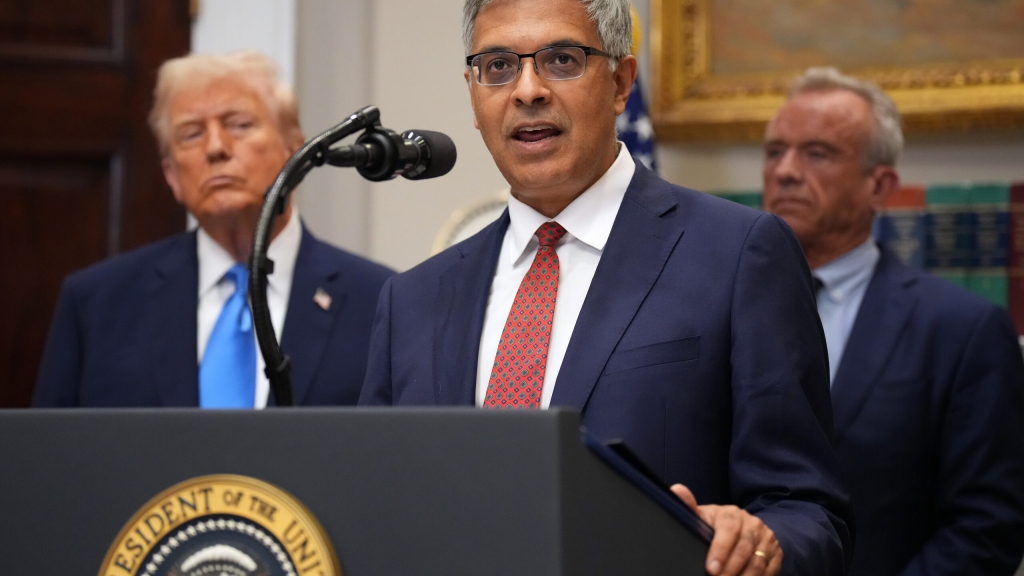
BREAKING: CDC Leadership Shakeup Sparks Outrage as “Podcast Jay” Takes Helm Amid Public Health Crisis
In a stunning and controversial move that has sent shockwaves through the medical community, President Trump has appointed Dr. Jay Bhattacharya as acting director of the Centers for Disease Control and Prevention (CDC) during one of the most critical periods in American public health history.
The appointment comes as the United States grapples with a resurgence of preventable diseases, including a troubling measles outbreak that has already claimed lives and infected hundreds across multiple states. Critics are calling the decision “malpractice against public health” and warning that the nation’s premier disease control agency is now in the hands of someone who has demonstrated a troubling pattern of delegation and public relations over substantive leadership.
The “Podcast Jay” Phenomenon
Dr. Bhattacharya, who currently serves as director of the National Institutes of Health (NIH), has earned the unflattering nickname “Podcast Jay” among Washington insiders and public health professionals. The moniker stems from his prolific media appearances and interview schedule, which many observers say has taken precedence over his administrative duties at the $47 billion NIH agency.
According to multiple sources within the NIH, Bhattacharya has effectively delegated the day-to-day operations of the massive research institution to two top officials, focusing instead on building his public profile through frequent media engagements. This hands-off approach has drawn sharp criticism from former agency leaders and public health advocates who argue that the current moment demands active, engaged leadership.
A Pattern of Delegation
The concerns about Bhattacharya’s leadership style are not new. Jenna Norton, an NIH program officer who spoke to the Guardian in her personal capacity, offered a blunt assessment: “He won’t actually run the CDC. Just as he doesn’t actually run NIH.” Norton characterized Bhattacharya’s role in the administration as “largely as a propagandist,” suggesting that his appointment represents more of a political move than a genuine effort to strengthen public health leadership.
Jeremy Berg, former director of the National Institute of General Medical Sciences, echoed these sentiments with characteristic directness. “Now, rather than largely ignoring the actual operations of one agency, he can largely ignore the actual operations of two,” Berg told the Guardian, highlighting the potential for compounded problems as Bhattacharya takes on dual leadership responsibilities.
Public Health Crisis Looms
The timing of Bhattacharya’s appointment could not be more concerning to public health experts. Under the leadership of Health and Human Services Secretary Robert F. Kennedy Jr., the administration has already implemented controversial changes to the CDC’s childhood vaccination schedule, reducing recommended vaccinations from 17 to 11 without scientific justification. Bhattacharya was among the officials who signed off on these changes, raising questions about his commitment to evidence-based public health policy.
Kayla Hancock, director of Public Health Watch, a nonprofit advocacy group, issued a scathing statement condemning the appointment. “Jay Bhattacharya has overseen the most chaotic and rudderless era in NIH history, and for RFK Jr. to give him even more responsibility at the CDC is malpractice against the public health,” Hancock declared.
Hancock’s concerns extend beyond Bhattacharya’s leadership style to the broader implications for American public health. “This is the last person who should be overseeing the CDC at a time when preventable diseases like measles are roaring back under RFK Jr.’s deadly anti-vax agenda,” she warned.
The Anti-Vaccine Connection
The appointment of Bhattacharya comes against the backdrop of Secretary Kennedy’s well-documented skepticism of vaccines and his history of promoting anti-vaccination rhetoric. Kennedy, who has long been associated with the anti-vaccine movement, has used his position to implement policies that many public health experts view as dangerous and scientifically unfounded.
When Kennedy dramatically overhauled the CDC’s childhood vaccine schedule, slashing recommended vaccinations from 17 to 11 without scientific evidence, Bhattacharya was among the officials who signed off on the unprecedented change. This alignment with Kennedy’s agenda has led many to predict that Bhattacharya will serve as little more than a rubber stamp for further anti-vaccine initiatives.
Temporary but Potentially Devastating
While Bhattacharya’s tenure as acting CDC director will be limited in duration, public health experts warn that the damage could be significant and long-lasting. The role of CDC director became a Senate-confirmed position in 2023, meaning that an acting director can serve only 210 days from the date the role became vacant. That deadline comes up on March 25, creating a ticking clock for potential permanent appointments.
President Trump has not yet nominated anyone to fill the director role permanently, leaving the door open for further controversy and uncertainty. The interim period could see critical public health decisions made without the benefit of stable, long-term leadership at the nation’s premier disease control agency.
The Stakes Could Not Be Higher
As measles cases continue to rise and other preventable diseases threaten to re-emerge, the CDC faces unprecedented challenges. The agency is responsible for coordinating the nation’s response to disease outbreaks, developing public health guidelines, and providing critical scientific guidance to state and local health departments.
Under normal circumstances, this would be a time for steady, science-based leadership at the CDC. Instead, the appointment of someone with Bhattacharya’s track record of delegation and political alignment raises serious questions about the agency’s ability to respond effectively to current and future public health threats.
A Perfect Storm of Concerns
The combination of Bhattacharya’s leadership style, his alignment with anti-vaccine agendas, and the critical timing of his appointment has created what many are calling a perfect storm of public health concerns. Public health professionals worry that the CDC’s effectiveness could be severely compromised at a moment when the nation can least afford it.
The nickname “Podcast Jay” may seem lighthearted, but it encapsulates a serious concern: that public relations and media appearances have taken precedence over the substantive work of protecting public health. As one insider put it, “When you’re dealing with a measles outbreak, you need a leader who’s focused on containing the disease, not on booking the next podcast appearance.”
What Comes Next?
As the March 25 deadline approaches, all eyes will be on the Trump administration to see whether a permanent CDC director will be nominated. In the meantime, public health experts are urging vigilance and preparation for what many fear could be a period of diminished effectiveness at the CDC.
The appointment of Jay Bhattacharya as acting CDC director represents more than just a personnel change; it signals a potential shift in the agency’s priorities and approach to public health at a critical juncture. Whether this shift will prove temporary or mark the beginning of a longer-term transformation remains to be seen, but one thing is clear: the stakes for American public health have never been higher.
Tags: CDC leadership crisis, Jay Bhattacharya appointment, Podcast Jay controversy, measles outbreak 2025, RFK Jr. vaccine agenda, NIH delegation scandal, public health emergency, anti-vaccine movement, Trump administration health policy, CDC acting director, preventable disease resurgence, medical community outrage, public health malpractice, vaccine schedule controversy, disease control leadership vacuum
Viral Phrases: “Podcast Jay takes the helm,” “rubber stamp for anti-vax agenda,” “malpractice against public health,” “chaotic and rudderless era,” “deadly anti-vax agenda,” “delegation over leadership,” “science-free vaccine decisions,” “perfect storm of public health concerns,” “booking podcasts instead of containing outbreaks,” “the last person who should be overseeing CDC”
,


Leave a Reply
Want to join the discussion?Feel free to contribute!