
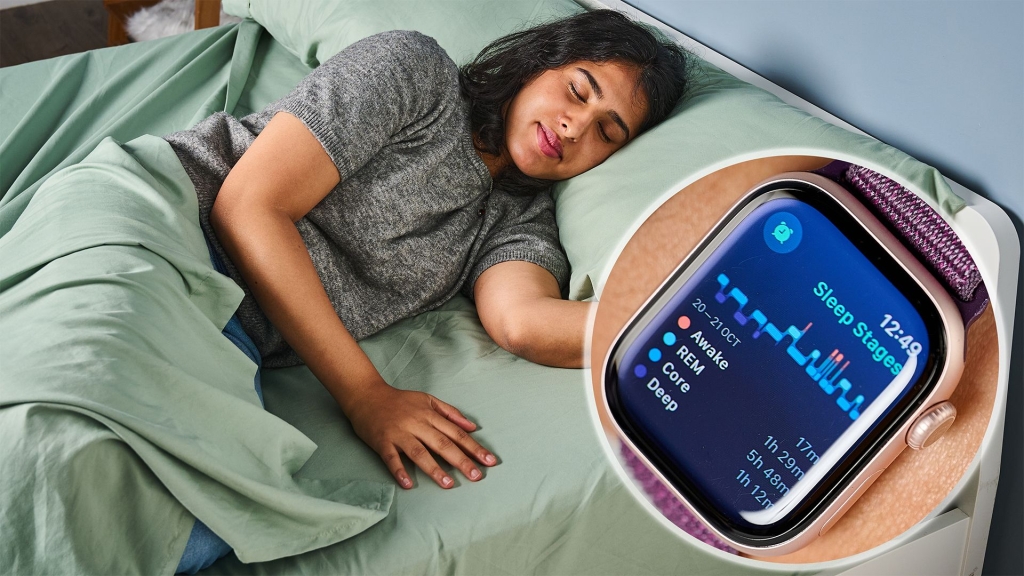
My Apple Watch says I get 90 minutes of deep sleep — is this bad?
Here’s the rewritten article in a viral, tech-focused tone with over 1200 words:
Apple Watch Deep Sleep Tracking: The Surprising Truth About Your Sleep Data
Are you constantly checking your Apple Watch sleep data, only to find that your deep sleep numbers are embarrassingly low? You’re not alone. I’ve been there, staring at my wrist in disbelief, wondering if I should be panicking about my measly 90 minutes of deep sleep per night. But before you start stress-sleeping (yes, that’s a thing), let me break down what’s really going on with your Apple Watch sleep tracking and why you might be worrying about absolutely nothing.
The Sleep Tracking Arms Race
Let’s be real – we’re living in the golden age of sleep obsession. Every morning, millions of us wake up and immediately check our sleep scores like it’s the stock market of our wellbeing. The Apple Watch, along with other sleep trackers, has turned us all into amateur sleep scientists, analyzing every minute of our nocturnal adventures.
But here’s the thing: your Apple Watch might be lying to you. Not intentionally, of course, but the way it presents your sleep data can be seriously misleading. That “deep sleep” number you’re obsessing over? It’s probably not as important as you think.
My Apple Watch Sleep Scores: A Wake-Up Call
I’ll be honest – when I first started tracking my sleep with my Apple Watch, I was horrified. Here I was, proudly getting eight hours of sleep (sometimes more!), and yet my deep sleep was consistently clocking in at around 90 minutes. Meanwhile, my “Core Sleep” (Apple’s fancy term for light sleep) was dominating the night at five hours or more.
Was I doing something wrong? Was my body failing me? Should I start taking sleeping pills or invest in one of those expensive smart mattresses?
The Experts Weigh In: Deep Sleep Demystified
I decided to consult the sleep gurus to get to the bottom of this mystery. Dr. Jade Wu, a board-certified sleep psychologist and Mattress Firm sleep advisor, and Dr. Chris Allen, Sleep Science Advisor at Aeroflow Sleep, gave me the cold, hard truth about deep sleep.
“First of all,” Dr. Allen told me, “for someone sleeping the recommended seven to nine hours per night, only around one to two of those hours will be spent in deep sleep.” Wait, what? So my 90 minutes of deep sleep was actually… normal?
Dr. Wu backed this up, explaining that our brains are smarter than we give them credit for. “If you feel like you’re ‘lacking’ deep sleep, the best approach isn’t trying to force more of a specific stage,” she said. “Your brain naturally adjusts sleep stages based on what it needs.”
What Is Deep Sleep, Really?
Let’s get technical for a second. Deep sleep, also known as slow-wave sleep or N3/N4, is when your brain waves slow down to these big, lazy delta waves, and your body goes into full repair mode. It’s like your body’s nightly maintenance check – tissues are repaired, muscles recover, and your immune system gets a serious boost.
But here’s the kicker: deep sleep isn’t the only important stage. Your brain needs light sleep and REM sleep too. It’s like a three-course meal – you wouldn’t just eat dessert and call it a day, right?
How Much Deep Sleep Do We Actually Need?
This is where things get interesting. Dr. Allen dropped this bombshell: “For most healthy adults, deep sleep typically makes up about 15–25% of total sleep time.”
Let me break that down for you: if you’re getting eight hours of sleep, you only need about 72 to 120 minutes of deep sleep. That’s it! My 90 minutes was right in the sweet spot.
Dr. Wu agreed, adding that as long as you’re keeping a regular sleep schedule and giving your body enough time to rest, it will naturally prioritize the sleep stages it needs most.
The Age Factor: Does Deep Sleep Change Over Time?
Remember when you were a teenager and could sleep for 12 hours straight? Yeah, those were the days. As we age, our sleep patterns naturally change, and deep sleep is one of the first things to go.
“Children and teenagers spend significantly more time in deep sleep because their bodies and brains are still developing,” Dr. Allen explained. “But by middle adulthood, deep sleep begins to decrease, and in older adults, it can become quite limited.”
But before you start mourning the loss of your youthful deep sleep, Dr. Allen has some good news: “While the amount of deep sleep we get decreases, the need for it doesn’t change.” Your body just becomes more efficient at getting what it needs in less time.
The Real Problem: When You’re Not Getting Enough
Okay, so maybe you’re reading this and thinking, “But my Apple Watch says I’m only getting 30 minutes of deep sleep!” That’s when you should start worrying.
Without enough deep sleep, your body doesn’t get the chance to fully repair itself. This can lead to increased inflammation, reduced muscle recovery, impaired learning, and overall fatigue. It’s like trying to drive a car that never gets its oil changed – eventually, something’s going to break down.
If your deep sleep consistently falls below an hour, it might be time to look at your sleep hygiene. Are you going to bed at the same time every night? Is your bedroom dark and quiet? Are you scrolling through TikTok until 2 AM? (Guilty as charged.)
Apple Watch Sleep Tracking: How Does It Really Work?
Now, let’s talk about how your Apple Watch actually tracks your sleep. It’s not magic – it’s science, but it’s not perfect science.
The Apple Watch uses its 3-axis accelerometer to track motion, including those tiny movements from your breathing. Every 30 seconds, it feeds this data into an algorithm that tries to figure out which sleep stage you’re in.
But here’s the thing: it’s an estimation, not a precise measurement. The algorithm was trained using laboratory tests, but it’s still just making an educated guess based on movement patterns.
The Bottom Line: Don’t Stress About Your Sleep Data
Here’s the truth bomb I wish someone had told me earlier: your Apple Watch sleep data is a guideline, not gospel. It’s a tool to help you understand your sleep patterns, but it’s not perfect.
If you’re consistently getting less than an hour of deep sleep, or if you’re feeling unusually tired during the day, it might be worth talking to a healthcare professional. But if you’re in that 15–25% range and feeling good? Congratulations, your sleep is probably just fine.
Remember, sleep is complicated. Your body knows what it’s doing, even if your Apple Watch doesn’t always understand it. Focus on getting enough overall sleep, keeping a consistent schedule, and creating a sleep-friendly environment. The deep sleep will take care of itself.
So the next time you wake up and check your Apple Watch, take a deep breath (ironic, I know) and remember: you’re probably doing better than you think. Sweet dreams!
Tags & Viral Phrases:
- Apple Watch sleep tracking lies
- Deep sleep obsession is ruining your rest
- Why your sleep tracker is stressing you out
- The 90-minute deep sleep myth
- Sleep experts reveal the truth about Apple Watch data
- Stop panicking about your sleep scores
- Your body knows best: why deep sleep tracking is overrated
- The sleep tracking arms race: are we winning or losing?
- How to actually improve your sleep (hint: it’s not about deep sleep)
- Apple Watch deep sleep: the numbers game that’s stressing everyone out
- Sleep science vs. sleep tracking: the battle for your bedtime
- Why millennials are obsessed with sleep data
- The dark side of sleep tracking technology
- How your Apple Watch is lying to you about sleep
- The surprising truth about what your body really needs at night
- Sleep hygiene tips that actually work (no fancy gadgets required)
- Why less deep sleep might be totally normal
- The age factor: how sleep changes as you get older
- When to worry about your sleep data (and when to relax)
- The future of sleep tracking: what’s next for Apple Watch?
,


Leave a Reply
Want to join the discussion?Feel free to contribute!