
“Cosmic Volcano” Erupts Again: Black Hole Awakens After 100 Million Years
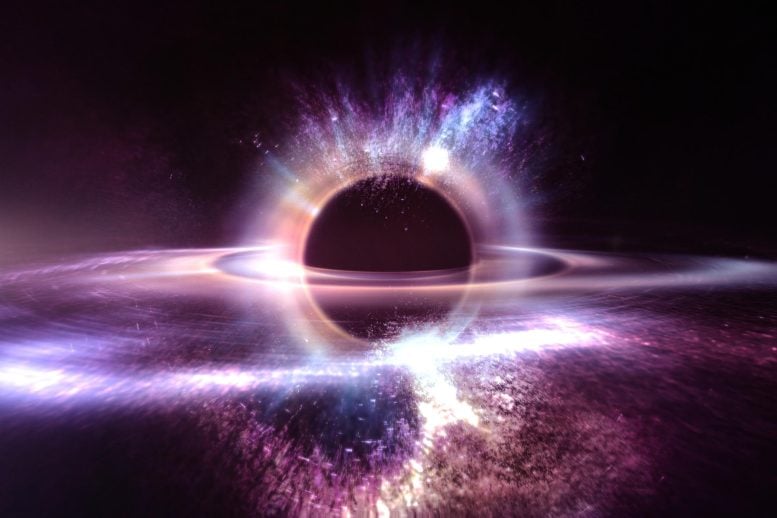
Astronomers have captured one of the clearest views yet of a black hole returning to life, in a vast radio galaxy where activity stretches nearly one million light-years across space. The phenomenon has been compared to a cosmic volcano erupting after lying dormant for 100 million years.
The galaxy at the heart of this discovery, designated J1007+3540, lies in the constellation of Boötes and is classified as a giant radio galaxy—one of the largest known single structures in the universe. What makes this object extraordinary is that its central supermassive black hole, which had been silent for an epoch-spanning period, has reignited with renewed jet activity, sending out powerful streams of plasma at nearly the speed of light.
Using the Low Frequency Array (LOFAR), a network of thousands of radio antennas spread across Europe, astronomers detected twin jets of charged particles blasting outward from the black hole’s poles. These jets have carved enormous cavities—or “bubbles”—in the surrounding intergalactic medium, pushing aside gas and magnetic fields in a process that resembles the explosive force of a volcanic eruption on Earth, but on a scale millions of times larger.
The jets are so powerful that they are actively reshaping the environment around the galaxy, injecting energy into the intracluster medium and influencing the evolution of the galaxy cluster itself. This kind of episodic activity is thought to be a key mechanism in regulating star formation and galaxy growth across the cosmos.
The black hole’s reactivation appears to have been triggered by a fresh influx of gas, possibly drawn in by gravitational disturbances or a minor merger with a smaller galaxy. Once the material crosses the event horizon, it spirals into the accretion disk, where friction and magnetic forces accelerate some of it outward in tightly collimated jets.
What makes this observation particularly significant is the timescale involved. A 100-million-year dormancy period is immense by human standards, yet it’s relatively short in cosmic terms. The jets themselves have been active for only a few million years, suggesting that the black hole is in a “youthful” phase of renewed activity.
Scientists believe that such cycles of dormancy and reactivation are common among supermassive black holes, but catching one in the act is rare. Most observations show either fully active systems or long-dead ones, making J1007+3540 a valuable “missing link” in understanding black hole life cycles.
This discovery also has implications for our broader understanding of galaxy evolution. The energy injected by these jets can heat surrounding gas, preventing it from cooling and collapsing into new stars. This feedback loop is crucial in shaping the properties of galaxies and their environments over billions of years.
Future observations with next-generation telescopes, such as the Square Kilometre Array (SKA), are expected to reveal even more of these episodic events, helping astronomers piece together the complex interplay between black holes and their host galaxies.
As researchers continue to monitor J1007+3540, they hope to determine how long this new phase of activity will last and whether the black hole will once again fall silent—or perhaps enter an even more energetic state. For now, this cosmic volcano stands as a vivid reminder of the dynamic and ever-changing nature of the universe.
#blackhole #astronomy #space #galaxy #astrophysics #science #universe #radioastronomy #cosmic #supernova #interstellar #astrophotography #cosmology #telescope #research #discovery #physics #cosmos #darkmatter #spaceexploration #LOFAR #J1007+3540 #giantradiogalaxy #cosmicvolcano #episodicactivity #intergalacticmedium #supermassiveblackhole #astrophysicsresearch #spaceobsession #universeunveiled #celestialphenomena #galacticevolution #blackholeawakening #cosmicjets #spacemysteries #astrophysicalphenomena #interstellarexploration #universedynamics #cosmicrebirth #spacephenomena #blackholejets #galacticactivity #cosmicenergy #spacewonders #universetoday #astronomyfacts #cosmicdiscovery #spacetech #galacticnuclei #interstellarevents #blackholeactivity #cosmicforces #spaceresearch #universeexpansion #galacticformation #astrophysicsnews #spaceupdates #cosmicinsights #universetopics #blackholephysics #cosmiccycles #spacephenomenon #galacticjets #universeexploration #astrophysicsupdates #cosmicforces #spacediscovery #universetrends #blackholescience #cosmicactivity #spacephenomena #galacticresearch #universestudy #blackholerenewal #cosmiceruption #spaceobservations #galacticevolution #universedynamics #blackholescience #cosmicenergy #spacemysteries #universediscovery #astrophysicsresearch #cosmicforces #spaceexploration #galacticnuclei #universetopics #blackholeawakening #cosmicjets #spacephenomena #galacticactivity #cosmicenergy #spacewonders #universetoday #astronomyfacts #cosmicdiscovery #spacetech #galacticformation #astrophysicsnews #spaceupdates #cosmicinsights #universetopics #blackholephysics #cosmiccycles #spacephenomenon #galacticjets #universeexploration #astrophysicsupdates #cosmicforces #spacediscovery #universetrends #blackholescience #cosmicactivity #spacephenomena #galacticresearch #universestudy #blackholerenewal #cosmiceruption #spaceobservations #galacticevolution #universedynamics #blackholescience #cosmicenergy #spacemysteries #universediscovery,

Leave a Reply
Want to join the discussion?Feel free to contribute!