
India’s Sarvam launches Indus AI chat app as competition heats up
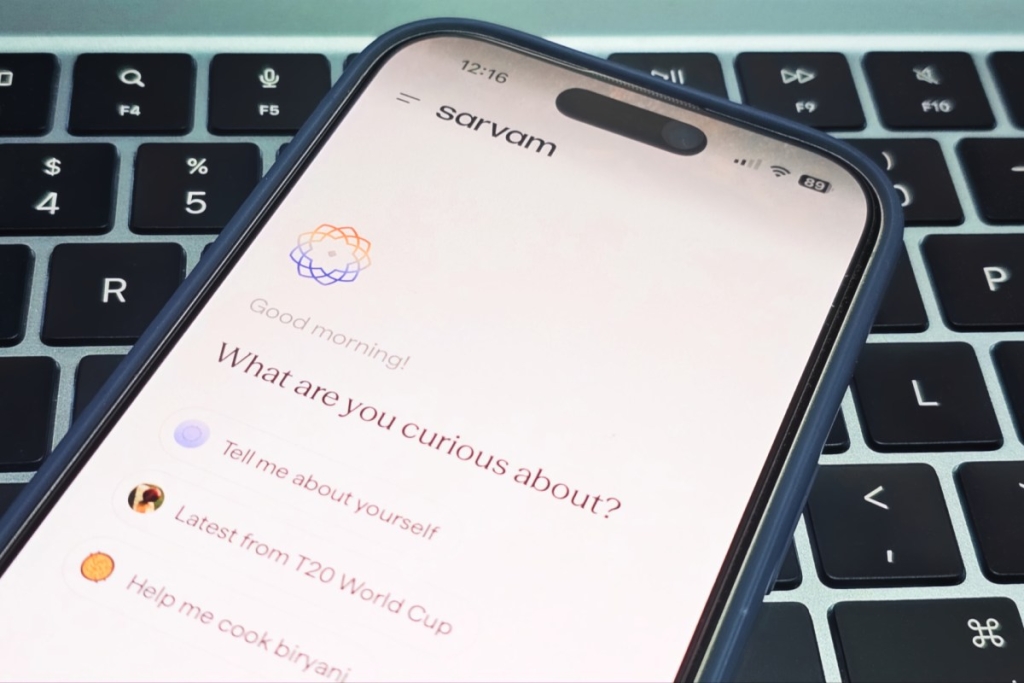
In a bold move that could reshape the Indian AI landscape, Bengaluru-based startup Sarvam has officially launched its Indus chat app, a powerful new interface designed to bring the company’s cutting-edge 105-billion-parameter Sarvam 105B large language model directly into the hands of millions of Indian users. This strategic launch positions Sarvam as a serious contender in India’s fast-growing generative AI market, a space currently dominated by global heavyweights like OpenAI, Anthropic, and Google.
The timing couldn’t be more significant. India has emerged as a key battleground for AI adoption, with OpenAI CEO Sam Altman recently revealing that ChatGPT boasts over 100 million weekly active users in the country. Anthropic’s Claude, meanwhile, has secured a strong foothold, with India accounting for 5.8% of total usage—second only to the United States. Against this backdrop, Sarvam’s Indus app represents a major push to localize AI innovation and cater to the unique linguistic and cultural diversity of the Indian market.
Indus is more than just a chatbot; it’s a gateway to Sarvam’s ambitious vision of building AI that truly understands and serves Indian users. The app allows users to type or speak queries in natural language and receive responses in both text and audio formats, making it accessible and intuitive for a broad audience. Available in beta on iOS, Android, and the web, Indus is currently limited to Indian users, with sign-in options including phone numbers, Google accounts, and Apple IDs.
The launch of Indus follows closely on the heels of Sarvam’s unveiling of its flagship Sarvam 105B model and a smaller 30B variant at the India AI Impact Summit in New Delhi. These models are designed with India’s linguistic diversity in mind, supporting multiple local languages and dialects—a critical differentiator in a country where over 19,500 languages and dialects are spoken. Sarvam’s commitment to open-source AI further underscores its mission to democratize access to advanced technology across the subcontinent.
But Sarvam isn’t stopping at chat interfaces. The company has announced ambitious partnerships aimed at embedding its AI models into everyday devices and industries. A notable collaboration with HMD Global will bring Sarvam’s AI capabilities to Nokia feature phones, potentially opening up AI access to millions of users who rely on affordable, basic mobile devices. Another partnership with Bosch will integrate Sarvam’s models into automotive applications, paving the way for smarter, AI-driven vehicles on Indian roads.
Despite its promise, the Indus app is still in its early stages and comes with some limitations. Users currently cannot delete individual chat histories without deleting their entire account, and there is no option to disable the app’s reasoning feature, which can sometimes slow down response times. Sarvam has also cautioned that access may be restricted as the company gradually scales up its compute capacity to meet growing demand. In a post on X (formerly Twitter), co-founder Pratyush Kumar acknowledged these challenges, stating that the company is rolling out Indus on limited compute capacity and may implement waitlists before expanding access.
Founded in 2023, Sarvam has quickly established itself as a leader in India’s AI ecosystem. The startup has raised $41 million from top-tier investors, including Lightspeed Venture Partners, Peak XV Partners, and Khosla Ventures, fueling its mission to build large language models tailored specifically for the Indian market. By focusing on local languages, cultural nuances, and real-world applications, Sarvam aims to create AI that is not only powerful but also deeply relevant to the needs of Indian users.
Sarvam’s efforts are part of a broader movement within India to develop domestic alternatives to global AI platforms. As the country seeks greater control over its digital infrastructure and data sovereignty, homegrown AI companies like Sarvam are playing a crucial role in reducing dependence on foreign technology and fostering innovation from within.
The launch of Indus marks a significant milestone in Sarvam’s journey, but it’s just the beginning. With plans to expand its compute capacity, refine its models, and deepen its partnerships across industries, Sarvam is poised to become a central player in India’s AI revolution. For users, Indus offers a glimpse into a future where AI is not just a tool for the elite but an accessible, everyday companion that understands and responds to the rich tapestry of Indian languages and cultures.
As the global AI race intensifies, Sarvam’s bold bet on open-source, locally relevant AI could prove to be a game-changer—not just for India, but for the world. The question now is: will Indus be the spark that ignites a new era of Indian AI innovation? Only time will tell, but one thing is certain—Sarvam is a name to watch in the unfolding story of artificial intelligence.
#Sarvam #IndusApp #AI #ArtificialIntelligence #IndiaAI #LLM #LargeLanguageModel #Sarvam105B #OpenSourceAI #AIForAll #TechNews #IndiaTech #BengaluruStartup #AIInnovation #DigitalIndia #LanguageModels #HMD #Nokia #Bosch #TechCrunch #AIStartups #FutureOfAI #AIInIndia #TechTrends #AIForAll,


Leave a Reply
Want to join the discussion?Feel free to contribute!