
After fueling test, optimism grows for March launch of Artemis II to the Moon
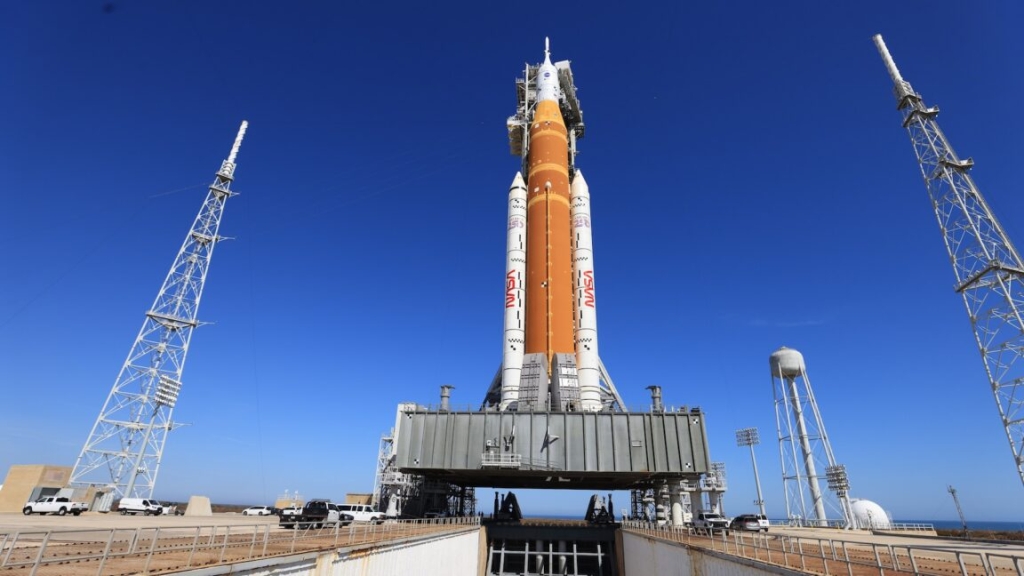
NASA’s Artemis II: Historic Lunar Mission Poised for March Launch After Successful Fueling Test
In a pivotal development for space exploration, NASA has cleared a critical milestone on its path back to the Moon. The agency’s massive Space Launch System (SLS) rocket completed a flawless second fueling test Thursday night, setting the stage for what could be humanity’s first crewed lunar flyby in over half a century.
The fueling test, technically known as a Wet Dress Rehearsal (WDR), took place at Kennedy Space Center in Florida under the watchful eyes of mission controllers and senior NASA officials. Unlike the previous attempt on February 2, which was marred by a persistent hydrogen leak, this time the rocket’s fueling systems performed exactly as designed.
“We were able to fully fuel the SLS rocket within the planned timeline,” said Lori Glaze, acting associate administrator for NASA’s exploration programs. “For the most part, those fixes all performed pretty well yesterday.”
The successful test came after technicians made crucial repairs at the launch pad, specifically replacing seals on the rocket’s main fueling line where hydrogen gas had previously escaped. These modifications proved their worth during Thursday’s countdown, with no major leaks detected throughout the entire fueling process.
With this critical hurdle cleared, NASA is now targeting March 6 as the earliest possible launch date for Artemis II. The four-person crew—commander Reid Wiseman, pilot Victor Glover, mission specialist Christina Koch, and Canadian Space Agency astronaut Jeremy Hansen—could be on their way to lunar orbit within weeks if all remaining preparations proceed smoothly.
Glaze was careful to temper expectations, noting that “there is still pending work” and “a lot of forward work that remains” before the mission can proceed. However, the successful fueling test represents a significant vote of confidence in the rocket’s readiness.
If launched on March 6, the mission would lift off during a two-hour window opening at 8:29 pm EST (01:29 UTC on March 7). NASA has backup opportunities on March 7, 8, 9, and 11, though the mission may need to slip to April if additional issues arise. The complex orbital mechanics of lunar missions mean there are only about five viable launch days per month, as NASA must account for the Moon’s position in its orbit, the spacecraft’s trajectory, and various thermal and lighting constraints.
The Artemis II mission represents far more than just a return to lunar exploration. When Wiseman’s crew loops around the far side of the Moon, they will travel farther from Earth than any humans in history, breaking a record that has stood since the Apollo era. Their journey will mark the first time people have ventured to the vicinity of the Moon since the final Apollo mission in 1972.
The mission duration is expected to last between nine and 10 days, during which the Orion spacecraft will perform a figure-eight trajectory around the Moon before returning to Earth for splashdown in the Pacific Ocean. This flight will serve as a crucial test of all systems with humans aboard, paving the way for future Artemis missions that aim to land astronauts on the lunar surface.
The successful fueling test represents a significant step forward for NASA’s Artemis program, which seeks to establish a sustainable human presence on the Moon and eventually use those capabilities to reach Mars. After years of development and multiple delays, the SLS rocket and Orion spacecraft appear to be finally ready to fulfill their promise of returning humans to deep space.
As NASA moves forward with final preparations, the space community and space enthusiasts worldwide are watching closely. The Artemis II mission carries not just four astronauts, but the hopes of a new generation of explorers and the dreams of those who watched the Apollo missions with wonder five decades ago.
Tags: Artemis II, NASA, Space Launch System, SLS, Wet Dress Rehearsal, lunar mission, crewed spaceflight, Kennedy Space Center, Orion spacecraft, Moon flyby, space exploration, 2026 launch
Viral phrases: First humans to fly near the Moon since 1972, Farthest humans have ever traveled from Earth, Record-breaking lunar mission, Historic return to deep space, NASA’s Moon mission back on track, Crewed lunar flyby poised for March launch, Critical fueling test success, Hydrogen leak fixed, Artemis program milestone, Space Launch System ready for humans, Orion spacecraft test flight, Lunar orbit mission, Space exploration comeback, Kennedy Space Center countdown, Historic space mission, NASA’s Moon return, Deep space human flight, Record-setting space journey, Lunar flyby crew announced, Space Launch System fueling success
,


Leave a Reply
Want to join the discussion?Feel free to contribute!