
Trump Imposes New Tariffs to Sidestep Supreme Court Ruling
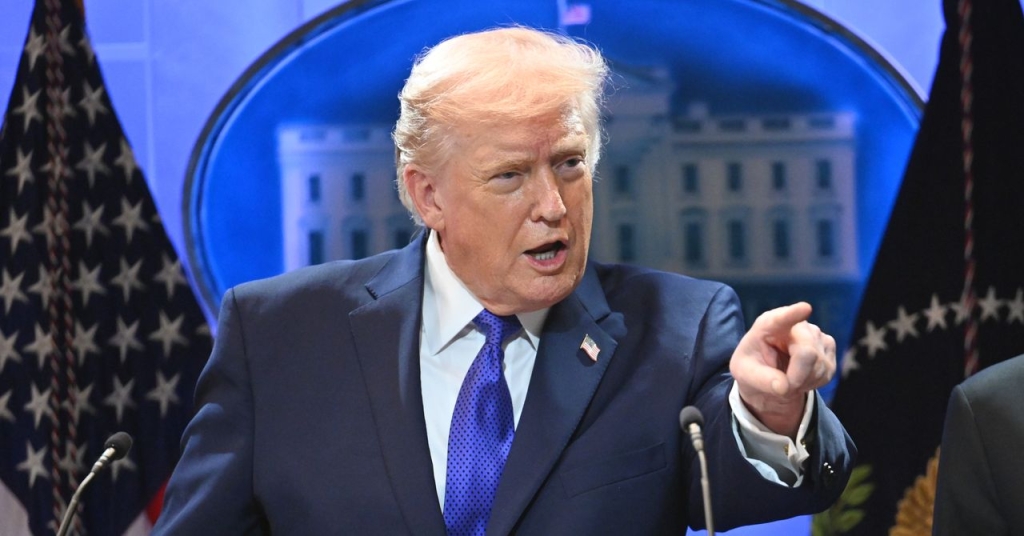
Trump Imposes 10% Tariff on Nearly All Imports After Supreme Court Ruling
In a bold move that has sent shockwaves through global markets, President Donald Trump has announced a sweeping new 10% tariff on nearly all imports entering the United States, just weeks after the Supreme Court struck down most of his previous trade levies.
The new policy, detailed in an executive order signed Friday evening, takes effect on February 24, 2026, and represents Trump’s latest attempt to reshape America’s trade relationships while navigating around legal constraints imposed by the nation’s highest court.
Legal Maneuvering and Strategic Exceptions
The president’s new approach leverages Section 122 of the Trade Act of 1974, a rarely-used provision that grants the executive branch authority to impose tariffs of up to 15% for 150 days when facing “large and serious” trade deficits. This legal framework allows Trump to bypass the restrictions that led to the Supreme Court’s recent decision.
However, the order includes several notable carve-outs. Critical minerals, beef and fruits, automobiles, pharmaceuticals, and products from Canada and Mexico are exempt from the new levies. These exceptions reflect both economic necessities and diplomatic considerations, particularly given the United States-Mexico-Canada Agreement (USMCA) that governs trade between the three North American partners.
Supreme Court Fallout and Presidential Reaction
The announcement comes in the immediate aftermath of a Supreme Court decision that overturned most of the tariffs Trump imposed under the International Emergency Economic Powers Act (IEEPA) last year. The 6-3 ruling found that while the IEEPA grants presidents broad emergency powers, those powers do not extend to imposing taxes or tariffs.
Trump’s reaction to the decision was visceral and personal. During Friday’s press conference, he launched into a scathing attack on the six justices who ruled against him, calling them “a disgrace to our nation.” When pressed about how his own Supreme Court nominees, Neil Gorsuch and Amy Coney Barrett, voted to overturn his policies, the president didn’t hold back: “They’re an embarrassment to their families.”
This unprecedented criticism of sitting Supreme Court justices marks a significant escalation in the ongoing tension between the executive branch and the judiciary, raising questions about the long-term implications for institutional respect and separation of powers.
Temporary Measure or Strategic Bridge?
Legal experts suggest the Section 122 tariffs may be more strategic than permanent. Gregory Husisian, a partner at Foley & Lardner LLP who has assisted over 100 companies with tariff refund requests, describes the new levies as “a bridge authority” that will expire after 150 days unless Congress extends them.
“This gives the administration time to prepare other forms of tariffs,” Husisian explains. “They can use this period to rush through trade investigations based on national security concerns or unfair trade practices, which are prerequisites for Section 301 and Section 232 tariffs.”
The distinction is crucial. While Section 122 tariffs can be implemented immediately, other forms of trade restrictions require extensive investigation and justification. By using Section 122 as a temporary measure, Trump can maintain pressure on trading partners while building cases for more permanent trade policies.
The Refund Conundrum
One of the most pressing questions following the Supreme Court decision concerns the fate of companies that paid tariffs now deemed illegal. The administration has been notably silent on whether these payments will be refunded, and Trump’s comments at the press conference offered little clarity.
“We are going to let that be decided in court,” the president said when asked about potential refunds, suggesting that affected companies may need to file lawsuits to recover their money. This approach could lead to a protracted legal battle, with some experts predicting the refund process could take anywhere from several months to more than two years.
The complexity of the refund process cannot be overstated. Companies would need to file formal complaints and calculate the exact amounts they believe they’re owed, while the government could contest these calculations. For businesses that paid millions or even billions in tariffs, this uncertainty creates significant financial planning challenges.
De Minimis Exemption Remains Suspended
In a separate executive order, the administration confirmed that the de minimis exemption—which previously allowed packages valued under $800 to enter the country tax-free—will remain suspended despite the IEEPA ruling. This decision maintains the status quo established last year when the exemption was first suspended.
The suspension of de minimis has already had significant impacts on the e-commerce sector, causing massive backlogs at border processing facilities and forcing price increases on platforms like Shein and Temu that relied heavily on this exemption for their business models.
Economic and Diplomatic Implications
The new tariffs arrive at a particularly sensitive moment for the global economy. With inflation still a concern and supply chains still recovering from pandemic disruptions, the additional costs imposed by tariffs could ripple through multiple sectors.
International reaction has been swift and largely negative. Trading partners are already threatening retaliatory measures, potentially setting the stage for another round of trade wars reminiscent of Trump’s first term. The European Union, China, and other major trading partners have indicated they’re reviewing their options for response.
A President’s Reading Comprehension and Other Asides
In a bizarre turn during the press conference, Trump veered off-topic multiple times, touching on subjects ranging from European “wokeness” to his disdain for Federal Reserve Chair Jerome Powell. The most unusual moment came when the president, discussing how the Supreme Court interprets the literal meaning of statutes, suddenly began boasting about his reading abilities.
“I read the paragraphs. I read very well. Great comprehension,” Trump declared, seemingly unprompted. This odd interjection, along with other tangential remarks, left many observers questioning the president’s focus and messaging discipline.
Looking Ahead: The 150-Day Countdown
As the February 24 implementation date approaches, businesses across America are scrambling to understand and prepare for the new tariffs. The 150-day window provided by Section 122 creates both urgency and uncertainty. Will Congress extend these tariffs? Will the administration use this time to implement alternative trade restrictions? How will trading partners respond?
The answers to these questions will shape not only Trump’s trade legacy but also the economic landscape for years to come. What’s clear is that the president remains committed to using tariffs as a central tool of economic policy, regardless of legal obstacles or international criticism.
The coming months will test whether this latest iteration of Trump’s trade agenda can withstand both legal scrutiny and economic reality, or whether it will become another chapter in the ongoing saga of America’s trade policy under the 47th president.
Tags: Trump tariffs, trade war, Section 122, Supreme Court ruling, import taxes, economic policy, international trade, de minimis suspension, trade deficit, presidential powers
Viral Sentences:
“This is economic warfare disguised as trade policy”
“The Supreme Court just handed Trump a roadmap to tariff everything”
“Trump’s reading comprehension is apparently better than his trade comprehension”
“These tariffs are coming whether you like it or not”
“The refund process could take longer than the tariffs themselves”
“Trump just found a loophole in the Supreme Court’s decision”
“International markets are bracing for impact”
“This is the trade equivalent of a mic drop”
“The 150-day countdown has begun”
“Trump’s trade policy is like a game of economic whack-a-mole”
“The de minimis exemption is dead, long live the de minimis exemption”
“Prepare for higher prices on almost everything”
“This isn’t just a tariff, it’s a declaration of economic independence”
“The trade wars are back and bigger than ever”
“Trump just proved that where there’s a will, there’s a tariff”
,

Leave a Reply
Want to join the discussion?Feel free to contribute!