
A Galaxy Composed Almost Entirely of Dark Matter Has Been Confirmed
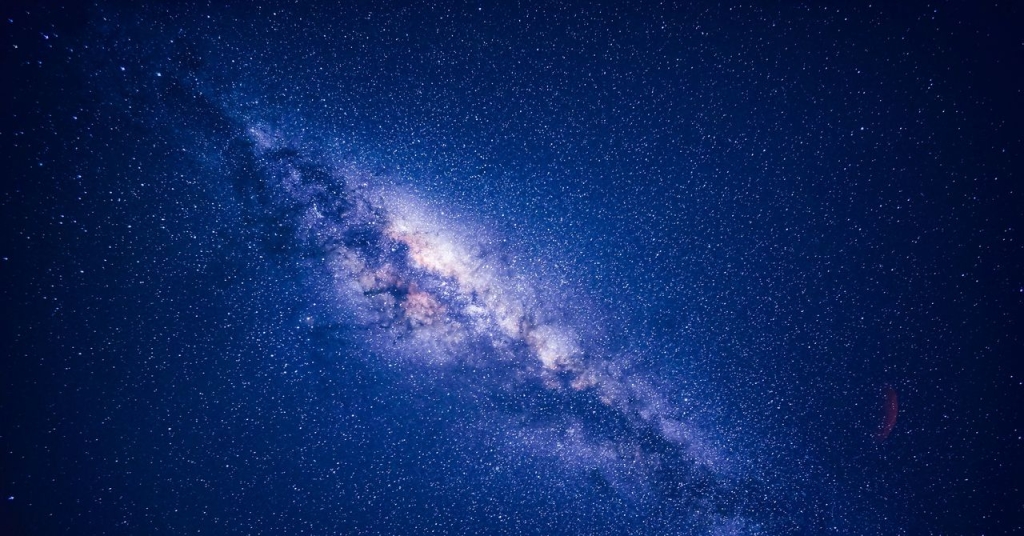
Astronomers have just uncovered what may be one of the most perplexing and extreme cosmic discoveries in recent memory: a galaxy so faint and sparse in visible stars that it appears to be made up of 99.9 percent dark matter, with only 0.1 percent of its mass consisting of conventional, observable matter. Located roughly 300 million light-years away in the Perseus galaxy cluster, this ghostly celestial object has challenged astronomers’ understanding of galaxy formation and the role of dark matter in the universe.
For years, the only hints of this galaxy’s existence were four tiny, isolated globular clusters—dense concentrations of stars that, from Earth’s perspective, looked like lone “neighborhoods” adrift in the void. These clusters were long assumed to be independent objects, but new research suggests they are in fact the brightest fragments of a much larger, hidden galaxy. The team behind the discovery has tentatively named it CDG-2, short for Candidate Dark Galaxy-2, and it represents the first galaxy ever detected solely through its most luminous parts.
The breakthrough came after an exhaustive multi-telescope analysis combining data from three of the most powerful observatories available: the Hubble Space Telescope, the Euclid Space Telescope, and the Subaru Telescope in Hawaii. Each instrument brought unique strengths—Hubble’s unparalleled resolution, Euclid’s wide-field survey capabilities, and Subaru’s deep imaging power. Yet even together, these observatories initially struggled to see the full picture. Only by carefully stacking and cross-referencing their data did the faint, underlying glow of CDG-2 become apparent.
The combined observations revealed an extremely diffuse halo of light surrounding the four globular clusters. This residual glow is the telltale signature of an entire galaxy that is so dim it had escaped detection by each telescope working alone. According to the researchers, the total luminosity of CDG-2 is equivalent to about 6 million suns, but here’s the astonishing part: the four globular clusters alone contribute roughly 16 percent of that light—an unusually high fraction for such a faint system. This suggests that the galaxy’s stars are not only sparse but also highly concentrated in these clusters, while the rest of the galaxy is essentially invisible.
The implications are profound. The researchers estimate that dark matter makes up between 99.94 and 99.98 percent of CDG-2’s total mass. In other words, this galaxy is almost entirely a dark matter halo, with only a sprinkling of stars to betray its presence. This extreme ratio is far beyond what’s seen in typical galaxies. For comparison, our own Milky Way is thought to be about 90 percent dark matter by mass, while the universe as a whole is about 85 percent dark matter and 27 percent dark matter in terms of total energy density.
Dark matter itself remains one of the greatest mysteries in astrophysics. It doesn’t emit, absorb, or reflect light, making it invisible to telescopes. Yet its gravitational influence is undeniable, shaping the motion of stars, the rotation of galaxies, and the large-scale structure of the cosmos. Without dark matter, galaxies like the Milky Way would fly apart; their visible matter alone isn’t enough to hold them together.
The discovery of CDG-2 pushes the boundaries of what astronomers thought possible. It’s a prime example of a “dark galaxy”—a system so dominated by dark matter that its visible component is almost negligible. While other dark galaxies have been theorized or hinted at, CDG-2 is the first to be confirmed through direct observation of its brightest parts. Its existence challenges existing models of galaxy formation, which typically assume a more balanced ratio of dark matter to visible matter.
For scientists, CDG-2 is more than just a curiosity. It offers a unique natural laboratory for studying dark matter’s properties and behavior. Because the galaxy’s visible matter is so minimal, any gravitational effects observed are almost certainly due to dark matter. This makes CDG-2 an ideal test case for theories about how dark matter interacts, how it clumps together, and how it influences the formation and evolution of galaxies.
The discovery also raises tantalizing questions about how such extreme systems form. Did CDG-2 once have more stars that were stripped away by gravitational interactions within the dense Perseus cluster? Or did it form in a region where gas was too sparse for significant star formation, leaving behind a nearly pure dark matter halo? Answering these questions could shed new light on the complex interplay between dark matter, gas, and star formation in the early universe.
As astronomers continue to probe the cosmos with ever more sensitive instruments, discoveries like CDG-2 suggest that the universe may be full of surprises—ghostly galaxies lurking in the shadows, waiting to be found. The hunt for dark matter and the search for the faintest, most elusive galaxies are now more intertwined than ever, promising new insights into the fundamental nature of the cosmos.
Tags: dark matter, dark galaxy, CDG-2, Perseus cluster, Hubble Space Telescope, Euclid Space Telescope, Subaru Telescope, galaxy formation, cosmic anomaly, invisible galaxy, globular clusters, extreme dark matter, astronomical discovery, WIRED en Español, astrophysics
Viral phrases: “99.9 percent dark matter,” “invisible galaxy discovered,” “cosmic ghost made of dark matter,” “galaxy detected only by its brightest fragments,” “dark matter dominates nearly all of this galaxy,” “astronomers uncover ghostly galaxy,” “extreme dark matter ratio stuns scientists,” “first galaxy found through its luminous parts alone,” “dark matter mystery deepens,” “universe’s most elusive galaxies revealed”
,

Leave a Reply
Want to join the discussion?Feel free to contribute!