
Should You Buy A CFMoto Or A Kawasaki? 5 Things To Keep In Mind
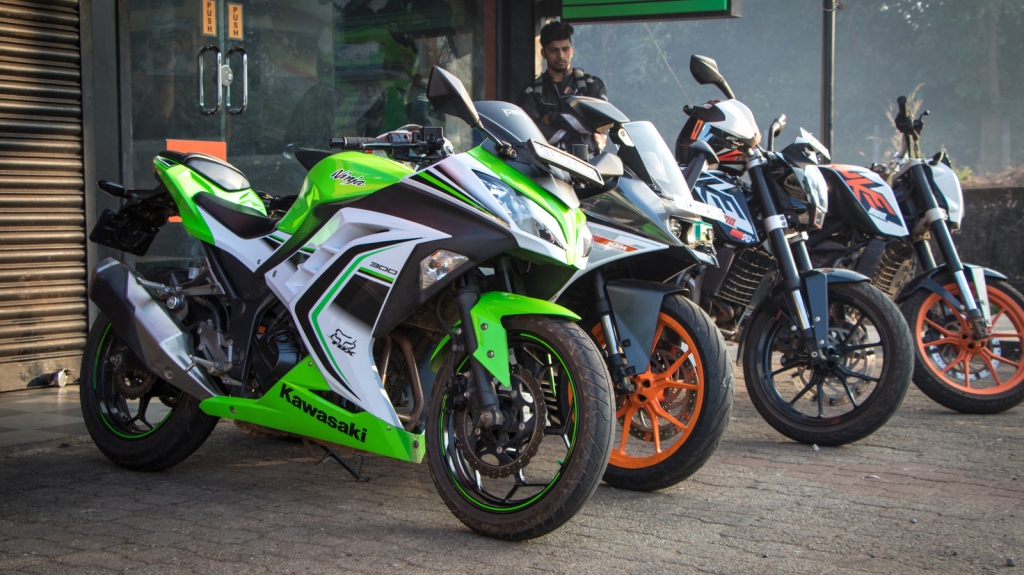
Kawasaki vs. CFmoto: Which Brand Should You Buy? 5 Things to Keep in Mind
Kawasaki Has More Brand Recognition
Kawasaki has more than half a century of history in the U.S., having first opened shop here in 1966; it’s why the brand has a cult following in this country that CFmoto currently cannot hold a candle to. Additionally, Kawasaki has produced some truly legendary bikes such as the Ninja H2R, H1 Mach III, and the Ninja ZX-10R, to name a few. Many of its models have also achieved great success in motorsport, with several iconic race victories going to Kawi bikes. Two key examples of this include the 2006 MotoGP Assen win and Jonathan Rea’s win streak in the 2010s.
On the other hand, CFmoto’s parent organization, Zhejiang Chunfeng Power Company, Limited, has only really been a corporate entity since 2003, even though it has existed in some form or the other since 1989. This means that CFmoto has had a lot less time to develop and make a name for itself, and hasn’t really had much success (or interest, really) in making headwinds into motorsport.
As a result, CFmoto has a lot less “street cred” than a Kawasaki equivalent, no matter how good the spec sheets for its motorcycles are. However, for buyers who are willing to look past that, CFmoto bikes can often prove to be an amazing deal in terms of price, as we’ll discuss further down. But first, we have to talk about parts and the dealer network of each brand.
Kawasaki Has a Better Dealer Network and Parts Support
It should be well-understood by those who buy CFmoto motorcycles that parts availability might be slightly more of an issue than for Kawasaki owners. This is to be expected, mainly on account of Kawasaki’s larger dealer network and the huge amount of aftermarket specialist support that Japanese legacy manufacturers have. However, CFmoto is quite aware that this is a major pain point for both new and existing customers. So, credit where credit is due — the company set up a dedicated website, CFmoto USA Parts, to help buyers access parts for their specific motorbike.
The site allows owners to filter by year of manufacture as well as by the model. You can also select your level of trim, although these are in the same drop down list as the other models, so it can be a bit confusing. CFmoto’s parts website also sells clothing, accessories, and, interestingly, diagrams for their part kits. In our opinion, every part kit should come with a free diagram.
All in all, it’s a step in the right direction. Still, Kawasaki has the lead in terms of dealerships with over a thousand in the U.S. versus CFmoto’s 600-ish. Having a dealer close by gives a lot of peace of mind to buyers, knowing that (in the worst case scenario), their vehicle won’t be left to rust in a driveway while waiting for parts to ship from the other side of the planet.
CFmoto Has Better Prices
It’s hardly a secret that the most attractive selling point for CFmoto bikes is the price. For example, the 300 SS and 300 NK, both of which are 300 cc sport bikes (with the SS getting a sporty bodykit, while the NK is a naked version) come in with a base MSRP of $4,599 and $4,199 respectively. This does not include a destination freight surcharge of $400; which brings the total out-the-door price for a NK to approximately $4,599 in early 2026. Now, compare that to the cheapest 300 cc bike from Kawasaki, which is the KLX300 with a 2026 base MSRP of $5,449 and a delivery fee of $650.
That brings the minimum entry point to a Kawasaki 300 cc bike to $6,099, which is $1,500 more than an equivalent offering from CFmoto. Readers should be advised that many CFmoto bikes come with a hidden “setup” fee that is undisclosed on the website at the time of writing. However, the value argument is basically unbeatable for CFmoto, as they undercut the competition on price rather aggressively — and this isn’t limited to Kawasaki alone. Other strategically priced CFmoto models include the Papio, which has a base MSRP of $3,299, the 450CL-C, with an MSRP of $5,799, and the CFX-2e, which comes in with a starting price of $1,599. All of these quoted MSRPs are accurate as of early 2026 and are also before destination and setup fees are tacked on, which can vary dealer to dealer.
CFmoto Has Few Aftermarket Options
When we say CFMoto doesn’t offer much in the way of aftermarket options, we mean both in terms of parts as well as in terms of modifications, or “mods,” as the community calls them. There are a few available for sure, from the likes of brands such as Akrapovic and Vandemon — but these pale in comparison to the ones offered for Kawasaki models. As with the other points we’ve made above, this probably comes down simply to a factor of demand in all likelihood.
Not as many people buy CFmoto bikes as they do Kawasaki bikes, and not everyone who buys a motorbike modifies it or looks for aftermarket parts. As a result, there’s less overall demand for aftermarket parts and mods for CFmoto motorcycles, which in turn means that companies are less incentivized to produce them. Many people don’t realize the long-winded process that manufacturing motorbike (or vehicle) parts can be.
First there’s the R&D, then the designing, followed by the machining, milling, and manufacturing, plus the marketing, storage, shipping, and installation. Adding to all that is the fact that since CFmoto is such a comparatively new brand, the company is likely to keep iterating on its designs; parts and mods made for one model year might very well not be carried over to the next. All that goes to say that Kawasaki will have much better support from the aftermarket, at least for the next few years, when compared to CFMoto.
Resale Value for CFmoto and Kawasaki Bikes Are Both Stable
Another concern that buyers have when it comes to their motorcycles — whether American, Japanese, or Chinese — is resale price. Now, as with most vehicles, motorcycles lose about 10% (sometimes more) of their purchase value the second they leave the dealer lot, and then continue to lose five to 10% each subsequent year, before values bottom out near year five. From then on, the value is dictated more by condition, maintenance, and mileage than anything else — but the first few years’ worth of depreciation is basically unavoidable.
Anything that doesn’t follow this formula is more of an exception than the norm. And so is the case with CFmoto and Kawasaki, as both bikes actually hold their values quite similarly in the first five years of purchase. This is, of course, excluding the halo Ninja H2R model from Kawi; that one actually holds its value quite well, all things considered.
Take the Kawasaki KLX300 and CFmoto 300SS from earlier as an example. When new, these bikes cost $5,449 and $4,599 before destination fees. In early 2026, Ninja units are selling for around $3,200; while CFmoto units from the same year are not far off, at the $3,000 price point. That’s not to say this trend will continue; it may very well be that as bikes get older and reliability becomes a concern, Kawi bikes will hold value better. Or, the narrative might be completely flipped; we don’t have enough data yet to make a proper claim in that regard. For now, stability in resale value is a feather in the caps of both brands.
Tags: CFmoto, Kawasaki, motorcycle comparison, Chinese bikes, Japanese bikes, dealer network, parts support, aftermarket options, resale value, brand recognition, motorsport, motorcycle prices, Ninja H2R, KLX300, 300SS, motorcycle buying guide, motorcycle technology, motorcycle trends, 2026 motorcycles, motorcycle depreciation, motorcycle modifications, motorcycle parts availability, motorcycle brand comparison, motorcycle value retention, motorcycle community, motorcycle street cred, motorcycle R&D, motorcycle manufacturing, motorcycle design, motorcycle innovation, motorcycle performance, motorcycle reliability, motorcycle maintenance, motorcycle mileage, motorcycle condition, motorcycle depreciation formula, motorcycle halo model, motorcycle legend, motorcycle cult following, motorcycle dealer support, motorcycle setup fees, motorcycle destination fees, motorcycle MSRP, motorcycle naked bike, motorcycle sport bike, motorcycle entry point, motorcycle hidden fees, motorcycle pricing strategy, motorcycle undercutting, motorcycle value argument, motorcycle aftermarket support, motorcycle iteration, motorcycle model year, motorcycle machining, motorcycle milling, motorcycle manufacturing process, motorcycle marketing, motorcycle storage, motorcycle shipping, motorcycle installation, motorcycle demand, motorcycle production, motorcycle parts manufacturing, motorcycle parts design, motorcycle parts R&D, motorcycle parts machining, motorcycle parts milling, motorcycle parts manufacturing process, motorcycle parts marketing, motorcycle parts storage, motorcycle parts shipping, motorcycle parts installation, motorcycle parts demand, motorcycle parts production, motorcycle parts iteration, motorcycle parts model year, motorcycle parts hidden fees, motorcycle parts setup fees, motorcycle parts destination fees, motorcycle parts MSRP, motorcycle parts naked bike, motorcycle parts sport bike, motorcycle parts entry point, motorcycle parts pricing strategy, motorcycle parts undercutting, motorcycle parts value argument, motorcycle parts aftermarket support, motorcycle parts iteration, motorcycle parts model year, motorcycle parts machining, motorcycle parts milling, motorcycle parts manufacturing process, motorcycle parts marketing, motorcycle parts storage, motorcycle parts shipping, motorcycle parts installation, motorcycle parts demand, motorcycle parts production, motorcycle parts iteration, motorcycle parts model year.
,

Leave a Reply
Want to join the discussion?Feel free to contribute!