
‘Narco-Submarine’ Carrying 4 Tons of Cocaine Captured by Mexico’s Navy
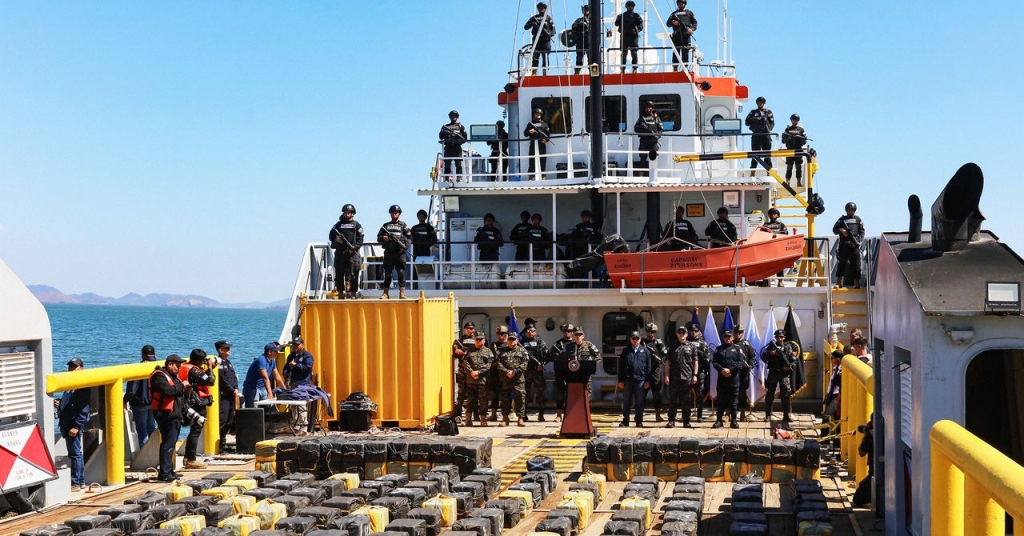
Mexican Navy Intercepts Narco-Submarine Carrying Nearly 4 Tons of Cocaine in Pacific Operation
In a dramatic maritime operation that underscores the escalating battle against transnational drug trafficking, the Mexican Navy (Semar) announced Thursday the seizure of a sophisticated semi-submersible vessel carrying an estimated four tons of cocaine in the Pacific waters off the coast of Colima state.
Precision Strike Against Maritime Drug Networks
The interception occurred near Manzanillo, a strategic Pacific port city, where naval forces deployed an impressive array of military assets including an ocean patrol vessel, two fixed-wing aircraft, two rotary-wing helicopters, and two interceptor boats. The operation, which resulted in the arrest of three suspects, represents a significant blow to the financial infrastructure of organized crime syndicates operating across the Eastern Pacific drug corridor.
“This operation adds to other seizures made during the past week, which have resulted in the confiscation of approximately 10 tons of cocaine,” stated Omar García Harfuch, Mexico’s Secretary of Security. “This represents a direct and multimillion-dollar blow to the financial structures of organized crime, preventing millions of doses from reaching the streets and protecting the safety of Mexican families.”
The Technical Marvel of Modern Narco-Submarines
The vessel intercepted—technically classified as a “narco-submarine” or low-profile vessel (LPV)—represents the cutting edge of maritime drug smuggling technology. These homemade craft, typically constructed from fiberglass and powered by diesel engines, are engineered to ride just below the waterline, making them extraordinarily difficult to detect by conventional radar and maritime surveillance systems.
Criminal organizations have invested millions in developing these vessels, which can carry payloads ranging from one to ten tons of narcotics while maintaining operational ranges that span thousands of nautical miles. The particular craft seized Thursday was carrying 179 individually packaged cocaine bricks, highlighting the industrial scale of modern drug trafficking operations.
A Transnational Battle Spanning Two Continents
Since early 2024, Semar has been tracking a sophisticated transnational network utilizing routes code-named “La Gorgona” and “El Desierto.” These maritime corridors originate in Ecuador and Colombia, passing through strategically important waypoints including the Galápagos Islands and Clipperton Island before making landfall at various points along Mexico’s Pacific coast, with Punta Tejupán in Michoacán serving as a primary destination.
An investigation by N+ Focus revealed that the ultimate destination for these shipments is the lucrative US drug market, where wholesale cocaine prices can reach $30,000 per kilogram, generating billions in annual revenue for criminal organizations.
Escalating Enforcement: Numbers Tell the Story
The scale of Mexico’s maritime drug interdiction efforts has intensified dramatically over the past two years. Between 2023 and early 2025, coordinated operations conducted by Semar have resulted in:
- Seizure of over 111 tons of cocaine
- Interdiction of 223 illegal maritime vessels
- Arrest of 476 suspected traffickers representing Ecuadorian, Mexican, Colombian, and Central American nationalities
This operation received critical intelligence support from US Northern Command and the Joint Interagency Task Force, demonstrating the deepening cooperation between American and Mexican security forces in combating maritime drug trafficking.
Political Pressure and Policy Shifts
The Trump administration has applied significant pressure on Mexico to intensify its fight against drug trafficking, particularly concerning synthetic opioids like fentanyl. Last year, concerns over fentanyl trafficking were leveraged as justification for imposing tariffs on Mexican imports, creating economic leverage to compel enhanced enforcement cooperation.
Mexican President Claudia Sheinbaum has responded with a more aggressive strategy against cartels, announcing increased surveillance of maritime routes and borders, along with the extradition of dozens of convicted drug traffickers to the United States. This represents a significant policy shift from previous administrations’ approaches to cartel enforcement.
The American Military Response: A New Frontier
Meanwhile, US President Donald Trump has pursued an unprecedented military campaign against organized crime, extending American military operations into international waters. According to The New York Times, Trump instructed the Pentagon to utilize military assets against Latin American cartels designated as terrorist organizations, representing the most aggressive strategy of his administration in this domain.
This policy shift has resulted in the first US military attack on a vessel suspected of transporting drugs from Venezuela to the United States. That incident occurred on September 2 in international waters of the southern Caribbean Sea, leaving 11 people dead, allegedly linked to the Tren de Aragua gang. Since then, dozens of similar attacks have been recorded in both the Caribbean and Pacific, with an estimated death toll of approximately 145 people.
The Economics of Maritime Drug Smuggling
The economics driving these maritime operations are staggering. A single semi-submersible carrying four tons of cocaine represents a potential wholesale value of $120 million in the US market. The operational costs—including vessel construction, crew salaries, fuel, and bribes—typically amount to less than 5% of the cargo’s potential value, making these high-risk ventures extraordinarily profitable even when accounting for interdiction losses.
Criminal organizations factor in the probability of interdiction when calculating their operations, treating seizures as a cost of doing business rather than a deterrent. This economic reality explains why trafficking groups continue to invest in increasingly sophisticated smuggling technologies despite mounting enforcement pressure.
Technological Arms Race at Sea
The ongoing battle between traffickers and law enforcement has evolved into a technological arms race. As detection capabilities improve through enhanced radar systems, satellite surveillance, and aerial reconnaissance, trafficking organizations respond by developing vessels with lower profiles, improved stealth characteristics, and advanced navigation systems.
Some narco-subs now incorporate features such as periscopes for surface navigation, GPS systems for precise route planning, and even rudimentary air purification systems allowing crews to remain submerged for extended periods. The sophistication of these vessels has led some law enforcement officials to describe them as “navy-quality” constructions, highlighting the professionalization of criminal maritime operations.
Regional Implications and Future Challenges
The seizure highlights the complex regional dynamics of drug trafficking, where Colombian and Ecuadorian producers, Mexican transporters, and American consumers are linked in a multi-billion-dollar supply chain. The pressure on maritime routes has led to increased diversification of smuggling methods, including the use of fishing vessels as cover, ultralight aircraft, and even unmanned underwater vehicles in experimental phases.
As enforcement pressure intensifies in traditional smuggling corridors, trafficking organizations are likely to continue innovating, potentially shifting to alternative routes or developing new concealment technologies. The seizure of this narco-submarine, while significant, represents just one battle in an ongoing conflict that continues to evolve with technological and geopolitical developments.
This story originally appeared in WIRED en Español and has been translated from Spanish.
Tags
Mexican Navy, Narco-submarine, Drug seizure, Cocaine trafficking, Maritime interdiction, Pacific drug routes, Semar operation, Organized crime, Fentanyl crisis, US-Mexico security cooperation, Trump administration policy, Cartel warfare, Maritime surveillance, Drug economics, Transnational crime, Low-profile vessel, Eastern Pacific corridor, Claudia Sheinbaum strategy, Military operations, International waters
Viral Sentences
Four tons of cocaine seized in Pacific narco-submarine bust – Mexico’s biggest maritime drug haul this year
Mexican Navy deploys full military arsenal: helicopters, aircraft, and patrol boats in dramatic Pacific interception
The $120 million narco-sub: Inside the sophisticated vessels built to beat radar and smuggle drugs across oceans
Trump’s deadly Caribbean campaign: US military strikes leave 145 dead in international waters against drug trafficking vessels
From Ecuador to Mexico to US: The billion-dollar maritime cocaine pipeline fueling America’s addiction crisis
Homemade submarines worth millions: How cartels are winning the technological arms race against naval forces
Mexican President Claudia Sheinbaum escalates war on cartels with extraditions and maritime crackdowns
US pressure tactics: How fentanyl trafficking concerns became leverage for Trump’s tariffs on Mexican imports
The Galápagos Connection: How remote islands became waypoints in the global cocaine trafficking network
111 tons of cocaine seized, 476 arrests: Mexico’s maritime drug war by the numbers
Narco-subs with periscopes and air systems: The navy-quality vessels built by criminal engineers
Caribbean Sea becomes battlefield as US military conducts operations against Venezuelan drug vessels
The $30,000 per kilogram reality: Economics driving the relentless innovation in drug smuggling technology
From fishing boats to submarines: How trafficking organizations adapt to mounting enforcement pressure
The death toll rises: 145 killed in US military operations targeting suspected drug trafficking vessels
,


Leave a Reply
Want to join the discussion?Feel free to contribute!