
This Extreme Radiation-Resistant Organism Evolved a Remarkable Ability : ScienceAlert
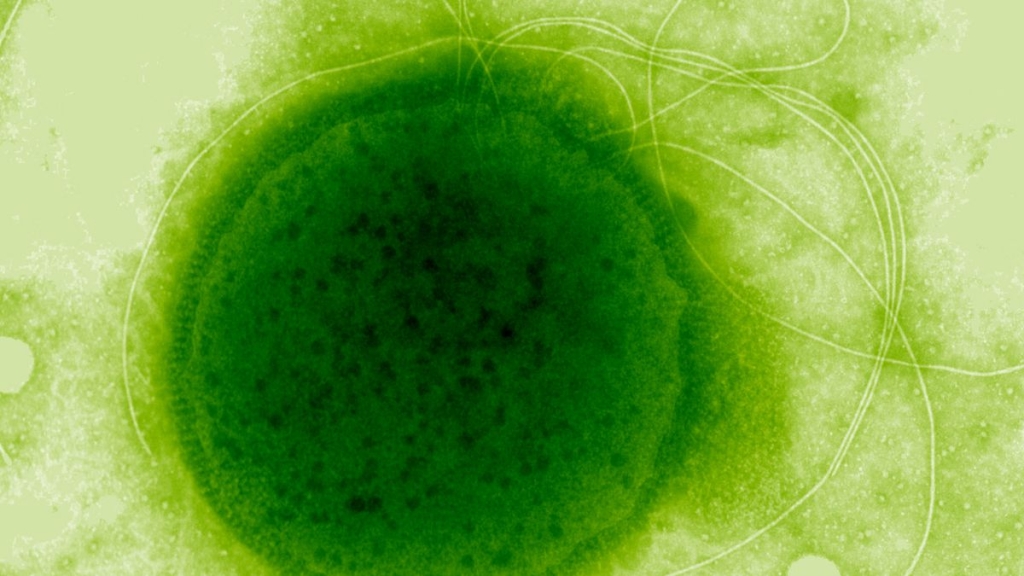
Microbe from Deep-Sea Vents Survives Radiation 6,000 Times Stronger Than Lethal to Humans
In the crushing depths of the Guaymas Basin, 2,600 meters beneath the Gulf of California, superheated fluids erupt from hydrothermal vents, creating an environment of extreme heat, crushing pressure, and chemical volatility. It’s here, in this lightless abyss, that scientists have discovered one of nature’s most astonishing survivors: Thermococcus gammatolerans, an archaeon capable of withstanding radiation doses 6,000 times higher than what would kill a human within weeks.
First identified in the late 1990s, T. gammatolerans stunned researchers when lab tests revealed it could survive a staggering 30,000 grays of gamma radiation—a dose that would obliterate most life on Earth. For context, just 5 grays is enough to be fatal to humans. Yet this microbe, thriving in the scalding, sulfur-rich waters near hydrothermal vents, shrugged off radiation levels that exist nowhere in its natural habitat.
The mystery deepened when scientists sequenced its genome. Unlike other radiation-resistant organisms, T. gammatolerans doesn’t carry an unusually large arsenal of DNA repair tools. Its genetic toolkit is surprisingly standard, leaving researchers puzzled about the source of its resilience.
Further experiments revealed that while gamma rays do damage its DNA, the archaeon limits oxidative stress—damage caused by free radicals unleashed by radiation—far better than expected. Within an hour of exposure, much of the harm is repaired, thanks to repair enzymes always on standby.
Scientists believe the answer lies in the microbe’s extreme environment. Life at hydrothermal vents means constant exposure to heat, chemical stress, and reactive molecules—conditions that also damage DNA. The very systems that allow T. gammatolerans to endure boiling volcanic chemistry may have inadvertently equipped it to survive radiation levels that would annihilate most other organisms.
This isn’t a case of evolutionary specialization. T. gammatolerans never evolved to resist radiation; it evolved to survive the hellish conditions of deep-sea vents. Its radiation resistance is a remarkable byproduct—a testament to the concept of “survival of the good enough.” The systems that made it fit for life in the abyss also made it extraordinarily resilient to radiation.
In a world where extremophiles push the boundaries of life’s possibilities, T. gammatolerans stands out as a reminder that nature’s solutions are often unexpected—and sometimes, astonishingly powerful.
Tags:
Deep-sea microbe, radiation resistance, hydrothermal vents, extremophile, Thermococcus gammatolerans, gamma radiation, DNA repair, Guaymas Basin, survival of the good enough, evolutionary marvel
Viral Phrases:
“Survives radiation 6,000 times stronger than lethal to humans”
“Microbe from the abyss shrugs off deadly radiation”
“Nature’s unexpected radiation warrior”
“How a deep-sea microbe became a radiation superhero”
“The microbe that defies death itself”
“From boiling vents to radiation resistance—nature’s hidden genius”
“Survival of the good enough: The microbe that accidentally became indestructible”
,


Leave a Reply
Want to join the discussion?Feel free to contribute!