
Tesla loses bid to overturn $243M Autopilot verdict
Tesla Loses Bid to Overturn $243 Million Autopilot Death Verdict
In a major legal setback for Tesla, a federal judge has upheld a staggering $243 million jury verdict that found the electric automaker partially responsible for a fatal 2019 crash involving its controversial Autopilot driver assistance system. The ruling, delivered by U.S. District Judge Beth Bloom, delivers a resounding blow to Tesla’s ongoing efforts to shield itself from liability in cases involving its advanced driver-assistance technologies.
The case centers on a tragic incident that occurred in Broward County, Florida, where 18-year-old Naibel Benavides lost her life and 22-year-old Dillon Angulo suffered critical injuries when a Tesla Model S, operating under Autopilot, collided with a parked semi-truck on a highway. The crash sparked a complex legal battle that has now culminated in one of the largest verdicts ever awarded in an autonomous vehicle-related case.
Judge Bloom’s 17-page decision represents a comprehensive rejection of Tesla’s arguments for a new trial or judgment notwithstanding the verdict (JNOV). The judge’s ruling emphasizes that Tesla’s grounds for relief were essentially identical to arguments already considered and dismissed during the trial proceedings. “The grounds for relief that Tesla relies upon are virtually the same as those Tesla put forth previously during the course of trial and in their briefings on summary judgment — arguments that were already considered and rejected,” Judge Bloom wrote in her decision.
The jury’s original verdict, delivered in August 2025, assigned blame in a nuanced manner: two-thirds of the fault was attributed to the human driver, while one-third was assigned to Tesla itself. This apportionment reflects the complex nature of crashes involving semi-autonomous systems, where both human and technological factors contribute to accidents. Notably, the jury determined that punitive damages were warranted only against Tesla, not the driver, suggesting they found the company’s conduct particularly egregious.
Tesla’s legal team had mounted an aggressive defense, arguing that the driver bore full responsibility for the crash. Their position centered on the assertion that the driver failed to maintain proper vigilance and attention while using Autopilot, as required by the system’s terms of use. The company contended that its technology includes clear warnings and limitations that users must acknowledge before activation.
The case has significant implications for the broader autonomous vehicle industry and raises important questions about the legal framework surrounding semi-autonomous driving systems. As vehicles become increasingly capable of handling driving tasks, the lines between human and machine responsibility continue to blur, creating new challenges for courts and regulators.
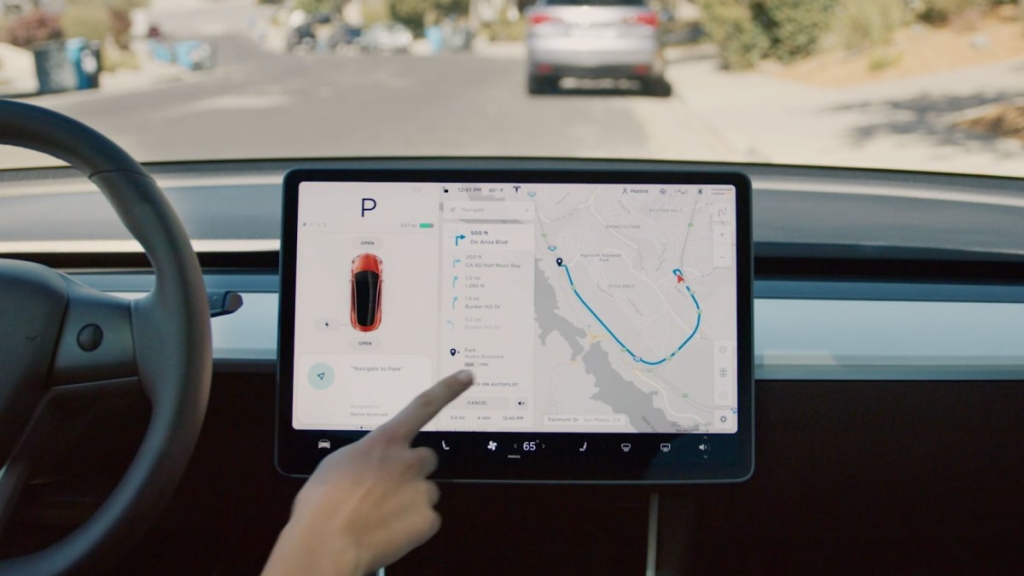
Tesla’s Autopilot system, while marketed as a sophisticated driver assistance feature, requires constant human supervision and intervention. The system uses a combination of cameras, radar, and ultrasonic sensors to navigate roads, but explicitly requires drivers to keep their hands on the wheel and remain attentive. The company has consistently maintained that its technology is not fully autonomous and that drivers must be prepared to take control at any moment.
The verdict against Tesla is particularly noteworthy because it represents a rare instance where a jury has assigned significant liability to an automaker for the performance of its driver assistance technology. Previous cases involving Tesla’s Autopilot have generally resulted in settlements or findings that placed primary responsibility on drivers.
Legal experts suggest that this ruling could set a precedent for future cases involving advanced driver assistance systems (ADAS) and potentially influence how automakers design, market, and implement these technologies. The decision may also impact insurance practices and regulatory approaches to semi-autonomous vehicles.
Tesla has faced increasing scrutiny over its Autopilot and Full Self-Driving (FSD) systems in recent years. The National Highway Traffic Safety Administration (NHTSA) has investigated multiple crashes involving Tesla vehicles operating under these systems, and consumer advocacy groups have called for stricter oversight of the company’s marketing practices.
The company’s approach to autonomous driving technology has been characterized by a philosophy of rapid deployment and iterative improvement through real-world usage. This strategy, while innovative, has also exposed Tesla to significant legal and reputational risks as the technology encounters edge cases and rare but serious failure modes.
The Florida crash that led to this verdict involved circumstances that have been implicated in several other Tesla accidents: the vehicle’s cameras failing to detect a stationary object in its path while traveling at highway speeds. This particular failure mode has become a focus of both regulatory investigations and internal Tesla discussions about system limitations.
As the autonomous vehicle industry continues to evolve, cases like this one highlight the complex interplay between technological innovation, human behavior, and legal accountability. The $243 million verdict sends a clear message that courts are willing to hold technology companies responsible when their systems contribute to serious accidents, even when human error is also a factor.
Tesla has not yet announced whether it plans to appeal Judge Bloom’s decision to the Eleventh Circuit Court of Appeals. Given the significant financial implications and the precedent-setting nature of the case, an appeal seems likely. However, the company faces an uphill battle, as Judge Bloom’s decision demonstrates a thorough consideration of the evidence and arguments presented.
The outcome of this case may influence how other automakers approach the development and deployment of driver assistance technologies. Companies may become more cautious in their marketing claims and more conservative in the capabilities they enable, potentially slowing the pace of autonomous vehicle development but reducing legal exposure.
For victims’ families and safety advocates, the verdict represents a measure of justice and a warning to companies that profit from autonomous technologies. It suggests that the legal system is beginning to grapple with the unique challenges posed by vehicles that can drive themselves, even if imperfectly.
As this case moves forward, either through appeal or potential settlement discussions, it will continue to shape the conversation around autonomous vehicle liability and responsibility. The intersection of cutting-edge technology and traditional legal principles remains a dynamic and evolving frontier, with this Florida crash serving as a pivotal moment in that ongoing dialogue.
The automotive industry, legal community, and technology sector will be watching closely as Tesla decides its next steps. Whatever the outcome, this case has already left an indelible mark on the landscape of autonomous vehicle development and regulation, reminding all stakeholders that innovation must be balanced with safety and accountability.
tags
Tesla #Autopilot #AutonomousVehicles #SelfDrivingCars #LegalBattle #AutomotiveSafety #TechnologyLiability #DriverAssistance #FloridaCrash #JuryVerdict #PunitiveDamages #TechNews #AutomotiveIndustry #LegalPrecedent #NHTSA #AdvancedDriverAssistance #AutonomousTechnology #TechLaw #AutomotiveInnovation #SafetyTechnology
viral
Tesla loses $243M verdict Autopilot death case
Judge rejects Tesla’s bid to overturn Autopilot verdict
Tesla Autopilot held partially responsible for fatal crash
$243 million jury award against Tesla stands
Autopilot liability case sets precedent for autonomous vehicles
Tesla faces major legal setback in Autopilot death trial
Florida crash verdict impacts autonomous vehicle industry
Tesla’s legal battle over Autopilot responsibility continues
Judge upholds jury decision in Tesla Autopilot case
Autonomous vehicle liability questions raised by Tesla verdict
Tesla Autopilot system under scrutiny after $243M verdict
Legal experts weigh in on Tesla Autopilot liability case
Automotive industry watches Tesla Autopilot verdict closely
Tesla’s approach to autonomous tech faces legal challenges
Driver assistance technology liability becomes clearer after Tesla case
,
Leave a Reply
Want to join the discussion?Feel free to contribute!