
The splinternet: how online shutdowns are getting cheaper and easier to impose | Censorship
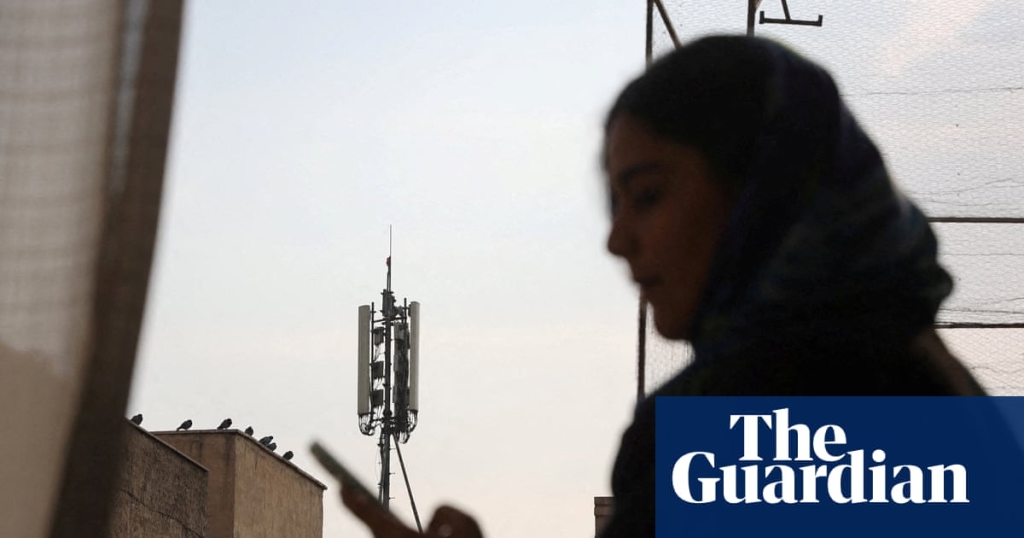
The Splinternet Is Here: How Iran’s Blackout Reveals a Terrifying Future for the Global Internet
When Iran plunged into darkness in January, the world watched in horror as the government systematically severed its citizens from the global internet. But what emerged from the blackout wasn’t complete digital isolation—it was something far more insidious: a carefully curated, government-controlled version of the internet that kept people just connected enough to prevent total chaos while ensuring they remained completely cut off from the truth.
During those critical weeks, Iranians found themselves trapped in a digital prison disguised as connectivity. They could still message family members through government-monitored applications, watch carefully filtered videos on Farsi-language platforms, read state-approved news, and use local navigation services. But the moment they tried to access international headlines about the thousands being killed in the streets, or attempt to share evidence of military vehicles crushing protesters or family members being dragged from homes and executed, the digital walls slammed shut.
This wasn’t just another internet shutdown—it was the blueprint for the future of global digital control.
The Death of the Global Internet
For nearly two decades, the United States championed a vision of the internet as a global commons—a decentralized network where information flowed freely across borders, where a fact discovered in London was equally accessible in Delhi, Johannesburg, or São Paulo. This vision was built on a foundation of sophisticated circumvention tools developed by organizations worldwide, making it extraordinarily difficult and expensive for governments to completely isolate their populations.
Those days are over.
Today, more than half of Russia’s regions operate on severely restricted, government-approved internet versions through mobile phones. China’s “great firewall” blocks most of the global internet, including major platforms like Google and the Guardian. Myanmar’s military junta has experimented with targeted internet shutdowns, as have authorities in Afghanistan and Pakistan.
The infrastructure that once protected digital freedom is crumbling. US funding for global internet freedom initiatives has been effectively gutted or redirected toward politically motivated efforts to undermine international tech regulation. Meanwhile, censorship technologies are becoming exponentially more sophisticated and are being aggressively marketed to authoritarian regimes worldwide.
Chinese companies are selling devices that give governments like Pakistan, Myanmar, and Ethiopia unprecedented granular control over their digital borders. These aren’t blunt instruments that simply flip an “off” switch—they’re surgical tools that can selectively filter, monitor, and manipulate information flows with terrifying precision. Iran’s current shutdown is believed to be built on similar technology.
The Perfect Storm of Digital Authoritarianism
The convergence of technological advancement and political regression has created what experts call the “perfect storm” for digital authoritarianism. Censorship tools are becoming more powerful at precisely the same moment that programs designed to counter them have been decimated.
“When governments want to avoid scrutiny for how many people they’re killing in their streets, they’ll shut the internet down,” explains a former US official who worked on digital freedom initiatives. This isn’t hyperbole—it’s the grim reality playing out in real-time across multiple authoritarian regimes.
Russia has been attempting to create its own “sovereign internet” for years, and the technical infrastructure is finally catching up to the ambition. Other authoritarian regimes are watching closely, learning from both successes and failures. What was once prohibitively expensive and technically complex is becoming increasingly affordable and achievable.
The European Dilemma
As the United States retreats from its role as defender of the open internet, eyes are turning to Europe. Digital freedom activists in Iran and other authoritarian states are approaching European institutions, hoping the EU might fill the funding gap left by US withdrawal and continue supporting anticensorship technologies.
But the calculus is complicated. Europe faces numerous pressing challenges—defense spending, economic stability, migration crises—and funding digital freedom tools might seem like a marginal concern by comparison. Yet the stakes couldn’t be higher.
The information environment that has allowed this article to be written and read by people across the globe is under existential threat. The shared factual foundation that enables global discourse, journalism, and human rights advocacy is being systematically dismantled.
The Infrastructure of Control
Iran’s ability to execute such a sophisticated shutdown wasn’t accidental—it was the result of years of deliberate infrastructure nationalization. The country spent years consolidating its digital infrastructure under state control, ensuring that all data flowed through government-accessible channels. This wasn’t just about censorship; it was about creating the technical capability for complete information control.
This model is being replicated worldwide. Governments from Europe to Asia are promoting concepts of “sovereign data,” “sovereign AI,” and in some cases, “sovereign internet.” The rationale often involves legitimate concerns about data privacy and protection from foreign surveillance, particularly given the increasingly authoritarian tendencies of US tech platforms that currently control much of the world’s data infrastructure.
But this approach contains a dangerous paradox. In attempting to protect citizens from one form of potential tyranny, it may be creating the perfect conditions for another. Nationalizing data infrastructure makes it exponentially easier for authoritarian regimes to implement comprehensive surveillance and control when they inevitably rise to power.
The Technical Reality
Building a splinternet isn’t technically simple. The internet was designed as a decentralized, interdependent network specifically to resist centralized control. But as Iran’s example demonstrates, the technical barriers are falling rapidly.
The key lies in creating parallel infrastructure that can operate independently while maintaining the illusion of connectivity. This involves sophisticated routing technologies, domestic content delivery networks, localized DNS systems, and most critically, the ability to filter and monitor all traffic at the network perimeter.
What makes this particularly dangerous is that it doesn’t require complete disconnection. Countries can maintain limited external connectivity for economic purposes while completely controlling the information environment for their citizens. This “partial splinternet” approach is far more sustainable and less likely to provoke international backlash than complete isolation.
The Global Implications
The fragmentation of the internet represents more than just a technical challenge—it’s a fundamental shift in how human civilization shares and processes information. For the first time in history, we’re witnessing the deliberate creation of parallel information universes, each with its own facts, narratives, and realities.
This fragmentation has profound implications for everything from scientific collaboration to human rights advocacy to global commerce. When different populations operate from fundamentally different sets of facts, the basis for international cooperation erodes. When governments can completely control the information environment within their borders, accountability becomes impossible.
The current trajectory suggests we’re moving toward a world where the internet becomes less like a global commons and more like a collection of national intranets, each filtered through the ideological lens of its controlling regime. The technical capability for this transformation exists today, and the political will to implement it is growing.
The Fight Ahead
Digital freedom activists aren’t giving up. Organizations worldwide are developing new tools and strategies to circumvent censorship, from sophisticated VPN technologies to decentralized mesh networks that can operate independently of traditional internet infrastructure. But these efforts face an uphill battle against increasingly sophisticated and well-funded opposition.
The question isn’t whether the splinternet can be technically defeated—it’s whether there’s sufficient political will to fund and support the ongoing arms race between censors and circumventors. As one activist put it: “The technology exists to maintain an open internet. What’s missing is the commitment to defend it.”
As we stand at this digital crossroads, the choices made in the coming years will determine whether the internet remains a tool for global connection and human progress, or becomes just another instrument of state control and population management. The splinternet isn’t just a technical possibility anymore—it’s a present reality, and it’s spreading faster than most people realize.
Tags: #Splinternet #InternetFreedom #DigitalAuthoritarianism #IranBlackout #CensorshipTechnology #CyberSovereignty #InternetShutdown #DigitalRights #InformationControl #GlobalInternet #TechCensorship #DigitalDivide #AuthoritarianTech #InternetFragmentation #DigitalFreedom #CyberControl #InformationWarfare #TechPolitics #DigitalSovereignty #InternetGovernance
Viral Sentences:
- The internet is breaking apart before our eyes
- Iran showed us the future of digital control
- Your internet might not be the same as someone else’s
- The global commons is becoming a collection of national prisons
- Digital freedom is becoming a luxury good
- The tools to control information are getting smarter while our defenses are getting weaker
- We’re witnessing the death of the open internet in real-time
- The splinternet isn’t coming—it’s already here
- Every internet shutdown is a practice run for something bigger
- The technology exists to maintain freedom, but the will is disappearing
- Digital authoritarianism is the new normal
- Your data might be safe from foreign spies but completely accessible to your own government
- The internet was supposed to connect us—now it’s dividing us
- We’re creating parallel information universes where facts don’t cross borders
- The fight for digital freedom is the fight for the future of truth itself
,


Leave a Reply
Want to join the discussion?Feel free to contribute!