
This Strange Spiky Dinosaur Had Skin Unlike Anything We’ve Ever Seen : ScienceAlert
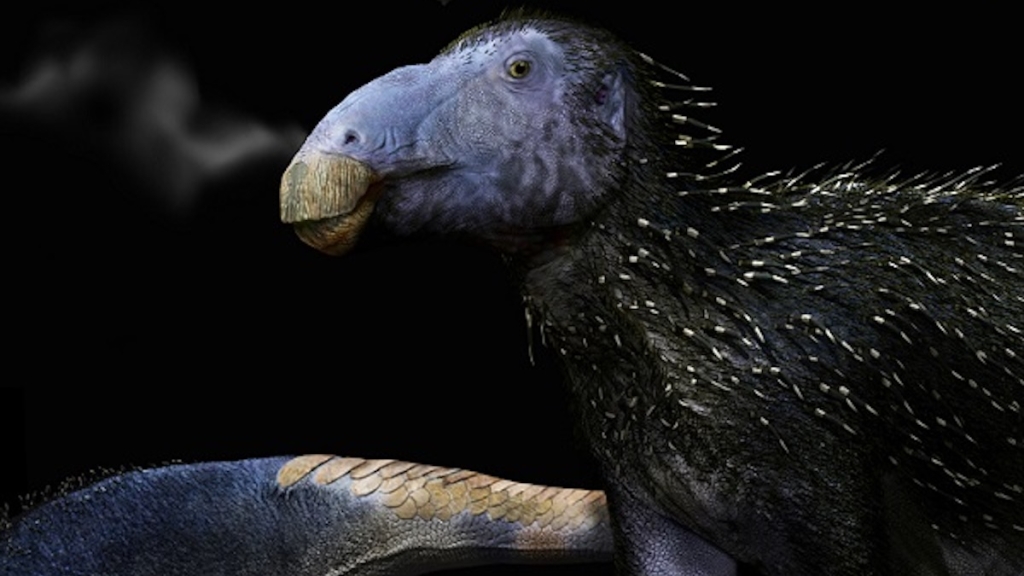
Scientists Discover Dinosaur with Spiky Porcupine-Like Skin—A First in Paleontology
In a groundbreaking discovery that’s sending shockwaves through the paleontological community, researchers have unearthed a dinosaur species with a skin covering unlike anything ever seen before in the fossil record. Meet Haolong dongi—the “spiny dragon” that’s rewriting everything we thought we knew about dinosaur integument.
A Jurassic Punk Rock Star
Picture this: a dinosaur that looks like it’s wearing a fur coat made entirely of porcupine quills. That’s Haolong in a nutshell. While most of its iguanodontian relatives sported typical scaly skin, this remarkable creature evolved something completely different—hollow spikes covering its neck, back, and sides.
The specimen, discovered in northeastern China and dating back approximately 125 million years to the Early Cretaceous period, is nothing short of extraordinary. What makes this find even more incredible is that we’re not just looking at bones here—the skin itself is preserved in stunning detail, giving us an unprecedented glimpse into dinosaur biology.
The Spiky Details That Will Blow Your Mind
Let’s talk about these spikes because they’re seriously weird. The arrangement is fascinating: thousands of tiny spikes, each about 2-3 millimeters long, run parallel to each other and all point toward the dinosaur’s rear. But here’s where it gets interesting—interspersed among these miniature spikes are medium-sized ones measuring 5-7 millimeters, and scattered throughout are a few massive spikes stretching over 44 millimeters long.
Imagine walking through a Cretaceous forest and seeing this thing lumber by—it would look like nature’s own punk rocker, covered in an organic mohawk that runs the length of its body.
The Mystery of the Juvenile Specimen
Here’s where things get complicated. The fossil represents a nearly complete skeleton measuring 2.45 meters (8 feet) long, but analysis of the bones reveals something intriguing: this was a juvenile when it died. This raises a fascinating question that paleontologists are still grappling with—did Haolong lose its spikes as it matured, or did adults retain this bizarre feature throughout their lives?
It’s like finding a baby hedgehog and wondering if adult hedgehogs exist. The implications are huge for understanding dinosaur growth patterns and evolutionary strategies.
Not Just Another Feather Imposter
At first glance, you might think these spikes are just another example of protofeathers—those early feather-like structures that many dinosaurs sported. After all, we’ve found plenty of feathered dinosaurs from this same time period and region. But the researchers are adamant: these are something entirely different.
Protofeathers had already been well-established in dinosaur evolution by the time Haolong appeared on the scene. These spikes represent a completely independent evolutionary experiment in skin covering—nature trying something new, something that hadn’t been seen before and hasn’t been seen since.
The Great Spike Debate: What Were They For?
Now we get to the million-dollar question: what was the purpose of these bizarre spikes? The research team has run through every possibility, and the truth is, we still don’t know for certain. But let’s explore the fascinating hypotheses:
Could They Have Been for Warmth?
Some dinosaurs in Haolong‘s environment, like Yutyrannus (which literally means “feathered tyrant”), wore thick feather coats that probably helped regulate body temperature in the relatively cool climate of Early Cretaceous China. Could Haolong‘s spikes have served a similar purpose?
The researchers say probably not. While the spikes might have provided some insulation, they likely weren’t dense enough to make a significant difference in temperature regulation. It’s like wearing a jacket made of cocktail toothpicks—technically better than nothing, but not exactly practical for surviving a Chinese winter.
Visual Display or Camouflage?
Many animals use unusual skin features for communication or concealment. Could Haolong have used its spikes to attract mates or blend into its environment? Unfortunately, no pigment cells were found preserved with the specimen, so we can’t determine if the spikes had any coloration that might support this theory.
It’s frustrating—we’re left imagining a dinosaur that might have been brightly colored, patterned, or camouflaged, but we have no way of knowing. Paleontologists are left with a beautifully preserved fossil that still manages to keep some of its secrets.
Sensory Superpowers?
Some modern lizards and snakes have tiny spinule structures that help them sense touch and vibrations. The spikes on Haolong look a little similar to these structures at first glance. But upon closer examination, the researchers determined that these spikes were too large and didn’t connect to the scales in the right way to function as sensory organs.
It’s like finding a weird organ in a fossil and wondering if it was a nose or an ear, only to discover it’s neither—it’s something completely different that we don’t have a modern equivalent for.
The Most Likely Answer: Predator Defense
After considering all possibilities, the research team believes the most plausible explanation is that these spikes evolved as a defense mechanism against predators. And it makes perfect sense when you consider Haolong‘s environment.
The Early Cretaceous of northeastern China was home to numerous relatively small carnivorous dinosaurs. For a herbivorous dinosaur like Haolong, evolving some kind of deterrent against these predators would have been a significant survival advantage.
But here’s the clever part: these spikes probably weren’t designed to kill or seriously injure predators. Instead, they were likely meant to be annoying enough to make Haolong an unappealing meal. Think of it like nature’s version of a “Do Not Eat” label.
“The defences did not necessarily provide impenetrable protection against theropod teeth and claws, but they made the prey more difficult and time-consuming to kill and ingest and consequently reduced the likelihood of successful ingestion,” the researchers explain in their paper published in Nature Ecology & Evolution.
It’s the evolutionary equivalent of being the least tasty item on the menu—predators would likely move on to easier prey rather than waste time and energy trying to eat something covered in annoying spikes.
A Window into Dinosaur Diversity
What makes Haolong truly remarkable isn’t just its weird spikes—it’s what those spikes represent about dinosaur evolution as a whole. This discovery proves that dinosaurs were experimenting with body coverings in ways we never imagined.
We already knew dinosaurs were diverse: some were scaly, some had bony armor plates, others were covered in feathers. Now we can add “porcupine-like spikes” to that list. It’s a reminder that evolution is endlessly creative, constantly trying new solutions to survival challenges.
The Technical Marvel of Preservation
Let’s take a moment to appreciate just how incredible this fossil is from a preservation standpoint. Finding dinosaur skin impressions is rare enough, but finding skin with this level of detail—preserved spikes in their original positions, showing their hollow structure—is extraordinary.
The specimen includes non-overlapping scales on the tail as well, giving us a complete picture of Haolong‘s unique integumentary system. It’s the kind of fossil that paleontologists dream about finding but rarely do.
What This Means for Dinosaur Science
The discovery of Haolong opens up new avenues of research and raises fascinating questions:
- How many other dinosaur species might have had unusual skin coverings that simply haven’t been preserved?
- Could similar spike structures have evolved independently in other dinosaur groups?
- What does this tell us about the evolutionary pressures in Early Cretaceous China?
This find reminds us that despite over two centuries of dinosaur research, we’re still making fundamental discoveries about these ancient creatures. The dinosaur world still has secrets to reveal.
The Bigger Picture
Haolong dongi isn’t just another weird dinosaur—it’s a testament to the incredible diversity of life that existed during the Mesozoic Era. It shows us that dinosaurs weren’t just variations on a theme of “big lizard with teeth.” They were experimenting with body plans, skin coverings, and survival strategies in ways that continue to surprise us.
This discovery also highlights the importance of continued fossil exploration, particularly in regions like northeastern China that have yielded so many extraordinary specimens. Who knows what other surprises are waiting to be uncovered in the rocks of the Early Cretaceous?
The Research Behind the Discovery
The study, published in the prestigious journal Nature Ecology & Evolution, represents years of careful analysis by an international team of paleontologists. The lead researchers include experts from various institutions who brought together their knowledge of dinosaur anatomy, evolutionary biology, and paleoecology to unravel the mysteries of Haolong.
Their work involved not just describing the fossil, but also conducting detailed comparisons with other dinosaur species, analyzing the structure of the spikes, and considering the ecological context in which Haolong lived.
Looking to the Future
As we continue to study Haolong, new questions will undoubtedly emerge. Advanced imaging techniques might reveal more about the internal structure of the spikes. Comparative studies with modern animals might provide insights into how these structures functioned. And of course, the search for more Haolong specimens—particularly adult individuals—could answer the crucial question of whether these spikes were retained throughout life or lost with maturity.
One thing is certain: Haolong dongi has earned its place among the most fascinating dinosaur discoveries of recent years. It’s a reminder that the ancient world was far stranger and more wonderful than we often imagine, and that there are still plenty of surprises waiting for us in the fossil record.
Tags: #DinosaurDiscovery #Paleontology #HaolongDongi #SpikyDinosaur #FossilFind #PrehistoricLife #ChinaFossils #DinosaurSkin #EvolutionaryBiology #NatureEcologyEvolution #JurassicWorld #PaleoArt #DinosaurResearch #AncientAnimals #FossilPreservation #DinosaurDiversity #CretaceousPeriod #PaleontologicalDiscovery #SpinyDragon #PrehistoricCreatures
Viral Sentences:
- Scientists just discovered a dinosaur that looks like it’s wearing a porcupine coat!
- Meet Haolong dongi—the punk rocker of the dinosaur world
- This spiky dinosaur is unlike anything we’ve ever seen before
- Dinosaur with porcupine-like spikes found in China—and it’s changing everything we know
- The fossil that’s making paleontologists lose their minds
- Nature tried something new with this dinosaur’s skin, and it’s absolutely wild
- 125-million-year-old dinosaur sported hollow spikes instead of feathers or scales
- This discovery proves dinosaurs were even weirder than we thought
- The spiky defense system that made predators look elsewhere for lunch
- A juvenile dinosaur with adult-level weirdness
- When evolution decides to experiment with porcupine fashion
- The dinosaur that’s giving hedgehogs a run for their money
- Scientists are still scratching their heads over these mysterious spikes
- This fossil preservation is so good it’s almost unbelievable
- The most punk rock dinosaur discovery of the decade
- Nature’s experiment in spiky skin coverings finally revealed
- A completely new type of dinosaur skin—and it’s covered in spikes
- The evolutionary arms race that produced nature’s porcupine dinosaur
- This find proves we’re still making groundbreaking dinosaur discoveries
- The spikes that weren’t feathers, armor, or sensory organs—so what were they?
,


Leave a Reply
Want to join the discussion?Feel free to contribute!