
US President Trump Raises Global Tariff Rate to 15%, Crypto Doesn’t Budge
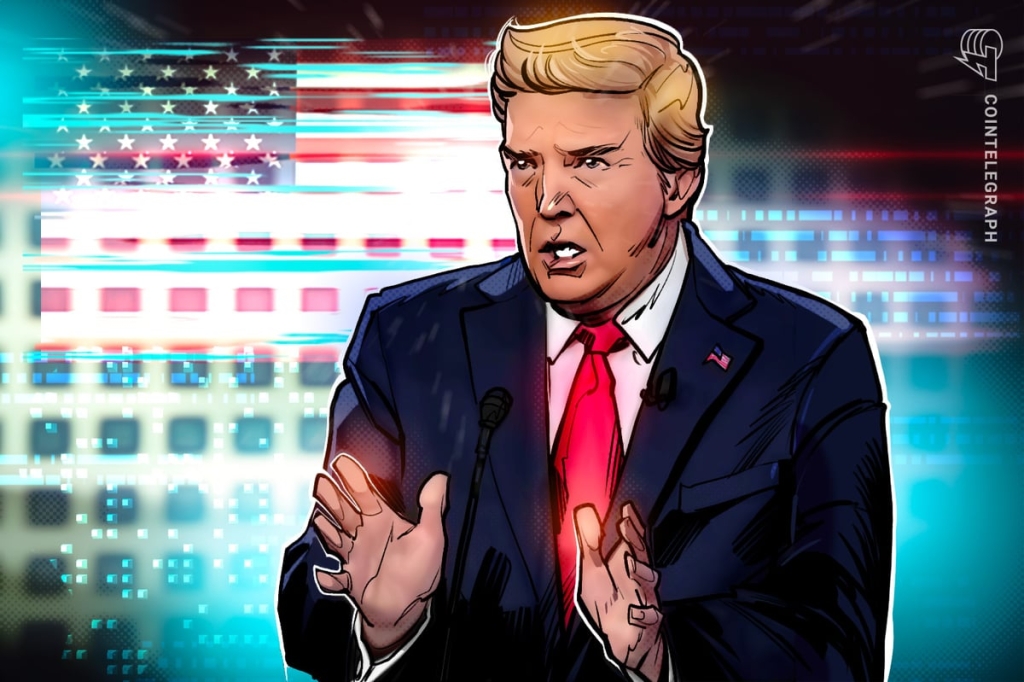
Trump Escalates Tariff War: Global Rates Jump to 15% as Crypto Markets Defy the Chaos
In a dramatic escalation of his ongoing trade war, President Donald Trump has announced a sharp increase in global tariff rates, raising them from 10% to 15% effective immediately. The move comes just days after the Supreme Court struck down his attempt to impose tariffs under the International Emergency Economic Powers Act (IEEPA), forcing the administration to pivot to alternative legal frameworks.
Trump, never one to back down from a legal or political fight, took to his Truth Social platform to declare the new tariff regime, framing it as a necessary measure to protect American interests from decades of what he calls “unfair trade practices.” “As President of the United States of America, I will be, effective immediately, raising the 10% worldwide tariff on countries, many of which have been ‘ripping’ the US off for decades, without retribution, until I came along, to the fully allowed, and legally tested, 15% level,” Trump posted Saturday.
The Supreme Court’s ruling had thrown a wrench into Trump’s tariff strategy, but the administration quickly adapted, leveraging the Trade Expansion Act of 1962 and the Trade Act of 1974 to impose the 10% global tariff rate announced Friday. These statutes, while narrower in scope than the IEEPA, still grant the president significant authority to levy tariffs on countries with which the U.S. runs a trade deficit. However, legal experts caution that these laws come with limitations—tariffs can only be imposed for a set period (150 days) and at capped percentages.
Pro-crypto attorney Adam Cochran was quick to point out these constraints, tweeting, “The law he is using only allows this to be on countries we have a deficit with, for a set period of 150 days, and at a capped percentage.” Despite these legal hurdles, Trump’s tariff announcements have already sent shockwaves through global markets, with crypto and stock markets experiencing severe downturns in response to previous tariff news.
Yet, in a surprising twist, the cryptocurrency market has shown remarkable resilience in the face of the latest tariff escalation. Bitcoin (BTC), which typically sees heavy sell-offs during periods of macroeconomic uncertainty, has held steady at the $68,000 level. Ether (ETH) has also remained firm, showing little to no change since Friday’s announcement. The Total3 indicator, which tracks the entire market capitalization of the crypto sector excluding BTC and ETH, fell by less than 1% on Saturday and remains at about $713 billion.
This unexpected stability in the crypto market has left many analysts scratching their heads. Some speculate that investors are increasingly viewing Bitcoin and other cryptocurrencies as safe-haven assets, akin to gold, during times of economic turmoil. Others suggest that the market has become desensitized to Trump’s tariff announcements, having weathered similar storms in the past.
The broader economic implications of Trump’s tariff escalation are still unfolding. Critics warn that the higher tariffs could derail the U.S. economy, fueling inflation and straining international trade relations. Lawmakers from both parties have voiced concerns, with some calling for a more measured approach to trade policy.
As the dust settles on this latest chapter in Trump’s trade war, one thing is clear: the global economic landscape is becoming increasingly unpredictable. For now, the crypto market appears to be weathering the storm, but how long this resilience will last remains to be seen.
Tags: Trump tariffs, 15% global tariff, trade war escalation, crypto market resilience, Bitcoin stability, Ether holds firm, Supreme Court ruling, IEEPA, Trade Expansion Act, Trade Act of 1974, Adam Cochran, macroeconomic uncertainty, safe-haven assets, inflation fears, international trade relations, Cointelegraph editorial policy.
,

Leave a Reply
Want to join the discussion?Feel free to contribute!