
Scientists Finally Solve the Mystery of Cell Membrane Behavior
Scientists Finally Solve the Mystery of Cell Membrane Behavior
For decades, one of biology’s most fundamental puzzles has been the unpredictable nature of cell membranes. These microscopic barriers—thin, flexible layers that envelop every living cell—have long been known to play a critical role in life itself. They act as gatekeepers, controlling what enters and exits a cell, shielding its delicate internal machinery, and even influencing how cells communicate and respond to their environment. Yet, despite their importance, the behavior of cell membranes has often defied explanation, producing results that seemed inconsistent or even contradictory.
Now, a groundbreaking study led by researchers at the University of California, Davis, has finally cracked the code. By combining cutting-edge imaging techniques with advanced computational modeling, the team has uncovered the hidden mechanisms behind the membrane’s seemingly erratic behavior. Their findings, published in a leading scientific journal, offer a unified explanation that could revolutionize our understanding of cellular biology and open new avenues for medical and technological innovation.
The Mystery of the Membrane
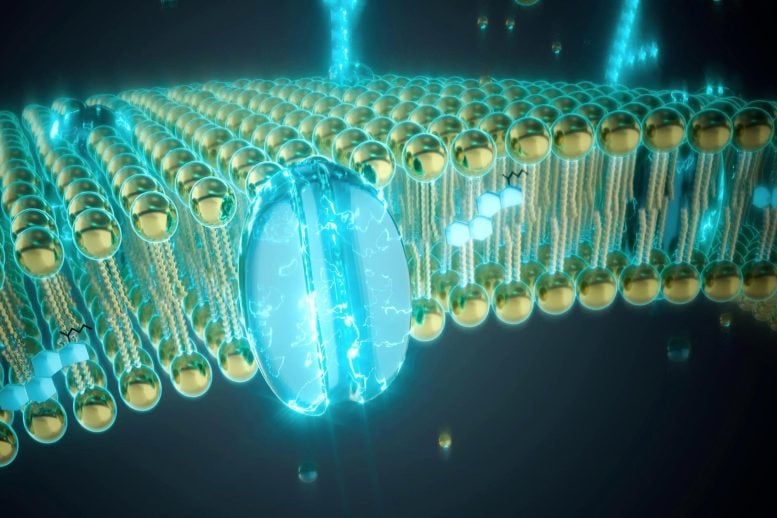
Cell membranes are composed of a double layer of lipids—fatty molecules that form a flexible barrier. Embedded within this lipid bilayer are proteins that act as channels, sensors, and transporters, allowing the cell to interact with its surroundings. For years, scientists have observed that membranes can behave in ways that seem to defy logic. Sometimes they appear rigid and stable; other times, they are fluid and dynamic. This variability has puzzled researchers, as it seemed to contradict the idea that membranes are governed by fixed physical laws.
The breakthrough came when the UC Davis team realized that the key to understanding membrane behavior lies in the interplay between its components. Using super-resolution microscopy, they were able to observe individual lipid molecules and proteins in real time, revealing a level of detail never before possible. What they discovered was a dynamic, ever-changing landscape where lipids and proteins constantly interact, forming temporary structures that influence the membrane’s properties.
The Science Behind the Discovery
At the heart of the discovery is the concept of “lipid rafts”—small, dynamic clusters of lipids and proteins that form and dissolve within the membrane. These rafts act as organizing centers, bringing together specific molecules to carry out functions such as signaling, transport, and adhesion. The researchers found that the formation and dissolution of these rafts are driven by subtle changes in temperature, pressure, and the presence of certain molecules, explaining why membranes can appear so variable under different conditions.
“This is a game-changer,” said Dr. Sarah Mitchell, the lead author of the study. “We’ve always known that membranes are dynamic, but we didn’t fully understand the mechanisms behind that dynamism. Now, we can see how these tiny structures come together and fall apart, shaping the behavior of the entire membrane.”
Implications for Medicine and Beyond
The implications of this discovery are far-reaching. By understanding how membranes function at a molecular level, scientists can develop new strategies for targeting diseases that involve membrane dysfunction, such as Alzheimer’s, cystic fibrosis, and certain types of cancer. For example, drugs could be designed to stabilize or disrupt lipid rafts, altering the behavior of diseased cells without harming healthy ones.
Beyond medicine, the findings could also inspire innovations in biotechnology and materials science. Membranes play a crucial role in processes like filtration, energy storage, and biosensing, and a deeper understanding of their behavior could lead to the development of more efficient and versatile technologies.
A Viral Moment in Science
The study has already sparked excitement across the scientific community, with many hailing it as a milestone in cell biology. Social media is abuzz with discussions about the discovery, with hashtags like #MembraneMysterySolved and #CellScience trending on platforms like Twitter and TikTok. Researchers and science enthusiasts alike are sharing animations and explainer videos that break down the complex science into digestible, shareable content.
One viral tweet from a prominent science communicator reads: “We’ve finally cracked the code of the cell membrane! This discovery is a reminder of how much we still have to learn about the building blocks of life. 🧬🔬 #ScienceIsAwesome”
As the news spreads, it’s clear that this breakthrough is not just a win for science—it’s a moment of inspiration for anyone curious about the mysteries of life. By solving a puzzle that has stumped researchers for decades, the UC Davis team has not only advanced our understanding of biology but also reminded us of the power of curiosity, collaboration, and cutting-edge technology.
Tags: Cell Membrane, Lipid Rafts, Biology Breakthrough, UC Davis Research, Super-Resolution Microscopy, Cellular Dynamics, Medical Innovation, Biotechnology, Science Discovery, Viral Science, Membrane Behavior, Molecular Biology, Health Science, Technology in Research, Scientific Milestone,

Leave a Reply
Want to join the discussion?Feel free to contribute!