
Supreme Court blocks Trump’s emergency tariffs, billions in refunds may be owed
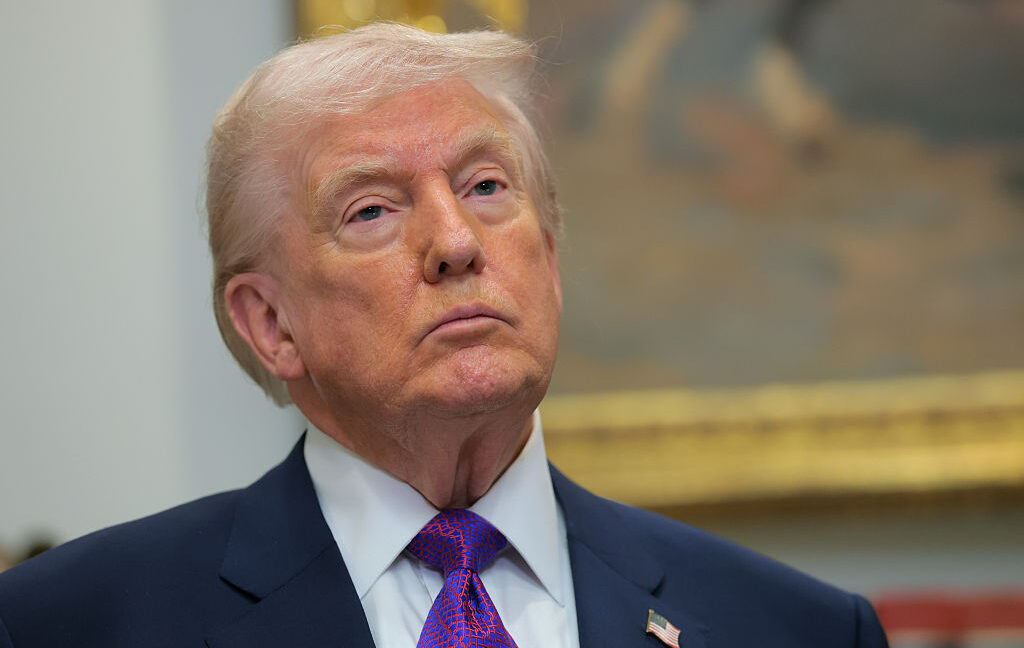
Supreme Court Deals Major Blow to Trump’s Tariff Gambit, Gorsuch Delivers Scathing Rebuke
In a landmark decision that has sent shockwaves through Washington and Wall Street alike, the Supreme Court has struck down President Donald Trump’s attempt to impose sweeping emergency tariffs under the International Emergency Economic Powers Act (IEEPA). The ruling, delivered with unusual force and clarity, not only limits presidential authority but also features a blistering concurring opinion from Justice Neil Gorsuch that reads like a direct challenge to Trump’s entire approach to executive power.
The case centered on Trump’s controversial declaration of national emergencies as justification for imposing tariffs on numerous countries and products. The administration argued that IEEPA’s broad language granted the president sweeping authority to regulate foreign commerce during emergencies. However, the Court’s majority saw through this expansive interpretation, ruling that while IEEPA does empower presidents to impose “penalties, restrictions, or controls on foreign commerce,” it explicitly does not authorize the imposition of emergency tariffs without clear congressional authorization.
Justice Amy Coney Barrett, writing for the majority, emphasized that Congress must speak clearly when delegating such significant economic powers to the executive branch. The Court’s decision effectively closes what Trump’s legal team had hoped would be a loophole allowing presidential action on tariffs without legislative approval.
Gorsuch’s Unprecedented Takedown of Executive Overreach
What makes this ruling particularly explosive is Justice Gorsuch’s concurring opinion, which goes far beyond simply agreeing with the majority’s decision. Gorsuch’s words amount to a comprehensive dismantling of Trump’s entire legal strategy and philosophical approach to presidential power.
“Perhaps the most striking aspect of this case,” Gorsuch wrote, “is the president’s apparent belief that he can declare a national emergency and then use that declaration to justify virtually unlimited economic authority over American commerce.” He continued with a rhetorical question that cuts to the heart of the matter: “Just ask yourself: What President would willingly give up that kind of power?”
Gorsuch’s opinion systematically dismantles the administration’s arguments, warning that accepting Trump’s interpretation would create a dangerous precedent. “If we accept the view that the president can impose tariffs of 1 percent or 1,000,000 percent on any product or country he chooses, based solely on emergencies he himself declares, we would be granting the executive branch a power that the Founders explicitly reserved for Congress.”
The justice’s critique extends beyond the immediate case to address what he sees as a broader pattern of executive overreach. “The president seems to be seeking to exploit questionable statutory language to aggrandize his own power,” Gorsuch observed, suggesting that Trump’s approach represents a fundamental misunderstanding of constitutional boundaries.
A Warning About the Future of Congressional Authority
Perhaps most ominously, Gorsuch warned about the long-term implications if courts were to accept the administration’s expansive view of presidential power. “Many other legislative powers could be passed wholesale to the executive branch in a few loose statutory terms, no matter what domestic ramifications might follow,” he wrote. “And, as we have seen, Congress would often find these powers nearly impossible to retrieve once surrendered.”
This observation cuts to the core of the separation of powers debate that has intensified during Trump’s presidency. Gorsuch argues that the Founders designed the legislative process to be deliberately difficult precisely because it forces deliberation, compromise, and broad consensus. “Through that process, the Nation can tap the combined wisdom of the people’s elected representatives, not just that of one faction or man,” he wrote.
The justice’s words carry particular weight given his conservative credentials and his appointment by Trump himself. His willingness to challenge the president so directly suggests deep concerns about the trajectory of executive power under the current administration.
The Dissenting View and Kavanaugh’s Nuanced Position
While the majority opinion represents a significant victory for congressional authority, the dissenting justices offered a different perspective. They argued that the Court was being overly restrictive in its interpretation of IEEPA and that presidents have historically been granted considerable latitude in matters of foreign affairs and national security.
The dissenters accused the majority of “putting a thumb on the scale” by requiring an unusually strict reading of the statute. Instead, they advocated for what they called a “special exception” requiring a more general interpretation of statutes whenever presidents seek to regulate matters of foreign affairs.
Justice Brett Kavanaugh, while ultimately siding with the majority, raised questions about other potential sources of presidential authority for imposing tariffs. His separate opinion suggests that while Trump’s specific argument under IEEPA failed, the broader question of presidential tariff authority remains unresolved and may require further clarification from Congress.
Market and Political Implications
The ruling’s immediate impact was felt across financial markets, with futures contracts reacting to the news of reduced tariff uncertainty. Investors had been closely watching the case, knowing that a different outcome could have dramatically altered trade relationships and economic calculations.
Politically, the decision represents a significant setback for Trump’s “America First” trade agenda. The president had used emergency declarations as a key tool for implementing protectionist policies, arguing that they were necessary to protect American industries and workers. With this avenue now closed, the administration will need to pursue its trade objectives through more traditional legislative channels.
A Victory for Constitutional Principles
What makes this ruling particularly noteworthy is its reaffirmation of fundamental constitutional principles. By insisting that Congress must clearly authorize any delegation of tariff-setting authority to the president, the Court has reinforced the idea that economic policy—particularly something as fundamental as taxation through tariffs—remains fundamentally a legislative responsibility.
As Gorsuch eloquently put it in his concluding remarks: “Laws must earn such broad support to survive the legislative process, they tend to endure, allowing ordinary people to plan their lives in ways they cannot when the rules shift from day to day.” This observation captures the practical wisdom underlying the Court’s decision: that stable, predictable economic rules require broad political consensus, not unilateral executive action.
The ruling represents a rare moment of judicial clarity in an era of increasing executive power claims. It serves as a reminder that even in times of perceived crisis or emergency, the constitutional architecture of separated powers remains intact, requiring presidents to work with Congress rather than around it.
tags
Supreme Court Trump tariffs, Gorsuch Trump rebuke, presidential power limits, IEEPA interpretation, emergency tariff authority, congressional vs executive power, constitutional separation of powers, Trump trade policy defeat, Supreme Court trade ruling, presidential emergency powers, Gorsuch conservative critique, Trump administration legal losses, tariff authority Supreme Court, executive overreach rebuked, constitutional crisis averted
viral sentences
Trump’s tariff gambit crushed by Supreme Court, Gorsuch delivers brutal takedown, presidential power grab fails spectacularly, Constitution wins as Trump loses, emergency powers not so emergency after all, Congress retains tariff authority, conservative justice turns on Trump, executive branch slapped down, trade policy must go through Congress now, presidential authority not unlimited, Gorsuch’s warning about executive overreach, Trump’s legal strategy dismantled, separation of powers reaffirmed, Founders’ vision preserved, presidential power grab backfires, Trump’s emergency declaration rejected, Congress must speak clearly on tariffs, Supreme Court protects legislative authority, Trump’s trade agenda hits major roadblock, constitutional crisis averted by Supreme Court
,


Leave a Reply
Want to join the discussion?Feel free to contribute!