
All the ways the Galaxy S26 versions are different
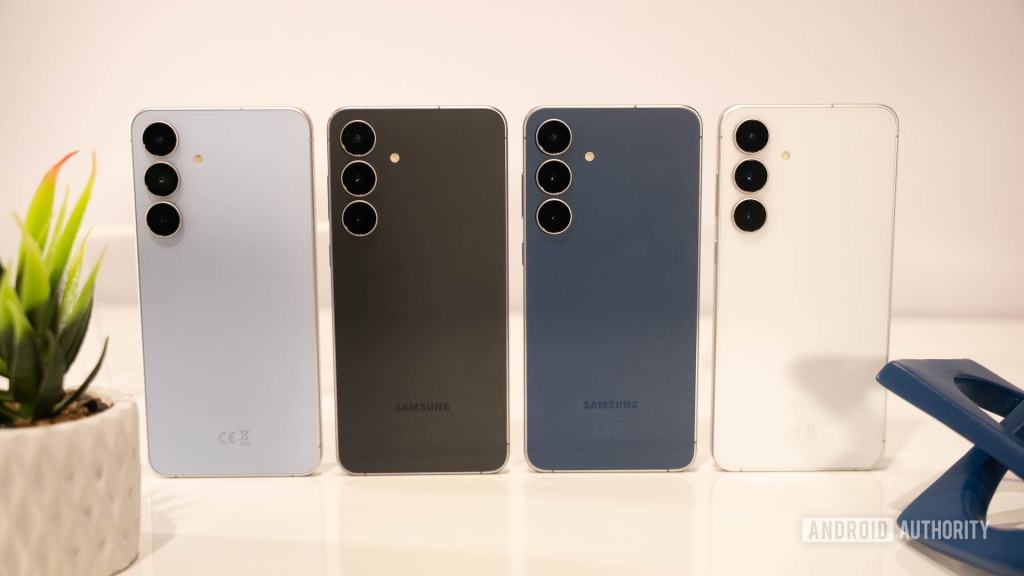
Samsung Galaxy S26 Series: Exynos 2600 vs Snapdragon 8 Elite Gen 5 – The Ultimate Chip Showdown
The tech world is buzzing with anticipation as Samsung prepares to launch its Galaxy S26 series, and the spotlight is firmly on the processor battle that’s shaping up to be the most intriguing yet. For the first time in years, Samsung’s Exynos 2600 looks like it might actually give Qualcomm’s Snapdragon 8 Elite Gen 5 a run for its money, and that’s sending shockwaves through the Android community.
The Global Divide: Why Your Region Matters More Than Ever
Here’s the deal: Samsung is playing regional favorites again, and this time the differences could be more pronounced than we’ve seen in recent years. Global markets outside the US, China, and certain other regions will get the Exynos 2600, while American customers and those in select markets will enjoy the Snapdragon 8 Elite Gen 5. Ultra models worldwide get the Snapdragon treatment, maintaining Samsung’s tradition of giving its flagship the absolute best silicon available.
This regional split isn’t just about bragging rights – it could mean real differences in performance, battery life, and even heat management depending on where you live. That’s a big deal for a phone that’s likely to cost over $1,000 in most markets.
The Numbers Game: Breaking Down the Specs
Let’s dive into the raw specifications that have everyone talking. The Snapdragon 8 Elite Gen 5 brings Qualcomm’s custom Oryon cores to the table with 2x Prime cores at 4.6GHz and 6x Performance cores at 3.65GHz. It’s built on TSMC’s mature 3nm N3P process and comes with the Adreno 840 GPU, which has been the gold standard for mobile gaming performance.
On the other side, Samsung’s Exynos 2600 features Arm’s latest C1-Ultra and C1-Pro cores: 1x C1-Ultra at 3.8GHz, 3x C1-Pro at 3.25GHz, and 6x C1-Pro at 2.75GHz. The real headline here is the manufacturing process – Samsung’s cutting-edge 2nm GAA (Gate-All-Around) technology, which promises better power efficiency and potentially higher performance density.
The AI Revolution: Machine Learning at the Core
Here’s where things get really interesting. Both chips have beefed up their AI capabilities, but they’re taking different approaches. Qualcomm’s Snapdragon features its Hexagon NPU, which is reportedly 37% faster than the previous generation. Meanwhile, Samsung claims its NPU is twice as powerful as last year’s, which is no small feat.
But the real differentiator might be CPU-level AI processing. The Exynos 2600 supports SME2 (Scalable Matrix Extension 2), which includes multi-vector instructions, weight compression, and tiny binary networks. This allows lighter AI workloads to run directly on the CPU without firing up the power-hungry NPU, potentially saving battery life and reducing latency for tasks like text-to-speech and summarization.
Graphics and Gaming: The Ultimate Test
For mobile gamers, this comparison is crucial. The Snapdragon 8 Elite Gen 5 continues with the Adreno 840 GPU, featuring Qualcomm’s sliced architecture and high-bandwidth memory. It also includes Snapdragon Game Super Resolution, which offers AI-based upscaling, though Qualcomm insists this isn’t technically AI-based.
Samsung’s Xclipse 960 GPU represents the third generation of its AMD RDNA collaboration. The company claims 50% faster ray-tracing performance compared to its predecessor, which was already impressive. The Exynos Neural Super Sampling (ENSS) technology provides capabilities similar to Qualcomm’s upscaling features, potentially leveling the playing field.
The Manufacturing Advantage: 2nm vs 3nm
This is where the Exynos 2600 could have a significant edge. Samsung’s 2nm GAA process is theoretically more advanced than TSMC’s 3nm process, offering better power efficiency and potentially higher performance. However, TSMC’s process is more mature with better yields, which could allow Qualcomm to be more aggressive with performance tuning.
The catch? The Exynos 2600 doesn’t have an integrated modem, meaning it needs to connect to separate networking chips. This adds complexity, cost, and potentially impacts power efficiency compared to Snapdragon’s integrated approach.
Heat Management: The Silent Killer
One area where Samsung might have a significant advantage is heat management. The company is expected to implement Heat Pass Block (HPB) technology in the Exynos 2600, which should provide superior heat dissipation compared to the Snapdragon 8 Elite Gen 5. This could be crucial for sustained performance during gaming sessions or heavy multitasking.
Real-World Performance: What Actually Matters
Here’s the thing – both of these chips are absolute powerhouses. Even last year’s flagship processors can easily handle 60fps, 90fps, and even 120fps in most popular Android games. This generation might be overkill for many users, but that doesn’t mean the differences won’t matter.
The Snapdragon 8 Elite Gen 5 will likely maintain its lead in standard rasterization performance, which has been Qualcomm’s strength for several generations. However, the Exynos 2600’s advancements in ray tracing, AI capabilities, and potentially better heat management could make it the better choice for specific use cases.
The Bottom Line: Too Close to Call
After years of Exynos chips lagging behind their Snapdragon counterparts, Samsung appears to have finally closed the gap significantly. The combination of a faster CPU, revamped GPU, ambitious AI capabilities, and potentially better heat management makes the Exynos 2600 a legitimate contender.
However, the Snapdragon 8 Elite Gen 5 isn’t standing still. Its proven track record, mature manufacturing process, integrated modem, and consistent performance across all markets give it significant advantages.
What This Means for You
If you’re in a region getting the Exynos 2600, you might not be missing out as much as in previous years. The performance gap appears to be narrowing, and Samsung-specific features and optimizations could actually make the Exynos variant more appealing in some scenarios.
For US customers and those in other Snapdragon regions, you’re getting what’s likely to be the slightly more consistent performer, but the Exynos versions might surprise you with their capabilities in certain areas.
The Verdict
This year’s Exynos vs Snapdragon debate is the closest we’ve seen in years, and that’s great news for consumers. Whether you get the Exynos 2600 or Snapdragon 8 Elite Gen 5, you’re getting a flagship-level processor that can handle anything you throw at it. The differences might come down to specific use cases, regional optimizations, and personal preferences rather than clear-cut performance advantages.
One thing’s for sure – the smartphone processor wars just got a lot more interesting, and that competition ultimately benefits everyone who loves cutting-edge mobile technology.
Tags & Viral Phrases:
- Exynos 2600 vs Snapdragon 8 Elite Gen 5 showdown
- Samsung finally closing the gap on Qualcomm
- 2nm vs 3nm processor battle
- Is Exynos finally good enough?
- Regional chip lottery could affect your Galaxy S26 experience
- AI processing differences that actually matter
- Gaming performance could surprise everyone
- Heat management could be the deciding factor
- The processor wars just got interesting again
- Flagship performance for everyone regardless of region
- Samsung’s comeback chip might actually win
- Qualcomm’s dominance challenged like never before
- Which Galaxy S26 chip is actually better?
- The most important processor comparison of 2025
- Don’t sleep on the Exynos 2600
- Snapdragon 8 Elite Gen 5 might not be the automatic winner
- Regional variants could mean different experiences
- AI capabilities that could change everything
- Gaming performance that pushes boundaries
- The chip that could make or break Samsung’s year
,


Leave a Reply
Want to join the discussion?Feel free to contribute!