
Linux 7.0-rc1 Released With Many New Features:
Linux 7.0-rc1 Released: A Milestone Kernel Packed with Performance Boosts, New Hardware Support, and the Rust Programming Language Goes Mainstream
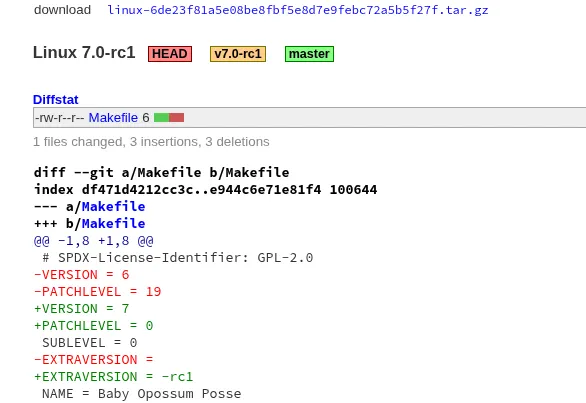
Linux creator Linus Torvalds has officially closed the merge window for Linux 7.0 with the release of the first release candidate, Linux 7.0-rc1. While the jump to version 7.0 was largely symbolic—Torvalds admitted he simply enjoys bumping the major version after the x.19 series—the kernel is anything but ordinary. Linux 7.0-rc1 is brimming with groundbreaking features, performance optimizations, and support for next-generation hardware, making it one of the most significant kernel releases in recent memory.
A Kernel for the Future: Hardware Enablement and Support
Linux 7.0-rc1 is packed with enablement work for cutting-edge processors. Intel’s upcoming Nova Lake and Diamond Rapids platforms receive substantial support, ensuring that Linux will be ready to harness the full potential of these next-gen CPUs from day one. AMD users aren’t left out either, with continued enhancements for Zen 6 architecture, promising even greater performance and efficiency for AMD-powered systems.
But the hardware support doesn’t stop at x86. Linux 7.0-rc1 brings significant upstreaming work for Qualcomm Snapdragon X2, broadening Linux’s reach into the ARM ecosystem and paving the way for powerful new ARM-based laptops and devices. On the graphics front, new AMD hardware support is included for upcoming products, ensuring that Linux users will be among the first to benefit from the latest GPU innovations.
File Systems and Performance: Faster, Smarter, More Reliable
Linux 7.0-rc1 introduces a host of file-system improvements designed to boost performance and reliability. PostgreSQL users on AMD EPYC platforms will be particularly pleased, as the kernel delivers substantial performance gains for database workloads. Sequential read performance for exFAT has also been enhanced, making it faster and more efficient for handling large files and media.
F2FS (Flash-Friendly File System) receives a suite of optimizations, improving both speed and durability for flash storage devices. Memory management has been fine-tuned for better efficiency, while EXT4 sees improvements in concurrent direct I/O writes, reducing bottlenecks in multi-threaded environments.
Intel TSX (Transactional Synchronization Extensions) is now enabled by default, unlocking new levels of parallelism for multi-threaded applications. The scheduler has been optimized for both performance and scalability, ensuring smoother multitasking and better resource utilization. Nouveau, the open-source NVIDIA driver, brings back large pages support, delivering a welcome performance boost for NVK (NVIDIA’s Vulkan driver).
Cutting-Edge Features and Innovations
Linux 7.0-rc1 is not just about incremental improvements—it introduces several headline-grabbing features. Apple USB Type-C PHY support is now included, reflecting Linux’s growing compatibility with Apple hardware. Multi-lane SPI and Octal DTR support for SPI NAND expand the kernel’s capabilities for embedded and industrial applications.
Sensor monitoring on more ASUS motherboards is now possible, giving users deeper insight into their system’s health and performance. Non-blocking timestamps and standardized generic I/O error reporting improve system responsiveness and reliability, making Linux even more robust for mission-critical deployments.
The Rust Programming Language: Officially Here to Stay
One of the most talked-about developments in Linux 7.0-rc1 is the official conclusion of the Rust experiment. After years of careful evaluation and community feedback, the Linux kernel now officially supports the Rust programming language. This marks a significant milestone for the open-source community, as Rust’s memory safety guarantees and modern tooling promise to reduce bugs and improve the security of the kernel.
Linus Torvalds himself acknowledged that Rust is here to stay, signaling a new era for kernel development. Developers can now write safe, efficient kernel modules in Rust, opening the door to a new generation of contributors and innovations.
A Special Release for the Linux Ecosystem
Linux 7.0-rc1 is expected to become the default kernel for major distributions such as Ubuntu 26.04 LTS and Fedora 44. This makes it an extra special release, as it will serve as the foundation for millions of systems worldwide for years to come.
The kernel is available for cloning from git.kernel.org, and the community is already hard at work testing and refining the release candidate. In the coming days, a comprehensive feature overview will be published, highlighting all the exciting changes and improvements in Linux 7.0.
Looking Ahead: Performance Benchmarking and Beyond
With Linux 7.0-rc1 now in the hands of developers and early adopters, the focus shifts to performance benchmarking and further refinement. The kernel’s impressive array of optimizations and new features sets the stage for even more exciting developments in the Linux ecosystem.
As Linus Torvalds humorously noted in his mailing list announcement, “You all know the drill by now: two weeks have passed, and the kernel merge window is closed. We have a new major number purely because I’m easily confused and not good with big numbers.” Despite the lighthearted tone, there’s no denying that Linux 7.0-rc1 is a monumental release that will shape the future of computing.
Tags & Viral Phrases:
- Linux 7.0-rc1 released
- Linus Torvalds kernel update
- Major Linux kernel milestone
- Intel Nova Lake support
- AMD Zen 6 enhancements
- Qualcomm Snapdragon X2 upstreaming
- PostgreSQL performance boost
- exFAT sequential read improvements
- F2FS file-system optimizations
- Intel TSX auto mode enabled
- Nouveau large pages support
- Apple USB Type-C PHY support
- Multi-lane SPI and Octal DTR
- ASUS motherboard sensor monitoring
- Non-blocking timestamps
- Generic I/O error reporting
- Rust programming language officially supported
- Ubuntu 26.04 LTS default kernel
- Fedora 44 kernel update
- Linux 7.0 performance benchmarking
- Open-source kernel innovation
- Future of Linux computing
- Next-gen hardware enablement
- Memory management optimizations
- EXT4 concurrent I/O improvements
- Scheduler performance and scalability
- NVk Vulkan driver boost
- Linux ecosystem evolution
- Kernel development milestone
- Cutting-edge Linux features
- Linux for ARM devices
- Secure kernel modules with Rust
- Linux 7.0-rc1 clone link
- Kernel merge window closed
- Major version bump humor
- Linux 7.0-rc1 feature overview coming soon
,


Leave a Reply
Want to join the discussion?Feel free to contribute!