
Scientists Find the Gene That Could Save the World’s Bananas
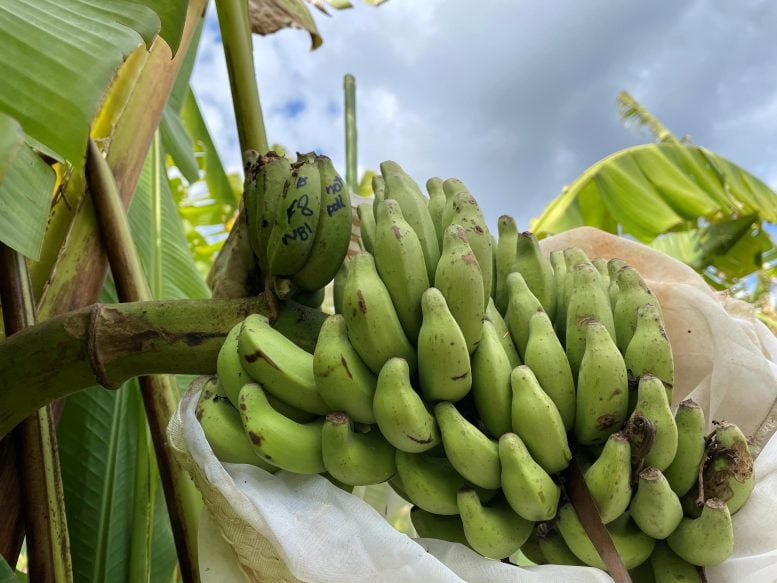
Scientists Discover the Gene That Could Save the World’s Bananas from a Silent Killer
In a breakthrough that could alter the fate of one of the planet’s most beloved fruits, researchers have uncovered a genetic key hidden within the DNA of a wild banana subspecies—a discovery that may finally provide a defense against one of agriculture’s most persistent threats.
The global banana industry, valued at over $25 billion annually, has been walking a precarious tightrope for decades. The Cavendish banana, which accounts for nearly 99% of international banana exports, faces an existential threat from Panama disease, caused by the soil-borne fungus Fusarium oxysporum f.sp. cubense Tropical Race 4 (TR4). This relentless pathogen has already devastated plantations across Asia, the Middle East, Australia, and more recently, Latin America—the heart of global banana production.
Now, scientists at The University of Queensland, led by Dr. Andrew Chen, have identified a powerful source of natural resistance buried within the genetic code of a wild banana relative. Their research, published in Nature Communications, reveals how a specific gene from the wild subspecies Musa acuminata ssp. burmannica provides robust immunity against TR4, offering hope for the future of commercial banana cultivation.
The discovery emerged from years of painstaking genetic analysis and field testing. The research team cross-referenced genetic markers from hundreds of banana varieties, searching for natural resistance mechanisms that had evolved over millennia. What they found was remarkable: the wild banana possessed a unique genetic sequence that triggers an immune response specifically targeting the TR4 fungus, effectively shutting down its ability to infect plant tissue.
“This isn’t just about finding resistance—it’s about understanding how nature has already solved this problem,” Dr. Chen explained. “The wild banana has been fighting this battle for thousands of years, and we’ve finally decoded its defense strategy.”
The implications extend far beyond academic interest. Current banana plantations infected with TR4 face complete abandonment, as the fungus can survive in soil for decades. Traditional breeding methods have proven inadequate due to the sterility of commercial bananas and the complexity of transferring resistance traits. However, this genetic discovery opens the door to precise gene-editing techniques that could introduce the resistance gene into Cavendish bananas without altering other desirable characteristics like taste, texture, or shelf life.
Industry experts warn that without intervention, the global banana supply chain faces catastrophic disruption. The uniformity of Cavendish bananas—while ideal for mass production—makes them particularly vulnerable to disease outbreaks. Unlike traditional crops with genetic diversity, every Cavendish banana is essentially a clone, meaning a pathogen that can kill one can potentially destroy entire plantations worldwide.
The research team’s findings couldn’t come at a more critical juncture. Recent outbreaks in Colombia and Peru have sent shockwaves through the agricultural community, with some regions reporting losses exceeding 80% of their banana production. Smallholder farmers, who depend on bananas for both income and food security, face the most immediate and devastating impacts.
Beyond the immediate agricultural crisis, this discovery represents a broader victory for food security and sustainable agriculture. Bananas rank as the world’s most popular fruit and serve as a staple food for over 400 million people across Africa, Asia, and Latin America. The potential loss of this crop would create ripple effects throughout global food systems, affecting everything from rural economies to international trade relationships.
The scientific community has responded with cautious optimism. While the identification of the resistance gene marks a significant milestone, translating this discovery into commercially viable, disease-resistant bananas will require additional years of research, regulatory approval, and field testing. However, the path forward now appears clearer than ever before.
“This discovery fundamentally changes our approach to protecting banana crops,” noted Dr. Sarah Matthews, a plant pathologist not involved in the study. “We’re no longer trying to find a needle in a haystack—we now have a precise genetic target that we know works in nature.”
The research also highlights the critical importance of preserving wild plant species and their genetic diversity. Many of these wild relatives, often dismissed as weeds or ignored in conservation efforts, harbor genetic solutions to challenges that cultivated crops cannot address. As climate change and emerging pathogens continue to threaten global agriculture, these natural genetic libraries may prove invaluable.
Looking ahead, the research team is already working on developing gene-edited banana varieties that incorporate the resistance gene while maintaining all the qualities that make Cavendish bananas commercially successful. Field trials are expected to begin within the next two years, with the hope that farmers could have access to TR4-resistant varieties within the decade.
For banana lovers worldwide, this scientific breakthrough offers more than just hope—it represents the possibility of securing the future of their favorite fruit. As Dr. Chen puts it, “We’re not just saving bananas; we’re preserving a piece of global food culture that connects people across continents and generations.”
banana disease resistance
TR4 Panama disease
wild banana genetics
Cavendish banana crisis
plant pathogen immunity
genetic engineering bananas
food security breakthrough
Musa acuminata burmannica
Fusarium oxysporum resistance
agricultural biotechnology
crop disease solutions
sustainable banana farming
global fruit supply chain
plant immune response
wild crop relatives
gene editing technology
banana industry innovation
fungal disease control
agricultural research impact
food production future
,

Leave a Reply
Want to join the discussion?Feel free to contribute!