
Is Samsung’s ecosystem worth the investment?
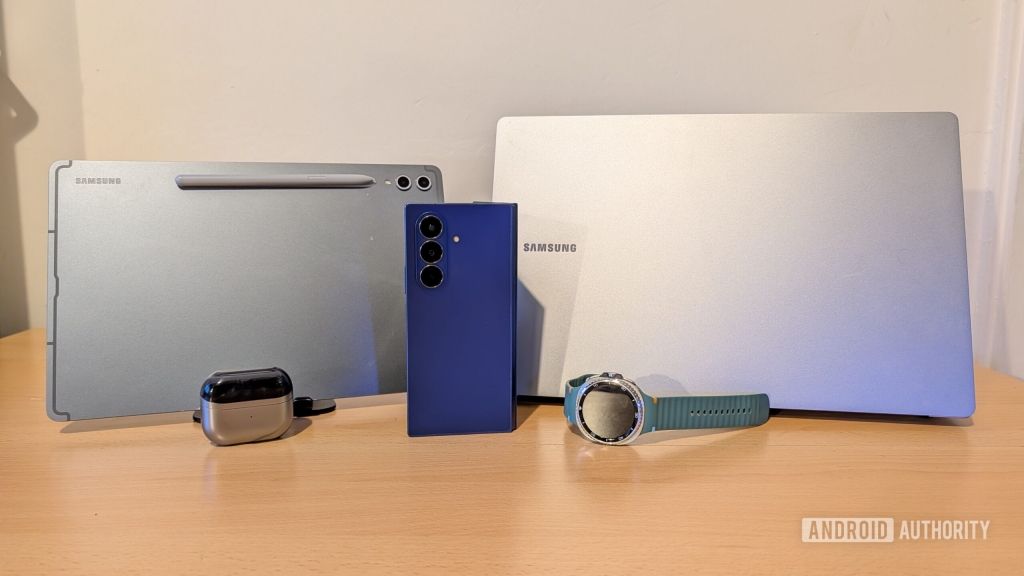
Samsung Ecosystem: Is It Worth Going All-In on Samsung Devices?
In today’s tech landscape, ecosystems matter more than ever. Companies design products and services that work best when used together, creating seamless experiences that benefit both users and manufacturers. A well-integrated ecosystem can save significant time and reduce daily frustrations by allowing hardware and software to work in perfect harmony.
Samsung manufactures virtually every type of smart device imaginable, but what tangible benefits do you actually gain from pairing multiple Samsung products together? Is the investment worthwhile?
Galaxy Watch
I’ve been using Samsung wearables since the Tizen days, and they’ve continuously improved since transitioning to Wear OS in 2021. While a Galaxy Watch functions with any Android device, certain features are exclusive to Samsung phone users.
One Samsung-exclusive feature I miss most when using my Pixel 10 Pro is alarm syncing. This functionality worked for years until October 2025, when Google removed support for non-Pixel smartwatches from its clock app. Losing the ability to create, view, and silence alarms from your wrist is genuinely frustrating and represents a major reason I prefer pairing my Galaxy Watch 8 Classic with a Samsung phone.
There are three health features you miss without a Samsung phone: blood pressure monitoring, ECG readings, and sleep apnea detection. These features hold varying importance for different users, but speaking from personal experience, health metrics can prove more crucial than initially realized. The only reason I was diagnosed with severe obstructive sleep apnea—where my breathing would stop up to 20 times per hour—was because my Galaxy Watch detected the drop in my blood oxygen levels.
Galaxy Tablets
I use a Galaxy Tab S10 Plus, and its functionality expands significantly when paired with other Samsung devices. When you receive a phone call on your Samsung phone, it appears on your tablet, allowing you to answer using the tablet’s microphone and speakers. If you’re already on a call, you’ll see the duration and contact name on the tablet, with the ability to switch which device you use to talk at any moment.
Whether you prefer Samsung’s keyboard or the superior Gboard, your clipboard automatically syncs between nearby Samsung devices logged into the same account. With two-factor authentication enabled on all my accounts, being able to copy a one-time code on my phone and paste it into an app on my tablet saves considerable time.
One of my favorite features exclusive to Samsung phone and tablet combinations is “use phone as toolbar.” Despite the awkward name, this feature has become indispensable for both my wife and me. When working in Samsung Notes with a Samsung phone logged into the same account, you get a button that transfers all brush, tool, and color controls to the phone’s screen, leaving your tablet display uncluttered for drawing or annotation. I’d love to see this functionality extend to Samsung’s dedicated drawing app, PENUP, but it’s already valuable in Notes.
If you prefer more control over your photos, Expert RAW has long been a favorite app on Samsung phones. What you might not realize is that the app improves when paired with a Samsung tablet. In Expert RAW’s settings menu, there’s a toggle called “Auto share to PC or tablet.” This menu allows you to connect the app to your Samsung computer or tablet so that any image taken in Expert RAW automatically transfers to the other device via Quick Share. I’ve been using this feature extensively lately. Adobe Lightroom is my preferred photo editor on Android, and I favor using it on my Tab S10 Plus’s large screen alongside the S Pen. Having photos automatically sync without manual intervention saves significant time.
Galaxy Buds
The Galaxy Buds 3 Pro are my favorite earbuds regardless of which phone they’re connected to, but they perform even better as part of an ecosystem. The first noticeable difference when using my Buds 3 Pro with a Samsung device is sound quality. Samsung employs its proprietary codec called Samsung Seamless Codec (SSC) to deliver higher fidelity audio, making a substantial difference when listening to high-quality music. The earbuds don’t sound bad with other devices, but SSC is noticeably superior.
More importantly, Galaxy Buds become smarter when paired with Samsung phones or tablets thanks to smart device switching. You can listen to music streamed from your phone and, without manually reconnecting, start playing something on your tablet or PC. Your earbuds will pause what was playing on your phone and switch connections automatically. It would be ideal if Samsung enabled this feature on any device with the Galaxy Wearable app installed, but for now, it remains exclusive to Samsung products.
Galaxy Book Laptops
The biggest surprise during my exploration of Samsung’s ecosystem has been discovering how much difference a Galaxy Book laptop makes. I recently purchased a Galaxy Book4 Edge, and it’s quickly become my favorite computer for work. While I’ve always appreciated Windows, the software and features Samsung adds on top make it even better.
Samsung Multi Control serves as Samsung’s answer to Apple’s Sidecar. With your Samsung phone or tablet connected, you can control it using your mouse and keyboard. As demonstrated in the photo above, you can move and orient the device so the Galaxy Book understands its position relative to the laptop and any external monitor. I was particularly impressed with how well this works with the Fold 7, as the UI in the Multi Control app adapts to show which Fold 7 screen you’re using.
Multi Control shouldn’t be confused with using a Samsung tablet as a wireless display for Windows itself, which works with any Windows PC. Rather than mirroring the Windows desktop onto your mobile device, Multi Control allows you to navigate the phone’s UI and apps from the laptop. This proves perfect for quickly replying to messages or, even better, dragging and dropping photos and files.
There are multiple ways to share files between a Galaxy Book and a Samsung phone or tablet, but none are redundant. Multi Control allows file dragging and dropping, but this only proves convenient if your mobile device is in a stand and positioned for keyboard and mouse use. Storage Share and Quick Share are what you’ll use more frequently. Storage Share makes your mobile device’s storage appear in Windows File Explorer. Without touching your device, you can move files as though it were physically connected to the computer.
Why do you need Quick Share? I use it to send files to the laptop when I’m not at my desk. If I’m in another part of the house taking photos for an article, for example, I can leave my computer running in my office and use Quick Share to send the photos and files I need without returning to the office.
You can use Galaxy Buds with any Windows PC—Samsung has made the Galaxy Buds app and several other Samsung apps available through the Windows Store. However, it’s never proven worthwhile in my experience. Every Windows PC I’ve tried with my Galaxy Buds has encountered the same problems: severe latency, connection issues, and a tendency to steal my buds’ connection from my phone even when I’m not using the computer.
The Galaxy Book4 Edge I’ve been using hasn’t experienced any of those issues. Unlike non-Samsung computers, this has access to Samsung’s SSC, mentioned earlier, which improves quality and reduces latency. I’ve experienced no lip-sync issues on YouTube, and even gaming with my Galaxy Buds 3 Pro has been excellent. I haven’t felt the need to grab my gaming headset when playing Sims 4 or Stardew Valley on this laptop.
To control my earbuds, I haven’t been using the Galaxy Buds app. Instead, I’ve been using a “Nearby Devices” shortcut on my taskbar, which serves the same purpose as the button with the same name in One UI’s Quick Settings page. It’s a hub for all your connected Samsung devices and serves as the gateway for many of the functions I’ve discussed today.
The included Samsung apps represent another highlight. Samsung Pass, for example, is a solid password manager that syncs between all your Samsung devices and makes logging into accounts easier and more secure. I don’t use it because I must switch between so many non-Samsung devices for work, but if that weren’t the case, I would definitely consider it.
The app I was most pleased to see was Samsung Notes. It can be downloaded to any Windows PC, but some features don’t work as well, and having it pre-installed proves more convenient than dealing with the Microsoft Store. Whenever I need to read a PDF or take notes at a product briefing or for an article, Samsung Notes is my go-to. Having it on your computer means everything syncs through your Samsung account, so all your content is exactly where you need it.
Is It All Worth It?
I believe so. All the Samsung products I own work best together, and the features offered are ones I use daily for both work and leisure.
Using the Galaxy Book4 Edge has streamlined many tedious work tasks like file transfers. Of course, some of these features will matter more to some users than others, so your mileage may vary. But if you already own a Samsung phone and another product I’ve discussed today, then Samsung should be at the top of your list if you find yourself shopping in any of the other product categories.
Tags: Samsung ecosystem, Galaxy Watch, Galaxy Tab, Galaxy Buds, Galaxy Book, Samsung Seamless Codec, Multi Control, Quick Share, Storage Share, Samsung Notes, Expert RAW, Smart device switching, Wear OS, Tizen, blood pressure monitoring, ECG, sleep apnea detection, clipboard sync, alarm syncing, password manager, Samsung Pass, Windows integration, Android ecosystem, tech ecosystem benefits, device interoperability, seamless connectivity, file sharing, audio quality, health tracking, productivity tools, cross-device functionality
Viral phrases: “Samsung ecosystem game-changer,” “Why I switched to all-Samsung setup,” “The hidden benefits of Samsung device pairing,” “Samsung Multi Control vs Apple Sidecar,” “Galaxy Buds 3 Pro sound quality revealed,” “How Samsung saved my health diagnosis,” “The ultimate Samsung productivity hack,” “Why your Galaxy Watch needs a Samsung phone,” “Samsung ecosystem features you didn’t know existed,” “Galaxy Book4 Edge review: A Windows powerhouse,” “Samsung vs Google ecosystem showdown,” “The truth about Samsung Seamless Codec,” “Is Samsung ecosystem worth the investment?” “Galaxy Tab S10 Plus: The ultimate companion device,” “Samsung Notes on Windows: A hidden gem,” “Smart device switching: The future of connectivity,” “Samsung ecosystem: More than just marketing,” “Galaxy Buds 3 Pro: Best earbuds for Samsung users,” “How to maximize your Samsung device potential,” “The Samsung ecosystem experience: Complete review”
,


Leave a Reply
Want to join the discussion?Feel free to contribute!