
Apple rolls out Xcode 26.3 Release Candidate 2
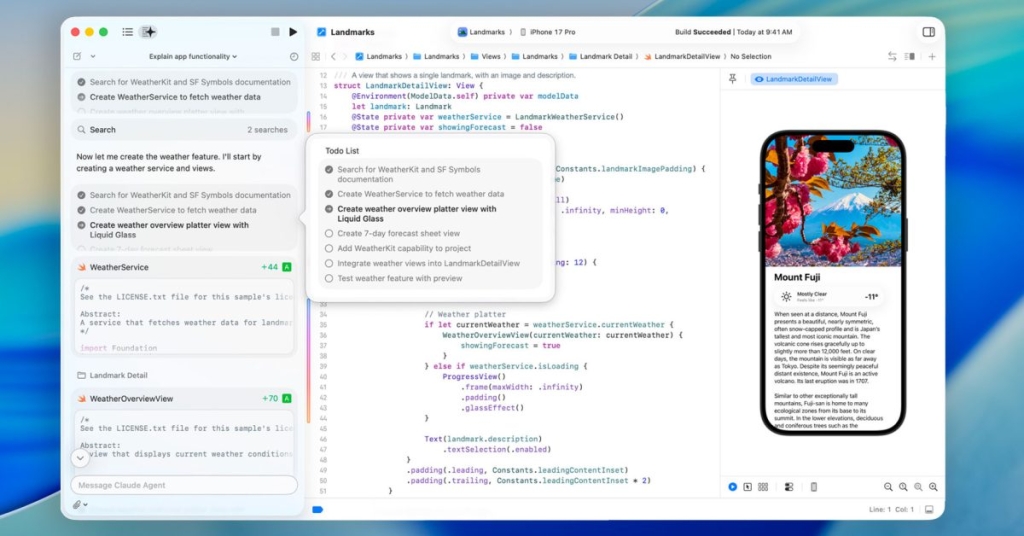
Apple’s Xcode 26.3 Release Candidate 2 Signals Imminent Launch of Revolutionary Agentic Coding Features
Apple has just pushed out Xcode 26.3 Release Candidate 2 to developers, marking another significant milestone in the evolution of iOS and macOS app development. This latest release candidate comes hot on the heels of the initial RC1 that launched earlier this month, alongside RC versions of iOS 26.3, macOS 26.3, and other platform updates.
The Missing Piece Finally Approaches
When Apple officially released iOS 26.3, macOS 26.3, and other operating system updates on February 11, one crucial component was conspicuously absent from the rollout: Xcode 26.3 itself. This omission left many developers wondering about the status of what promises to be one of the most transformative updates to Apple’s integrated development environment in years.
The arrival of Release Candidate 2 suggests that Apple’s engineering teams identified areas requiring refinement before the final public release. While the company hasn’t disclosed specific changes between RC1 and RC2, the mere existence of this second candidate indicates Apple’s commitment to delivering a polished, production-ready tool that will fundamentally change how developers build apps for Apple’s ecosystem.
Agentic Coding: The Future of App Development
At the heart of Xcode 26.3 lies its groundbreaking agentic coding capabilities, which Apple first announced earlier this month. This revolutionary feature integrates native support for AI-powered coding assistants directly into the development environment, with initial support for industry-leading tools like Anthropic’s Claude Agent and OpenAI’s Codex.
This integration represents a paradigm shift in software development. Rather than treating AI coding assistants as external tools that developers must manually invoke, Xcode 26.3 brings these capabilities directly into the IDE’s workflow. Developers can now leverage AI assistance seamlessly within their existing development processes, with the tools understanding the context of their projects, suggesting code improvements, identifying potential bugs, and even generating entire code blocks based on natural language descriptions.
The agentic coding features go beyond simple code completion. These AI agents can analyze project structure, understand coding patterns specific to Apple’s frameworks, and provide contextually relevant suggestions that align with Swift and Objective-C best practices. They can also assist with debugging by identifying potential issues before they manifest in runtime errors, potentially saving developers countless hours of troubleshooting.
Developer Reception and Early Adoption
Since the first Release Candidate shipped, developer feedback has been overwhelmingly positive. Early adopters have praised the seamless integration of AI capabilities, noting how the agentic features feel like a natural extension of Xcode rather than an awkward add-on. The ability to maintain focus within the IDE while accessing powerful AI assistance has been particularly well-received.
Developers report that the AI agents demonstrate impressive understanding of Apple’s development ecosystem, providing suggestions that align with platform-specific conventions and best practices. This deep integration means that developers can trust the AI’s recommendations to be contextually appropriate for iOS, macOS, watchOS, and tvOS development.
The coding agents have shown particular strength in areas like SwiftUI layout optimization, Core Data integration, and asynchronous programming patterns—domains where Apple’s frameworks have traditionally presented steep learning curves for newcomers and occasional challenges even for experienced developers.
Timing and Release Expectations
The timing of Release Candidate 2 is particularly interesting given that Apple pushed out the first beta of Xcode 26.4 just days ago. This suggests that Apple is maintaining its rapid development cadence while ensuring that each major release receives appropriate stabilization before public availability.
With RC2 now available and assuming no significant issues emerge during this testing phase, industry analysts expect the final release of Xcode 26.3 to land sometime next week. This timeline would align with Apple’s typical pattern of releasing development tools shortly after major operating system updates, allowing developers to update their toolchains in sync with new OS capabilities.
Implications for the Developer Ecosystem
The introduction of agentic coding capabilities in Xcode 26.3 has far-reaching implications for Apple’s developer ecosystem. For individual developers and small teams, these AI-assisted features could dramatically reduce development time and lower the barrier to entry for building sophisticated apps. The ability to leverage AI for routine coding tasks and architectural guidance means that developers can focus more energy on creative problem-solving and user experience design.
For larger organizations and enterprise developers, the integration of AI coding assistants into Xcode could standardize development practices across teams, ensure consistency in code quality, and accelerate onboarding for new developers joining projects. The AI agents can help maintain coding standards and architectural patterns throughout large codebases, reducing technical debt and improving maintainability.
Looking Ahead: The Evolution of Development Tools
Xcode 26.3’s agentic coding features represent just the beginning of what many in the industry see as an inevitable evolution toward AI-augmented software development. As these tools mature, we can expect even deeper integration, with AI agents that can understand entire project lifecycles, predict potential issues before they arise, and even suggest architectural improvements based on performance data and user feedback.
Apple’s approach of integrating these capabilities directly into Xcode, rather than relying on third-party plugins or external tools, ensures a cohesive experience that maintains the security and privacy standards that Apple developers have come to expect. This native integration also means that Apple can optimize the AI features specifically for its development ecosystem, potentially offering advantages over more generalized coding assistants.
Developer Community Response
The developer community has responded with enthusiasm mixed with healthy skepticism—a typical reaction to transformative technology. Many developers are eager to incorporate these tools into their workflows, seeing the potential for increased productivity and improved code quality. Others are taking a more measured approach, wanting to evaluate the tools’ effectiveness in real-world scenarios before fully embracing them.
Forums and social media channels dedicated to Apple development are buzzing with discussions about the best ways to leverage agentic coding features, with experienced developers sharing tips and strategies for maximizing the benefits while maintaining control over the development process. The consensus seems to be that while AI assistance is powerful, it works best as a complement to human expertise rather than a replacement.
Preparing for the Official Release
For developers planning to adopt Xcode 26.3’s agentic coding features, now is the time to prepare. This means ensuring that development environments are properly configured, reviewing project structures to maximize the benefits of AI assistance, and considering how these new capabilities might change team workflows and development processes.
Apple has provided documentation and sample projects to help developers understand the new features, and many third-party educational resources are emerging to help developers make the most of agentic coding capabilities. As the official release approaches, expect to see a wealth of tutorials, best practices guides, and community-driven resources to support adoption.
The Road Ahead
As we await the final release of Xcode 26.3, the development community stands at the threshold of a new era in software creation. The integration of sophisticated AI coding assistants directly into the development environment represents a significant step toward more efficient, accessible, and powerful app development for Apple’s platforms.
Whether you’re a seasoned iOS developer with years of experience or a newcomer just starting your journey in app development, Xcode 26.3’s agentic coding features promise to transform how you approach building apps for Apple’s ecosystem. The question is no longer if AI will become an integral part of software development, but rather how quickly developers will adapt to and embrace these powerful new capabilities.
What are your thoughts on Xcode 26.3’s agentic coding features? Have you been experimenting with the Release Candidate? Share your experiences in the comments below.
Tags: #Xcode263 #AgenticCoding #AppleDeveloper #AIInDevelopment #iOSDevelopment #macOSDevelopment #Swift #AppDevelopment #Xcode #AppleWWDC #CodingAssistant #ArtificialIntelligence #DeveloperTools #ReleaseCandidate #TechNews #AppleEcosystem #SoftwareDevelopment #FutureOfCoding #DeveloperExperience #Innovation
Viral Phrases: “Xcode 26.3 is about to change everything for developers”, “Apple’s AI coding revolution is here”, “The future of app development has arrived”, “Developers are losing their minds over Xcode 263”, “This changes the game completely”, “Apple just dropped a bombshell on the dev community”, “The way we code will never be the same”, “Prepare for a paradigm shift in development”, “Xcode’s new AI features are mind-blowing”, “The integration is seamless and powerful”, “Developers are calling this a game-changer”, “Apple’s bold move into AI-assisted coding”, “The wait is almost over for this revolutionary tool”, “Early adopters are raving about the results”, “This is what we’ve been waiting for”, “The next generation of development tools”, “Apple is leading the AI coding revolution”, “Developers are already seeing massive productivity gains”, “The future is now for Apple developers”, “This could be the biggest Xcode update ever”
,


Leave a Reply
Want to join the discussion?Feel free to contribute!