
South Korea’s Central Bank Reaffirms Bank-First Stablecoin Model
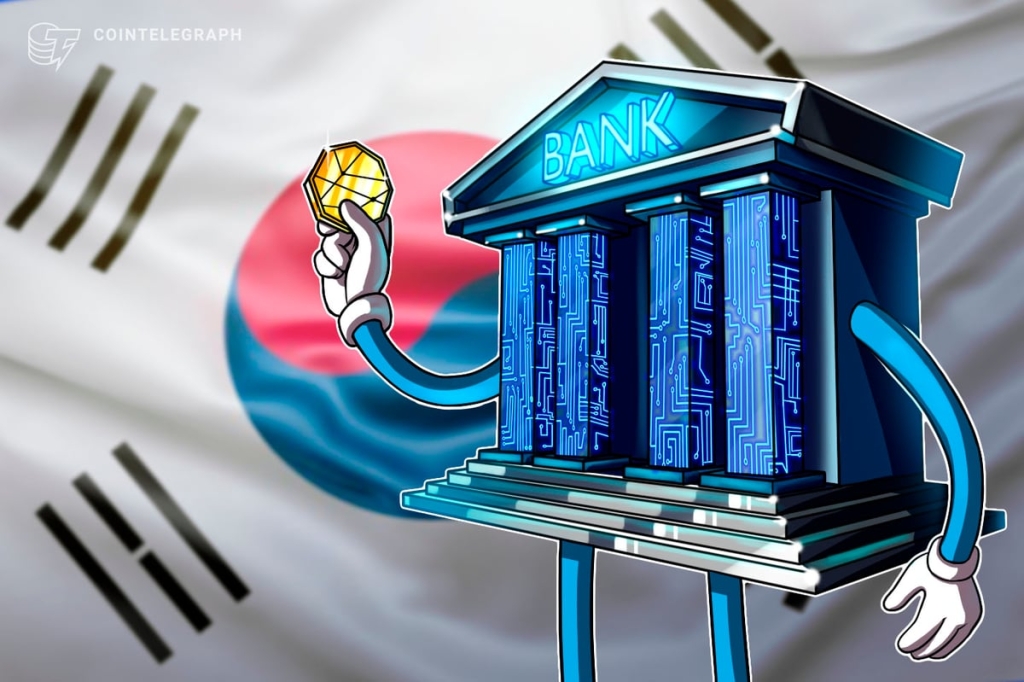
South Korea’s Central Bank Doubles Down on Bank-Only Stablecoin Issuance, Citing Systemic Risks
In a bold move that could reshape the future of digital finance in Asia, South Korea’s central bank has intensified its push to keep won-pegged stablecoin issuance firmly under the control of commercial banks, warning lawmakers that privately issued digital tokens could pose serious threats to monetary policy and financial stability.
The Bank of Korea (BOK) has submitted a comprehensive report to the National Assembly Strategy and Finance Committee, painting a picture of potential economic disruption if stablecoin issuance is opened to non-bank entities. According to local reporting, the central bank describes won stablecoins as “currency-like substitutes” that require careful regulation not just for their industrial benefits, but for their potential impact on monetary policy, foreign exchange stability, and overall financial system integrity.
A Warning Shot Across the Industry
The BOK’s report comes at a critical juncture as South Korea debates its delayed stablecoin framework. The central bank’s position is clear: banks, already subject to stringent capital, governance, and compliance standards, should be the first and primary issuers of won-pegged tokens. Any expansion beyond banks should proceed only gradually, after thorough risk assessments.
“The central bank is essentially saying that the financial system’s stability is too important to leave in the hands of tech companies or startups,” explains a Seoul-based financial analyst who requested anonymity. “They’re drawing a hard line in the sand.”
The concerns extend beyond simple regulatory control. The BOK warns that stablecoins could be used to circumvent foreign exchange regulations, including prior reporting requirements. This isn’t just theoretical—the bank points to real risks of capital flight and regulatory arbitrage that could emerge if non-bank entities are allowed to issue these digital tokens independently.
The Bank-Centered Consortium Model
In its report, the Bank of Korea proposes a sophisticated framework that would keep banks at the center of stablecoin issuance while allowing for some industry participation. The proposed bank-centered consortium model would see commercial banks holding majority stakes in any stablecoin issuing entity, with non-bank participants playing supporting roles under strict oversight.
This approach mirrors the central bank’s broader philosophy on financial innovation: controlled, measured, and always with systemic stability as the paramount concern. The BOK has even floated the idea of creating a statutory interagency policy body that would coordinate approvals and supervision across multiple regulators, taking inspiration from frameworks like the United States’ GENIUS Act.
Industry Pushback and Political Gridlock
The central bank’s hardline stance has sparked intense debate within South Korea’s fintech ecosystem. Industry participants argue that the bank’s approach lacks logical foundation and could stifle innovation in what many see as a crucial emerging sector.
Sangmin Seo, chair of the Kaia DLT Foundation, has been particularly vocal in his criticism. “The argument for banks leading the stablecoin rollout lacks a ‘logical foundation,'” Seo told Cointelegraph in a previous interview. He argues that establishing clearer rules for all types of issuers could minimize risks without unnecessarily restricting market participation.
This tension has created a political stalemate. On November 25, 2025, regulators remained split over whether banks should hold a majority stake in stablecoin issuers, leading to a delay in legislation that was initially expected in October. Lawmakers had hoped to resolve the issue in January 2026, but as of now, no final legislative timeline has been announced.
Global Context and Regional Implications
South Korea’s cautious approach to stablecoin regulation reflects broader concerns across Asia about the potential for digital currencies to disrupt traditional financial systems. The country’s experience with cryptocurrency trading—South Korea has one of the world’s most active crypto markets relative to its population—has made regulators particularly sensitive to potential risks.
The BOK’s stance also aligns with a growing global trend of central banks seeking to maintain control over digital currency issuance. From China’s digital yuan to the European Central Bank’s digital euro project, monetary authorities worldwide are grappling with how to embrace the benefits of digital currencies while maintaining their ability to implement effective monetary policy.
Technical and Economic Considerations
The central bank’s concerns are rooted in both technical and economic realities. Won-pegged stablecoins, if widely adopted, could potentially bypass traditional banking channels, making it harder for the BOK to implement monetary policy effectively. They could also create new vectors for capital flight, particularly given South Korea’s geographic proximity to China and the historical challenges of maintaining capital controls in an interconnected digital economy.
From a technical perspective, the BOK is also concerned about the potential for smart contract vulnerabilities, network congestion, and other technological risks that could create systemic vulnerabilities if stablecoin adoption becomes widespread.
The Path Forward
As the debate continues, the Bank of Korea appears to be positioning itself as the guardian of financial stability in an increasingly digital economy. The central bank’s approach suggests a future where financial innovation proceeds under close supervision, with traditional banking institutions serving as the gatekeepers of the digital financial system.
This philosophy represents a significant departure from the more open, permissionless vision of cryptocurrency that has dominated much of the blockchain industry’s development. Instead, it points toward a future where digital financial services operate within a framework of traditional financial regulation, albeit with new technological capabilities.
The outcome of this debate will have significant implications not just for South Korea’s fintech industry, but for the broader trajectory of digital finance in Asia. As other countries watch closely, South Korea’s approach to stablecoin regulation could serve as a model—or a cautionary tale—for how traditional financial systems adapt to the challenges and opportunities of digital currencies.
Tags
South Korea stablecoin regulation, Bank of Korea, won-pegged stablecoins, digital currency policy, financial stability, cryptocurrency regulation, bank-centered consortium, GENIUS Act framework, monetary policy, foreign exchange stability, fintech innovation, capital controls, blockchain regulation, digital asset supervision, financial system integrity, regulatory arbitrage, smart contract risks, capital flight prevention, traditional banking gatekeepers, digital financial services framework
Viral Phrases
“Banks must lead the stablecoin revolution,” “Digital dollars with traditional guardrails,” “The future of money needs a steady hand,” “Innovation within boundaries,” “Stability over speed,” “The central bank’s digital fortress,” “Won-pegged tokens: Innovation or instability?” “Banking’s blockchain moment,” “Regulators drawing the line in digital sand,” “The great stablecoin standoff,” “Traditional finance meets digital future,” “Monetary policy in the age of stablecoins,” “The bank-centered blockchain,” “Digital currency with institutional backbone,” “Financial stability first, innovation second”
,


Leave a Reply
Want to join the discussion?Feel free to contribute!