
Elliptic flags Russia-linked crypto exchanges over sanctions exposure risks
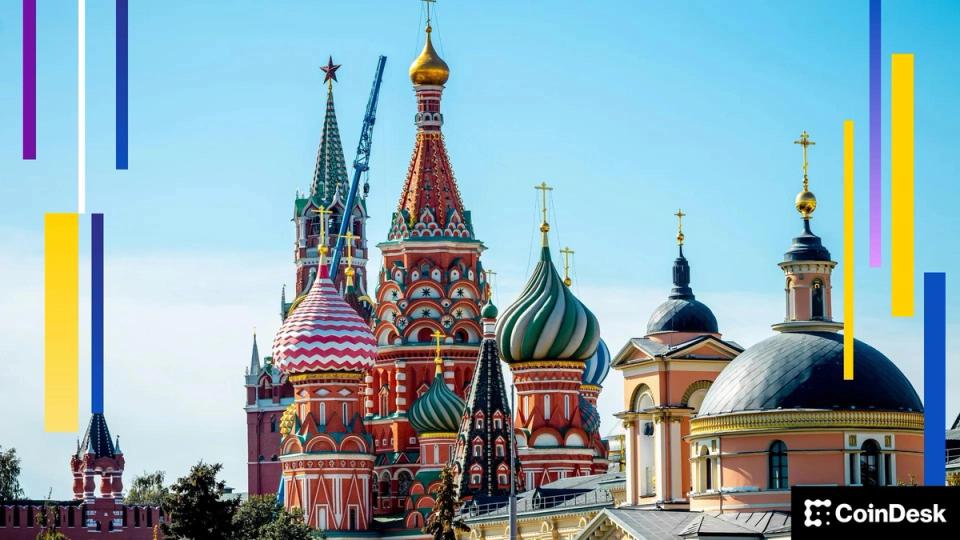
Russian-Linked Crypto Exchanges Under Fire: Billions in Sanctioned Transactions Uncovered
In a bombshell revelation that’s sending shockwaves through the global financial and crypto communities, blockchain analytics firm Elliptic has exposed how several cryptocurrency exchanges with ties to Russia are facilitating massive transactions linked to sanctioned entities, effectively creating a shadow financial system that operates beyond the reach of Western regulatory oversight.
The timing couldn’t be more critical. As tensions between Russia and Western nations remain at a boiling point following the 2022 Ukraine invasion, these findings suggest that cryptocurrency—once hailed as a revolutionary financial technology—may have become a sophisticated tool for sanctions evasion on an unprecedented scale.
The Digital Money Laundering Machine
According to Elliptic’s comprehensive investigation, certain crypto platforms have established sophisticated pathways that allow users to convert Russian rubles into cryptocurrencies, move funds across international borders outside traditional banking channels, and ultimately cash out through overseas brokers or exchanges. This three-step process effectively creates a parallel financial ecosystem that operates independently of SWIFT and other conventional financial infrastructure.
The implications are staggering. By routing transactions through these crypto exchanges, sanctioned entities can significantly reduce their reliance on the conventional financial system, making it exponentially more difficult for regulators and enforcement agencies to track and block illicit financial flows.
The $100 Billion Stablecoin Scandal
This latest report comes on the heels of another explosive finding from Elliptic just last month, which revealed that transactions involving A7A5, a ruble-pegged stablecoin, have surpassed an eye-popping $100 billion since Russia’s full-scale invasion of Ukraine. For context, that’s roughly equivalent to the entire GDP of countries like Bulgaria or Slovenia.
While Tether’s USDT has dominated headlines as the cryptocurrency of choice for sanctions evasion, the emergence of A7A5 as a major player in this shadow economy demonstrates how quickly the crypto landscape can evolve to meet the needs of those seeking to circumvent international restrictions.
The Scale of Western Retaliation
Since Russia launched its full-scale invasion in February 2022, Western governments have responded with an unprecedented barrage of sanctions targeting Russia’s energy sector, financial institutions, and strategic industries. The European Union has frozen approximately $250 billion in Russian assets, while the United Kingdom has seized nearly $35 billion.
Yet despite these massive financial penalties, the crypto ecosystem appears to have provided Russian entities with alternative channels to move money internationally, raising serious questions about the effectiveness of traditional sanctions in an increasingly digital world.
TRM Labs Confirms the Trend
Adding weight to Elliptic’s findings, blockchain intelligence firm TRM Labs released a report last week showing that illicit entities received $141 billion in stablecoins during 2025 alone—the highest volume recorded in five years. Even more concerning, over half of this total was linked to A7A5, the very same ruble-pegged token at the center of the current controversy.
Sanctions-related activity accounted for a staggering 86% of all illicit crypto flows tracked by TRM, with bad actors increasingly relying on stablecoin platforms to facilitate their operations. This data suggests that the problem isn’t isolated to a few bad actors but represents a systemic challenge to the global financial order.
The Exchanges Under Scrutiny
Bitpapa: The Sanctioned P2P Giant
Among the platforms highlighted in Elliptic’s report is Bitpapa, a peer-to-peer cryptocurrency exchange registered in the United Arab Emirates but primarily serving Russian users. The U.S. Treasury’s Office of Foreign Assets Control (OFAC) sanctioned Bitpapa in March 2024, yet the platform continues to operate and process significant transaction volumes.
Elliptic’s analysis estimates that approximately 9.7% of Bitpapa’s outgoing cryptocurrency flows were sent to sanctioned entities. Of particular concern, about 5% of these transactions were directed to Garantex, another exchange already under sanctions for similar violations.
Perhaps most alarmingly, Elliptic alleges that Bitpapa employs sophisticated techniques to rotate wallet addresses in a manner specifically designed to hinder transaction tracing. This suggests a deliberate effort to obscure the flow of funds and evade detection by blockchain analytics firms and regulatory authorities.
ABCeX: The Federation Tower Powerhouse
Operating from Moscow’s iconic Federation Tower—a symbol of Russia’s economic ambitions—ABCeX has processed at least $11 billion in cryptocurrency transactions, according to Elliptic’s findings. The exchange has been linked to flows involving other sanctioned platforms, including Garantex and Aifory Pro, suggesting a network of interconnected exchanges working in concert to facilitate sanctions evasion.
Rapira and Aifory Pro: The Local Networks
The report also named Rapira, which Elliptic says processed more than $72 million in transactions with Grinex, another sanctioned exchange. Aifory Pro offers cash-to-crypto services across multiple jurisdictions, including Moscow, Dubai, and Türkiye, providing physical touchpoints for users seeking to convert fiat currency into digital assets outside traditional banking channels.
The Technical Cat-and-Mouse Game
What makes this situation particularly challenging for regulators is the sophisticated technical measures employed by these exchanges. The practice of rotating wallet addresses, implementing complex transaction routing, and leveraging privacy-enhancing technologies creates a digital labyrinth that’s extremely difficult to navigate, even for specialized blockchain analytics firms.
This technological arms race between regulators and those seeking to evade sanctions represents a fundamental challenge to the traditional mechanisms of financial control and oversight. As cryptocurrency technology continues to evolve, the gap between regulatory capabilities and the tools available to bad actors may only widen.
The Broader Implications
These findings highlight the ongoing role of cryptocurrency infrastructure in facilitating cross-border financial activity linked to sanctioned actors, even as regulators increase scrutiny of the sector. The situation raises profound questions about the future of international sanctions enforcement in an era where digital currencies can bypass traditional financial controls with relative ease.
For the cryptocurrency industry as a whole, these revelations could prove devastating. After years of working to establish legitimacy and gain institutional acceptance, the sector now faces renewed scrutiny and potential regulatory crackdowns that could stifle innovation and adoption.
What Comes Next?
As Western governments grapple with these challenges, several paths forward are emerging. Some regulators are calling for stricter know-your-customer (KYC) requirements for cryptocurrency exchanges, while others advocate for enhanced blockchain surveillance capabilities. There are also discussions about extending sanctions to cryptocurrency infrastructure providers and payment processors that facilitate these transactions.
However, the decentralized and borderless nature of cryptocurrency presents unique enforcement challenges. Unlike traditional financial institutions that operate within specific jurisdictions, crypto exchanges can relocate operations, obscure ownership structures, and leverage technological tools to maintain operations even under intense regulatory pressure.
The coming months will be critical as policymakers, law enforcement agencies, and the cryptocurrency industry work to address these challenges. The outcome will likely shape the future of both international sanctions enforcement and the broader cryptocurrency ecosystem for years to come.
Tags & Viral Phrases:
Russian crypto sanctions evasion, blockchain analytics bombshell, $100 billion stablecoin scandal, ruble-pegged A7A5 token, Western sanctions ineffective, cryptocurrency money laundering, Bitpapa sanctioned exchange, Federation Tower crypto operations, TRM Labs illicit flows report, OFAC sanctions enforcement, digital sanctions evasion, crypto shadow banking system, blockchain surveillance challenges, decentralized finance risks, cryptocurrency regulatory crackdown, stablecoin illicit transactions, cross-border crypto flows, sanctions enforcement technology gap, cryptocurrency arms race, digital financial warfare, crypto compliance crisis, blockchain forensics limitations, international sanctions in digital age, cryptocurrency dark web connections, stablecoin regulatory scrutiny, peer-to-peer crypto exchanges, blockchain wallet rotation techniques, cryptocurrency financial crime, digital asset sanctions evasion, crypto industry reputation damage, blockchain intelligence firms, cryptocurrency regulatory future, digital currency geopolitical tensions, stablecoin market manipulation, cryptocurrency financial system bypass, blockchain transaction tracing, crypto exchange compliance failures, digital sanctions circumvention, cryptocurrency geopolitical weapon, blockchain analytics limitations, crypto financial infrastructure risks, stablecoin illicit market share, cryptocurrency enforcement challenges, digital asset regulatory framework, blockchain crime prevention, crypto financial system vulnerabilities, stablecoin regulatory backlash, cryptocurrency sanctions technology, blockchain financial crime detection, digital currency regulatory response.
,


Leave a Reply
Want to join the discussion?Feel free to contribute!