
Particle’s AI news app listens to podcasts for interesting clips so you you don’t have to
Particle App Expands Beyond Text to Deliver Podcast Clips as Part of Breaking News Coverage
In a move that signals the evolving nature of how people consume news, the AI-powered news app Particle has introduced a feature that brings podcast commentary directly into its news feed. The update, called Podcast Clips, allows users to access relevant audio snippets from podcasts alongside traditional news stories, creating a multimedia experience that reflects how modern audiences now get their information.
The timing is significant. As more people turn to podcasts for news analysis and commentary, Particle—developed by former Twitter engineers—is positioning itself at the intersection of traditional journalism and the booming podcast ecosystem. The feature arrives just as the app expands to Android, broadening its potential user base significantly.
From Hours of Audio to 45-Second Insights
The core problem Particle is solving is familiar to anyone who’s ever searched through a lengthy podcast hoping to find a specific discussion point. Instead of forcing users to scrub through hours of audio, Particle’s AI identifies and extracts the most relevant moments, presenting them as playable clips directly within news stories.
“We’ve done that basically for any news story — if there is a podcast that is talking about it, or relevant at all, we’ve got all those clips,” explains Sara Beykpour, Particle’s CEO and former Senior Director of Product Management at Twitter. “It’s a really cool way, when you’re reading a story or learning about a story, to get a breath of what are people saying about this? What’s the commentary?”
The technology behind this feature represents a sophisticated application of AI. Particle uses vector embedding models—not generative AI—to understand the relationship between podcast content and news stories. These models, provided by the same companies that offer large language models, help the app parse when and how podcast segments relate to specific news events.
A single podcast episode might touch on 10 to 20 different stories, making the AI’s ability to correctly identify and clip relevant segments crucial. The system also handles the technical challenge of determining precise start and end points for each clip, ensuring users get exactly the context they need without unnecessary preamble or trailing commentary.
The Podcast Revolution in News Consumption
Particle’s move reflects a broader shift in the media landscape. Podcasts have evolved from entertainment to become legitimate news sources, with public figures increasingly choosing podcast interviews over traditional media appearances. Tech CEOs, in particular, have embraced the format as a way to control their messaging, as Bloomberg reported in 2024.
This trend makes podcast integration essential for any comprehensive news platform. As Beykpour notes, “Not only are more people getting their news from podcasts and trusting them as reliable sources, but the medium is also becoming a destination for breaking news and major announcements from public figures.”
The feature also acknowledges how people now consume news across multiple formats simultaneously. Users can read a news article while playing back a relevant podcast clip, or choose to read the transcript with words highlighted as they’re spoken—a thoughtful accessibility feature that accommodates different learning styles and situations.
Beyond News: Entity-Based Podcast Discovery
Particle’s AI capabilities extend beyond simply matching clips to news stories. Because the app understands different entities—people, places, things—users can visit pages dedicated to notable figures and see all their podcast appearances arranged chronologically. This creates a new way to track how public figures discuss various topics over time, essentially building a searchable database of commentary across the podcast landscape.
For instance, someone interested in OpenAI CEO Sam Altman’s perspectives could visit his entity page and discover every podcast appearance where he discussed AI development, regulation, or other relevant topics. This entity-based approach transforms Particle from a news aggregator into a comprehensive media research tool.
Monetization and Platform Expansion
The Android release coincides with Particle’s first attempt at monetization through Particle+, an optional subscription service priced at $2.99 per month or $29.99 annually. The premium tier offers several features designed to enhance the user experience:
- Natural language summaries that can be customized to different styles
- Multiple voice options for the personalized audio feed
- Unlimited access to crossword puzzles
- Support for private questions with the AI chatbot
- Enhanced “Listen to the News” functionality
The subscription model represents a strategic choice in an era where many apps rely on advertising or data collection for revenue. By offering premium features, Particle aims to build a sustainable business while maintaining user trust.
Platform Improvements and International Growth
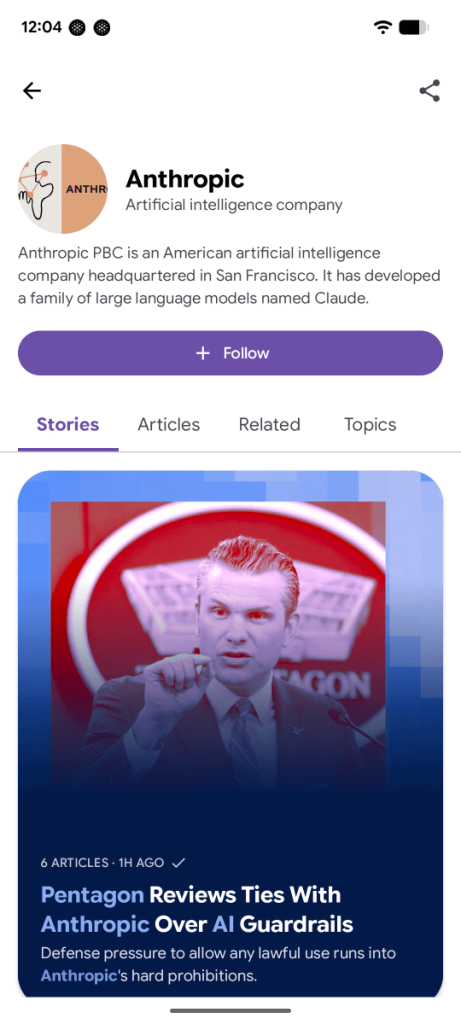
The Android launch brings additional improvements to the platform. The browse tab now includes timely stories like coverage of the 2026 Winter Olympics alongside traditional categories such as politics, tech, and entertainment. When users tap on entities, they’re presented with comprehensive pages featuring definitions, related stories, articles, connected entities, and associated topics.
These enhancements come as Particle experiences significant international growth. Even before the Android release, the app reported that 55% of its weekly users were outside the United States, with India representing its second-largest market at 15% of total users. This global adoption suggests strong demand for AI-powered news aggregation across different cultures and regions.
The Technical Foundation
Particle’s approach to podcast integration relies on several key technologies working in concert. The company uses embedding models to understand semantic relationships between audio content and text-based news stories. For transcription, Particle leverages ElevenLabs technology, though the specific algorithms for identifying optimal clip boundaries remain proprietary.
This combination of third-party and in-house technology allows Particle to scale its podcast coverage while maintaining quality control over the user experience. The system must handle the inherent challenges of audio processing, including varying sound quality, different speaking styles, and the contextual nature of many podcast discussions.
Industry Context and Competition
Particle’s podcast integration puts it ahead of many traditional news aggregators, but it’s not alone in recognizing the importance of audio content. Newsrooms themselves are increasingly using AI to monitor podcasts, with The New York Times employing custom AI tools to transcribe and summarize episodes from right-wing and conservative podcasts, according to Nieman Lab’s recent reporting.
This parallel development highlights how the entire news industry is adapting to the podcast revolution. While traditional outlets use these tools for internal research and competitive intelligence, Particle is bringing similar capabilities directly to consumers, democratizing access to podcast-based news analysis.
The Future of News Consumption
As Particle continues to evolve, its success will likely depend on how well it balances innovation with reliability. The app must ensure its AI accurately represents podcast content without taking statements out of context, a particular challenge when dealing with nuanced discussions that often characterize the medium.
The introduction of Podcast Clips represents more than just a new feature—it’s a recognition that the boundaries between different media formats are increasingly blurred. Modern news consumers don’t distinguish between reading an article, listening to a podcast, or watching a video; they want comprehensive coverage that meets them where they are, in whatever format they prefer.
Particle’s approach suggests a future where AI doesn’t just aggregate news but intelligently connects different forms of media coverage, creating a more complete picture of how stories develop and how different voices contribute to public understanding. As the podcast ecosystem continues to grow and evolve, tools that can effectively navigate and organize this content will become increasingly valuable.
The question now is whether Particle can maintain its technological edge as competitors inevitably follow suit, and whether users will embrace paying for premium features in an era of abundant free news sources. The company’s international growth and innovative feature set suggest it’s on the right track, but the rapidly evolving nature of both AI technology and news consumption habits means the journey is just beginning.
Tags: AI news app, Particle app, podcast integration, news consumption, Sara Beykpour, Twitter engineers, vector embeddings, podcast clips, multimedia news, Android release, news monetization, AI transcription, entity-based discovery, global news app, podcast revolution, news aggregation, audio news, tech CEOs podcasts, news commentary, AI-powered journalism, breaking news podcasts, podcast discovery, news technology, media consumption trends, podcast clipping technology, ElevenLabs transcription, news ecosystem evolution, podcast-based news, AI news features, international app growth, news app monetization, multimedia storytelling, podcast commentary, news AI features, audio content discovery, news app innovation, podcast news integration, AI media analysis, news app features, podcast content organization, news consumption habits, AI-powered news discovery, podcast ecosystem, news app technology, audio news clips, podcast news coverage, news app development, AI news tools, podcast transcription, news app expansion, multimedia news experience
Viral Sentences:
Particle just changed how we consume news forever by adding podcast clips to your news feed
Former Twitter engineers are revolutionizing news consumption with AI-powered podcast integration
The future of news is here: read articles while listening to relevant podcast commentary in real-time
Particle’s new feature solves the biggest problem with podcasts: finding the 45 seconds that actually matter
Tech CEOs are ditching traditional media for podcasts, and now your news app is finally catching up
Particle uses the same AI that powers ChatGPT to understand what podcasts are saying about breaking news
55% of Particle users are outside the US, proving AI news apps are going global
Particle+ subscription gives you AI news summaries in any style you want for under $3/month
The New York Times uses AI to spy on conservative podcasts, but Particle lets you listen for yourself
Particle’s secret sauce? Proprietary AI that knows exactly where to clip a podcast for maximum relevance
ElevenLabs powers Particle’s transcription, but the real magic is in the clipping algorithm
Particle understands entities so well you can see every podcast Sam Altman has ever appeared on
Android users finally get Particle, and it comes with Olympic coverage built-in
Particle is betting you’ll pay $2.99/month for natural language news summaries and unlimited crosswords
The podcast revolution is here, and Particle is making sure you don’t miss a single clip
Particle’s AI doesn’t just match podcasts to news stories—it understands the semantic relationships between them
Former Twitter product leads are building the future of news, one podcast clip at a time
Particle proves that the best news app isn’t just about articles anymore—it’s about the full multimedia experience
The lines between articles, podcasts, and videos are blurring, and Particle is leading the charge
Particle’s international growth shows that AI-powered news aggregation transcends cultural boundaries
Particle is doing what newsrooms have been doing internally: using AI to monitor podcast commentary
The future of journalism isn’t just writing—it’s understanding and organizing all forms of media
Particle’s entity pages turn podcast appearances into searchable databases of public commentary
The app that understands both news and podcasts might just be the ultimate media consumption tool
Particle’s clipping technology could be worth more than the entire app itself
When news breaks, Particle will show you not just what happened, but what podcasters are saying about it
Particle proves that sometimes the best way to understand news is to hear it in someone’s own voice
The subscription model might be Particle’s smartest move in an ad-driven world
Particle’s browse tab now includes the 2026 Winter Olympics, because why not?
Particle is building the Wikipedia of podcast commentary, one clip at a time
The AI that powers Particle could revolutionize how we discover and consume audio content
Particle’s success might convince every news app that podcast integration isn’t optional anymore
The former Twitter engineers behind Particle understand that modern news consumption is omnichannel
Particle’s approach to news might be the antidote to the filter bubble problem
The technology behind Particle’s podcast clips could be adapted for YouTube videos, webinars, and more
Particle proves that AI can make news consumption more efficient without sacrificing depth
The international adoption of Particle suggests a universal demand for smarter news aggregation
Particle’s entity-based approach could change how we research public figures and their media appearances
The future of news might not be about writing better articles, but about connecting all available media coverage
Particle’s podcast integration is just the beginning of a much larger vision for AI-powered media consumption
,


Leave a Reply
Want to join the discussion?Feel free to contribute!