
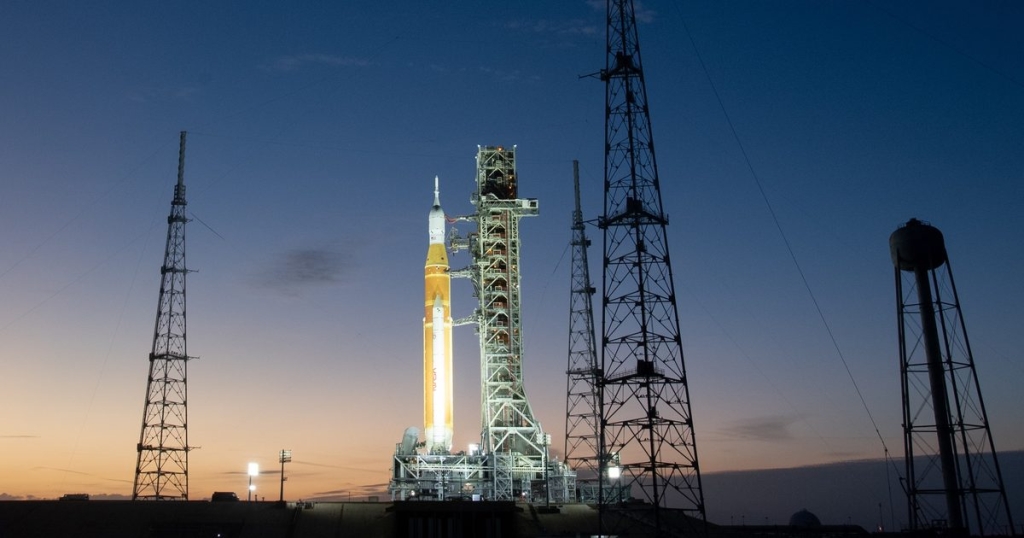
NASA’s moon rocket is about to leave the launchpad, but it ain’t going skyward
NASA Delays Artemis II Moon Mission to April 2026 After Helium Leak Discovery
In a major setback for NASA’s ambitious return to the Moon, the space agency has officially pushed back the Artemis II crewed mission to no earlier than April 2026, citing a critical helium leak discovered during the Space Launch System (SLS) rocket’s second wet dress rehearsal.
The four astronauts preparing to make history as the first humans to fly beyond low Earth orbit since the Apollo era will have to wait a little longer before embarking on their lunar flyby mission. NASA astronauts Victor Glover, Reid Wiseman, and Christina Koch, along with Canadian Space Agency astronaut Jeremy Hansen, were originally scheduled to launch in early 2026, but technical challenges have forced a delay.
The Helium Leak That Grounded History
During the SLS rocket’s second wet dress rehearsal conducted last weekend, engineers detected an anomaly in the helium flow system that feeds the rocket’s upper stage. This discovery has proven significant enough to warrant the complete rollback of the 322-foot-tall rocket from Kennedy Space Center’s Launch Pad 39B back to the Vehicle Assembly Building (VAB).
The four-mile journey back to the VAB is scheduled for Tuesday, February 24, marking yet another chapter in the SLS program’s challenging path to operational status. NASA engineers determined that the helium leak cannot be properly diagnosed and repaired while the rocket remains on the launchpad, necessitating this precautionary measure.
Timeline Complications and Launch Window Preservation
NASA had recently announced a target launch date of March 6, 2026, following delays from an earlier February 8 target. However, the helium leak discovery has now pushed the earliest possible launch to April 2026. The space agency emphasized that this rollback could actually help preserve the April launch window, depending on how quickly engineers can identify and resolve the issue.
“NASA is committed to ensuring the safety and success of the Artemis II mission,” the agency stated. “The quick work to begin preparations for rolling the rocket and spacecraft back to the VAB potentially preserves the April launch window, pending the outcome of data findings, repair efforts, and how the schedule comes to fruition in the coming days and weeks.”
The Artemis II Crew Remains Ready
Despite the delay, the Artemis II crew remains in good spirits and continues their training regimen. The astronauts had recently completed their pre-launch quarantine but were released on Saturday evening. They have since returned to NASA’s Johnson Space Center in Houston, Texas, where they will continue mission preparation activities.
The international crew represents a significant milestone for NASA’s Artemis program, which aims to establish a sustainable presence on the Moon and eventually pave the way for human missions to Mars. Commander Reid Wiseman, pilot Victor Glover, and mission specialists Christina Koch and Jeremy Hansen have been training extensively for this historic mission.
Technical Challenges Plague SLS Development
The helium leak represents just the latest in a series of technical challenges that have plagued the SLS program since its inception. The rocket, which stands as the most powerful ever built, has faced numerous delays and cost overruns during its development phase.
The wet dress rehearsal, a crucial pre-launch test where the rocket is fueled and brought through a simulated countdown, has been particularly problematic for the SLS program. This marks the second time that issues discovered during this test have forced delays in the launch schedule.
Mission Objectives and Historical Significance
When Artemis II finally launches, it will mark the first crewed mission beyond low Earth orbit since the final Apollo mission in 1972. The 10-day journey will see the Orion spacecraft perform a flyby of the Moon, testing critical systems and gathering data that will inform future Artemis missions.
The mission’s primary objectives include validating life support systems, testing the spacecraft’s navigation and communication capabilities, and demonstrating the Orion capsule’s ability to support human life during extended spaceflight. The crew will also perform detailed system checks while in lunar orbit, ensuring that all components function as designed in the harsh environment of deep space.
Looking Ahead to Artemis III
A successful Artemis II mission will set the stage for Artemis III, which aims to land astronauts near the Moon’s south pole. This mission, potentially occurring before the end of the decade, represents NASA’s first crewed lunar landing since Apollo 17 and will include the first woman and first person of color to walk on the lunar surface.
The Artemis program represents a fundamental shift in NASA’s approach to lunar exploration, focusing on sustainability and the establishment of a long-term presence rather than the “flags and footprints” approach of the Apollo era. The lessons learned from Artemis II will be crucial in ensuring the success of future lunar landing missions.
Public Engagement and Mission Coverage
NASA has been actively engaging the public throughout the Artemis program’s development, sharing detailed information about mission objectives, technical challenges, and progress updates. The space agency recently released an animated preview of the Artemis II mission, providing space enthusiasts with a visual representation of what to expect during the historic flight.
For those eager to follow the mission when it eventually launches, NASA plans comprehensive coverage including live broadcasts, educational programming, and real-time data feeds. The agency recognizes the public interest in this historic return to lunar exploration and is committed to keeping space enthusiasts informed throughout the mission.
The Road Ahead
As NASA works to resolve the helium leak issue and prepare for the April 2026 launch window, the space agency continues to emphasize that safety remains the top priority. The additional time gained through this delay will allow engineers to thoroughly investigate the root cause of the helium flow problem and implement appropriate solutions.
The Artemis program represents NASA’s most ambitious deep space exploration effort in decades, and while technical challenges are inevitable in such complex endeavors, the agency remains committed to returning humans to the Moon and establishing a foundation for future Mars missions.
Tags
Artemis II, NASA, Space Launch System, SLS, helium leak, lunar mission, moon exploration, Victor Glover, Reid Wiseman, Christina Koch, Jeremy Hansen, Kennedy Space Center, Vehicle Assembly Building, Orion spacecraft, deep space, crewed mission, space exploration, Artemis program, lunar flyby, space technology, rocket engineering
Viral Phrases
- “First humans beyond Earth orbit in 50 years”
- “NASA’s return to the Moon delayed but determined”
- “Helium leak grounds historic lunar mission”
- “Four astronauts wait for their Moon moment”
- “The most powerful rocket ever built hits a snag”
- “From Apollo to Artemis: The next giant leap”
- “NASA’s Moon mission pushed to April 2026”
- “Historic crew ready despite technical setbacks”
- “The SLS program’s latest challenge”
- “Moon landing dreams delayed but not denied”
- “Artemis II: When will humans return to deep space?”
- “NASA engineers tackle critical helium system issue”
- “The four-mile rollback that could save the mission”
- “Space exploration’s newest hurdle”
- “Waiting for the Moon: Astronauts in limbo”
- “The technical drama behind NASA’s lunar ambitions”
- “From launchpad to VAB: A rocket’s journey”
- “NASA’s most powerful rocket faces its toughest test”
- “The crew that will circle the Moon”
- “Space history on hold”
,

Leave a Reply
Want to join the discussion?Feel free to contribute!