
Data center builders thought farmers would willingly sell land, learn otherwise
Tech Giants Are Bulldozing America’s Heartland—One Farm at a Time
Across rural America, a quiet war is raging—one that pits century-old family farms against the insatiable hunger of Big Tech’s AI data centers. As companies like Google, Microsoft, and Amazon race to build massive computing facilities to power artificial intelligence, they’re descending on America’s agricultural heartland with offers that would make anyone’s head spin.
But in towns from Pennsylvania to Wisconsin, farmers are saying something radical in our age of instant wealth: “No, thank you.”
Take 75-year-old Timothy Grosser in Huddleston’s county, who turned down what the Guardian described as a “name your price” offer for his 250-acre farm. When the tech company came knocking, Grosser didn’t even bother haggling. “There is none,” he said flatly.
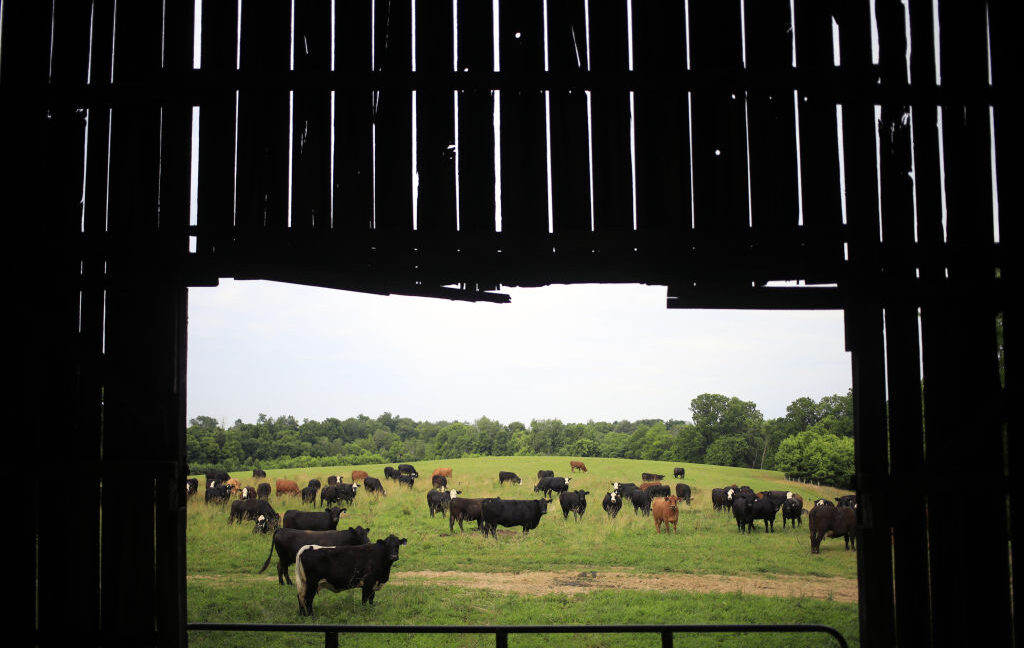
His reasoning cuts to the core of what these companies are fundamentally misunderstanding. This isn’t just dirt and crops—it’s where Grosser “lives, hunts, and raises cattle,” where his grandson ventures out every Christmas to harvest a turkey for the family feast. “The money’s not worth giving up your lifestyle,” he explained.
But Grosser isn’t alone in this David-versus-Goliath battle. In Wisconsin, Anthony Barta finds himself caught between a life-changing fortune and the deep, unbreakable bonds that tie farming communities together. Barta’s neighbor was reportedly offered between $70 million and $80 million for 6,000 acres—enough money to retire multiple generations in obscene luxury.
“Me and my family, we own the farm and run close to 1,000 animals,” Barta said, his voice heavy with concern. “What would that do if that’s next to it? Can they even be there? You know, that’s our livelihood—the farm. We’re just concerned what, if it would go through, what would happen to us and our neighbors and farms and our community? What would happen to that?”
The math is dizzying. A single data center can consume as much electricity as 50,000 homes and millions of gallons of water daily for cooling. But the real calculus for these farmers isn’t about kilowatts or gallons—it’s about heritage, community, and a way of life that predates the internet by centuries.
Some tech companies aren’t accustomed to hearing “no.” Eighty-six-year-old Mervin Raudabaugh, Jr., who spent 51 years milking cows in Pennsylvania, described them as “relentless.” After years of pressure, Raudabaugh found an ingenious workaround: he turned to a farmland preservation program that uses taxpayer dollars to protect agricultural land from development.
The catch? He’ll receive only about one-eighth of what the developers offered. But as Raudabaugh put it, “These people have hounded the living daylights out of me.” For him, the peace of mind that his land will remain farmland—forever out of reach of persistent tech companies—is worth the fortune he’s walking away from.
This isn’t just about individual farmers making principled stands. It’s about the soul of rural America at a crossroads. These data center deals are arriving during what experts call a “fragile farm economy,” where many family farms are already struggling to survive against corporate agriculture and unpredictable weather patterns.
The concerns run deeper than economics. Communities are fighting to preserve the character of their land—the rolling hills, the open spaces, the quiet nights unbroken by the constant hum of server cooling systems. They worry about noise pollution that can reach levels of 80 decibels (about as loud as heavy traffic), about construction that could last for years, and about environmental impacts that might not be fully understood for decades.
There’s also a profound cultural anxiety at play. When a tech company builds a data center, they typically bring in specialized workers from outside the community. The result? A massive facility that contributes relatively little to the local economy while fundamentally altering the landscape and potentially driving up property values beyond what locals can afford.
The irony isn’t lost on these farmers: the very technology that’s threatening their way of life—AI systems that can write essays, create art, and analyze data at superhuman speeds—requires physical infrastructure that can only be built in places with space, water, and power. And right now, that means America’s farmland.
As this battle unfolds, it raises uncomfortable questions about progress and preservation. Is the march of technology worth the cost of America’s agricultural heritage? Can we have both cutting-edge AI and thriving family farms? Or are we witnessing the beginning of a fundamental shift in how and where Americans live and work?
For now, farmers like Grosser, Barta, and Raudabaugh are drawing lines in the soil, telling tech giants that some things money can’t buy. But with AI’s appetite growing exponentially and tech companies showing no signs of slowing down, this clash between silicon and soil is far from over.
The question is: when the dust settles, what will be left of America’s farming communities? And more importantly—what will we have lost in the pursuit of artificial intelligence?
Tags & Viral Phrases:
- Tech companies offering millions for farmland
- Farmers saying “no” to billionaire tech offers
- AI data centers vs family farms
- The $80 million offer that got rejected
- Rural America fights back against Big Tech
- “The money’s not worth giving up your lifestyle”
- Tech giants hounding 86-year-old farmers
- Data centers consuming water like small cities
- Family farms vs artificial intelligence
- The quiet war in America’s heartland
- Farmers choosing heritage over wealth
- “Relentless” tech companies pressure farmers
- Farmland preservation vs data center development
- The real cost of AI infrastructure
- When progress threatens tradition
- America’s agricultural soul at stake
- Silicon Valley vs the soil
- The $70 million question
- Why some farmers are walking away from fortunes
- The future of rural America
,


Leave a Reply
Want to join the discussion?Feel free to contribute!