
Everyone’s a queen: The ant species with no males or workers
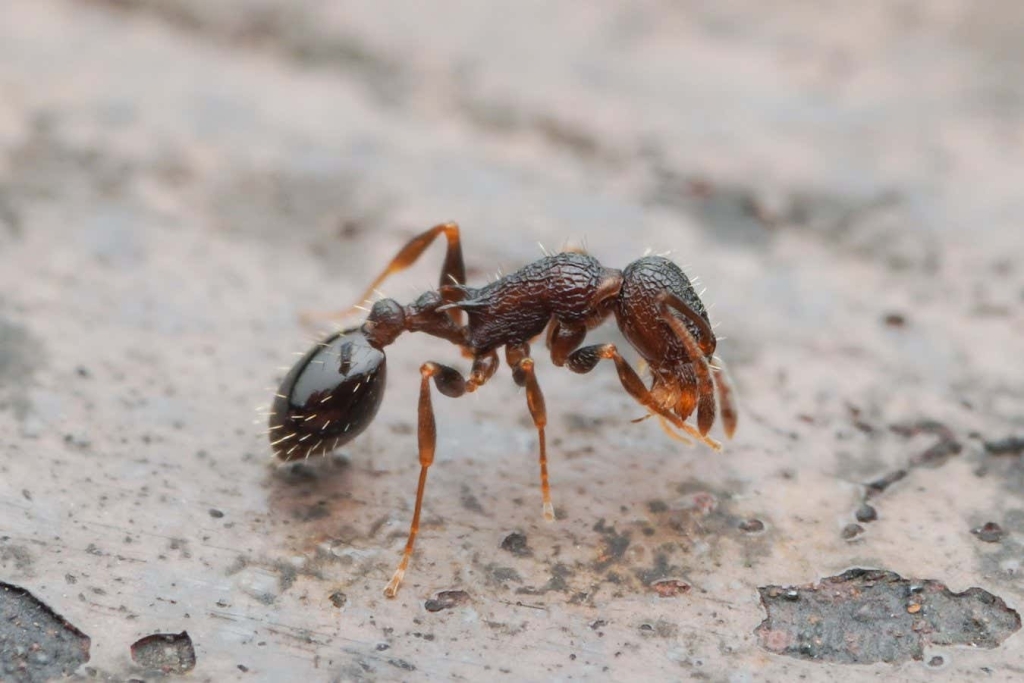
Japan’s Parasitic Ant Revolution: The World’s First All-Queen Society
In a discovery that’s sending shockwaves through the entomology world, researchers have identified what appears to be the first all-queen ant society on Earth. The parasitic species Temnothorax kinomurai, native to Japan, has evolved a revolutionary social structure where every individual is a queen, eliminating the need for males and female workers entirely.
This groundbreaking finding, published in a recent study led by Jürgen Heinze at the University of Regensburg, Germany, represents a dramatic departure from the traditional ant colony model. For decades, scientists suspected that T. kinomurai might be producing only queens, but definitive proof has eluded researchers until now.
The parasitic ants employ a sophisticated invasion strategy. Young T. kinomurai queens actively seek out and infiltrate colonies of their host species, Temnothorax makora. Upon entry, these invading queens execute a brutal coup d’état, using their stingers to kill the host queen and several workers. Once the host colony is under their control, the parasitic queens begin reproducing through parthenogenesis – a form of asexual reproduction where offspring are genetic clones of the mother.
What makes this discovery particularly fascinating is the complete absence of males in the species’ life cycle. The researchers collected six colonies containing T. kinomurai queens and successfully bred 43 queen offspring in laboratory conditions. Detailed anatomical examination confirmed that every single individual was female, with no trace of male genitalia or characteristics.
The parasitic queens then demonstrated their remarkable reproductive strategy in action. When given the opportunity to take over T. makora colonies, seven queens survived the invasion attempts and successfully established control. These seven queens went on to produce 57 additional offspring, all of which were confirmed to be female queens.
“This species exhibits an entirely new form of social organization, adding another exciting dimension to the already rich and varied world of ants,” explains Heinze. The discovery challenges our fundamental understanding of social insect evolution and raises intriguing questions about the limits of social organization in nature.
The evolutionary logic behind this all-queen strategy is compelling. Traditional ant colonies produce a mix of queens, workers, and males, with males serving only to mate before dying. By eliminating males entirely and producing only queens, T. kinomurai maximizes its reproductive potential. Each queen can found a new colony without the need for mating, dramatically increasing the species’ chances of successful colonization.
“If parthenogenesis evolves due to random mutation, as in T. kinomurai, queens can produce 100 daughters, which do not need to mate – hence, there are 100 queens that try to found a new colony,” Heinze elaborates. “Obviously, the success of parthenogenetic queens is higher than that of sexual queens.”
This reproductive strategy comes with significant risks. The high failure rate observed in the study – only seven out of 43 queens successfully completed their invasion attempts – demonstrates the dangerous nature of the parasitic lifestyle. However, the potential rewards are enormous. Instead of producing a single reproductive queen alongside hundreds of sterile workers, T. kinomurai invests all its resources in producing reproductive individuals.
The discovery represents what Heinze describes as “the final step in the evolution of social parasitism.” This species showcases the extraordinary flexibility that exists within social insect life histories, pushing the boundaries of what we thought possible in social organization.
The implications of this discovery extend far beyond entomology. It challenges our understanding of social evolution, reproductive strategies, and the fundamental principles that govern complex societies. The T. kinomurai system demonstrates that even the most established biological paradigms can be overturned by nature’s creativity.
As researchers continue to study this remarkable species, they hope to uncover the genetic and environmental factors that led to this unique evolutionary path. The discovery of T. kinomurai serves as a powerful reminder that nature still holds countless surprises, waiting to be discovered in the most unexpected places.
Tags: parasitic ants, all-queen society, parthenogenesis, social evolution, ant behavior, invasive species, asexual reproduction, evolutionary biology, Japanese wildlife, entomology breakthrough
Viral Sentences:
- Nature just rewrote the rulebook on ant colonies!
- Meet the world’s first all-queen ant society
- No males, no workers – just queens taking over
- Japan’s parasitic ants are evolutionary game-changers
- Scientists discover ant species that defies all expectations
- This ant species proves nature is full of surprises
- The ultimate feminist ant colony has been found
- Evolution takes a wild turn with these parasitic queens
- Ants just got a whole lot more interesting
- Nature’s most extreme social experiment revealed
,


Leave a Reply
Want to join the discussion?Feel free to contribute!