
Why conservationists are making rhinos radioactive
Tech Tools Take on Wildlife Crime: 5 Innovations Fighting Poaching and Trafficking
Every year, poachers kill hundreds of rhinos, fishing crews haul millions of sharks from protected waters, and smugglers move countless animals and plants across borders. This illegal activity, worth $20 billion annually according to Interpol, is the world’s fourth-most-lucrative criminal enterprise after drugs, weapons, and human trafficking. Despite the United Nations’ goal to end trafficking in protected species by 2030, environmental guardians remain underfunded and ill-equipped to combat sophisticated criminal networks.
However, hope is emerging as technologies developed for cities and research facilities move into wild spaces. These tools are empowering rangers, community groups, and law enforcement to detect illegal goods, trace smuggling networks, and prevent poaching at the source.
In December 2024, Interpol’s Operation Thunder 2025 demonstrated this potential, coordinating 134 countries to seize 30,000 live animals using digital forensics and AI-driven detection. “The success of Thunder 2025 shows that modern threats demand modern tools,” says José Adrián Sanchez Romero of Interpol’s environmental security subdirectorate.
Here are five groundbreaking technologies that are transforming the fight against wildlife crime:
Radioactive Rhino Horns: Making Poaching Pointless
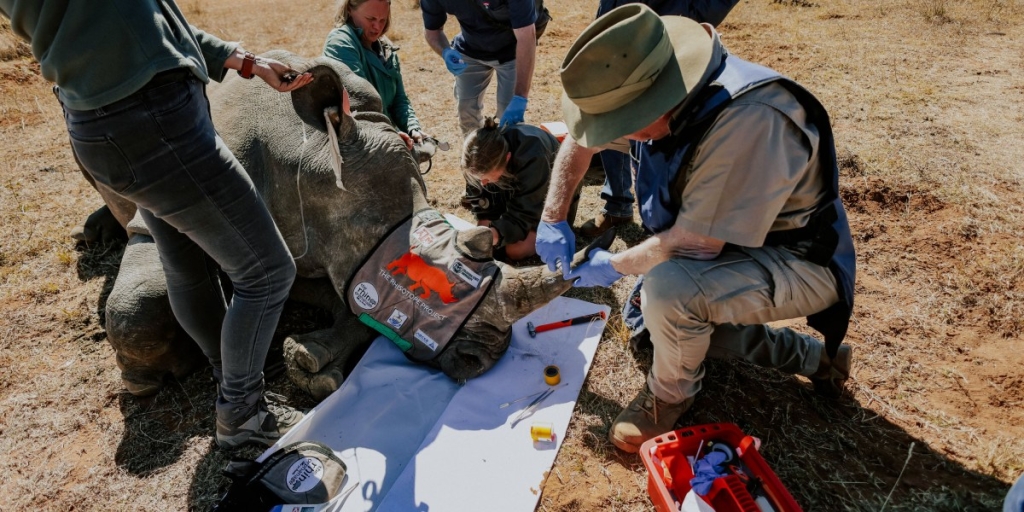
In a groundbreaking approach, South African researchers have won government approval to drill radioactive pellets into rhino horns. The Rhisotope Project, supported by the International Atomic Energy Agency, has fitted 33 rhinos with low-level radioactive isotopes that don’t harm the animals but make their horns detectable by radiation portal monitors at airports and shipping terminals worldwide.
Each treatment costs about $1,300 per rhino and remains effective for five years. The radiation renders horns unsafe for traditional medicine use while making them easily detectable to border security. “It’s almost impossible to remove isotopes unless you are a skilled radiation protection officer,” explains project leader James Larkin. The South African health agency has approved expanding the program to treat up to 500 rhinos annually.
X-Ray Fluorescence: Reading Animal Stories in Keratin
Australian researchers at Taronga Conservation Society have developed an XRF gun that analyzes elemental signatures in animal keratin—the protein in quills, feathers, and hair. This technology can distinguish between wild and captive-bred animals by reading their dietary histories recorded in their bodies.
The device has exposed illegal wildlife trade by revealing that Indonesia’s exports of “captive-bred” echidnas were likely wild-caught, given the species’ extreme difficulty in breeding. Australian authorities used the technology alongside AI parcel scanners in post offices, uncovering over 100 illegally shipped lizards and resulting in a three-year jail sentence for a distributor.
AI-Powered Ocean Monitoring: Finding Illegal Fishing in Vast Seas
Skylight AI, developed by the Allen Institute for AI, uses artificial intelligence to analyze satellite and ship-tracking data across the world’s oceans. The system monitors approximately 300,000 vessels weekly, detecting suspicious fishing patterns that would be impossible for human analysts to identify across vast marine protected areas.
In Panama’s Coiba Ridge marine reserve, Skylight’s AI detected long-line fishing patterns, requested high-resolution satellite images, and enabled authorities to seize six vessels and thousands of kilograms of illegally caught fish. “The Panama case really was one of those ‘wow’ moments,” says Ted Schmitt, senior director of conservation at AI2.
Rapid DNA Testing: Species Identification in Minutes
WildTechDNA has developed a DNA test that works like a home pregnancy test, identifying species from samples in about three minutes. The technology uses a simple two-step process: quick DNA extraction followed by lateral-flow strips that provide yes-or-no answers about whether a sample belongs to a target species.
Canadian authorities have used the tests to detect European eels being smuggled disguised as other species, with rates dropping below 1% in a 2025 campaign compared to higher rates detected in 2016. The tests can identify everything from snow leopard hair to disease-causing fungi in amphibians.
Acoustic Monitoring: Listening for Illegal Activity
Rainforest Connection has pioneered bioacoustic monitoring using solar-powered devices called Guardians that capture rainforest soundscapes for years. These devices detect chainsaws, gunshots, and logging trucks in real-time, alerting local partners including Indigenous groups and law enforcement.
The technology has evolved to use machine learning to identify human intruders by detecting “uncharacteristic sudden changes to the soundscape.” When animals go silent, it can indicate poachers’ presence. In 2026, Rainforest Connection will deploy this approach across reserves in Thailand, Jamaica, and Romania.
These technologies represent a turning point in wildlife conservation, providing the tools needed to combat increasingly sophisticated criminal networks. As these innovations continue to evolve and spread, they offer genuine hope that the 2030 target to end trafficking in protected species might finally be within reach.
WildlifeCrime #ConservationTech #AntiPoaching #EndangeredSpecies #WildlifeTrafficking #ConservationInnovation #TechForGood #EnvironmentalProtection #AIForConservation #Biodiversity #SaveWildlife #RhinoProtection #MarineConservation #RainforestProtection #DNAforensics #AcousticMonitoring #RadioactiveTagging #WildlifeEnforcement #SustainableFuture #TechSolutions
,

Leave a Reply
Want to join the discussion?Feel free to contribute!