
Oura launches a proprietary AI model focused on women’s health
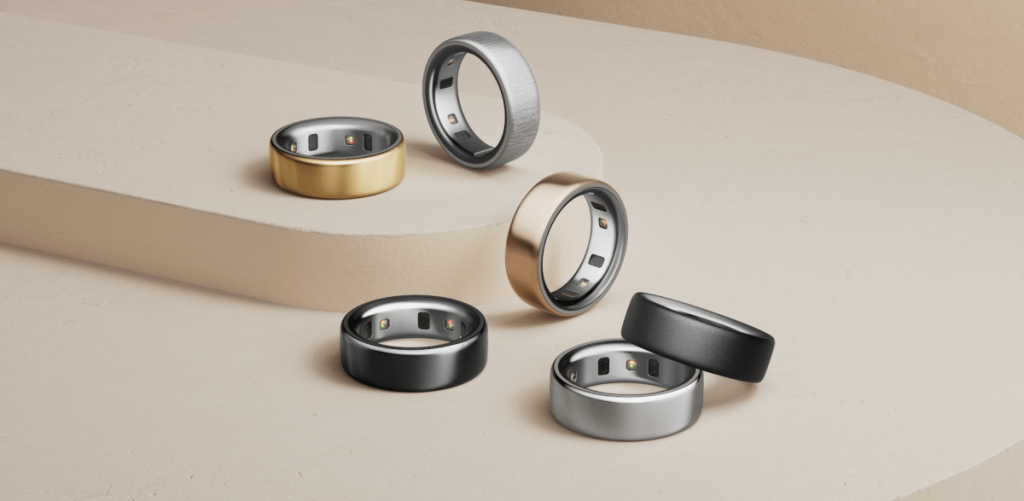
Oura Rings Up a Major AI Move: A Women’s Health Model That Actually Gets It
In a tech world where “personalized AI” often means “generic chatbot with your name slapped on,” Oura is doing something genuinely different. On Tuesday, the wearable wellness pioneer announced its first proprietary AI model—one designed from the ground up to deliver personalized, clinically grounded insights into women’s health.
This isn’t just another algorithm update. It’s a deliberate, carefully constructed system aimed at supporting the full reproductive health spectrum, from early menstrual cycles through menopause. And it’s launching inside Oura Labs, the company’s experimental feature hub within the Oura app, giving members the option to opt in and test the cutting edge of AI-driven health support.
Why This Matters More Than Ever
Women’s health has long been underserved by both traditional medicine and tech. From dismissive misdiagnoses to data gaps in clinical trials, the system has historically treated women’s health concerns as niche rather than foundational. Meanwhile, AI chatbots are exploding in popularity for health guidance—but most are built on generic datasets that fail to capture the nuances of female physiology.
Oura’s new model changes that equation. It’s trained on established medical standards, peer-reviewed research, and knowledge sources vetted by the company’s in-house team of board-certified clinicians and women’s health experts. But here’s the kicker: it also integrates real-world biometric signals and long-term trends from the user’s own Oura Ring data—sleep patterns, activity levels, cycle and pregnancy data, stress metrics, and more.
That combination of rigorous science and lived, longitudinal data is what makes this model unique. It’s not just spitting out WebMD-style answers; it’s contextualizing them within your personal health story.
The Brains Behind the Breakthrough
Ricky Bloomfield, MD, Oura’s chief medical officer, framed the launch as a fundamental shift in how AI can be responsibly deployed in health. “Women’s health is too complex—and too often overlooked—to rely on one-size-fits-all systems,” he said in a press release. “By designing a model specifically for women and grounding it in trusted clinical science and real-world biometric data, we’re setting the standard for how responsible intelligence should be built.”
That ethos is baked into the model’s design. It’s intentionally non-dismissive, reassuring, and emotionally supportive—because, as any woman who’s ever been gaslit by a healthcare provider knows, tone matters. But Oura is also clear about its limits: this isn’t a replacement for a doctor. The AI won’t diagnose or prescribe; it’s a guide, not a clinician.
A Strategic Play in a Growing Market
The timing of this launch is no accident. Last October, Oura’s chief commercial officer Dorothy Kilroy told TechCrunch that the company’s fastest-growing user segment isn’t gym rats—it’s women in their early twenties. That demographic shift has clearly influenced the company’s product roadmap, and this AI model is a direct response to their needs.
It’s also a savvy move in a competitive wearables market. While Apple and Fitbit dominate headlines, Oura has carved out a niche by focusing on holistic wellness and, increasingly, women’s health. This AI model reinforces that positioning and could help the company attract even more users in a demographic that’s often underserved by mainstream tech.
Privacy and Trust: The Fine Print
In an era of data breaches and AI ethics scandals, Oura is leaning hard into transparency. The company says the model is hosted entirely on Oura-controlled infrastructure, and that conversations are never shared or sold. For users concerned about privacy, that’s a crucial reassurance—especially when dealing with sensitive health data.
How to Get Access
Curious to try it out? The new model is rolling out now in Oura Labs. To opt in, just navigate to the drop-down menu in the upper left corner of the Oura app. From there, you can start asking questions and see how the AI tailors its responses to your unique health profile.
The Bigger Picture
Oura’s move is part of a broader trend: tech companies are finally waking up to the fact that women’s health isn’t a niche—it’s half the population. But few are putting their money where their mouth is like Oura is here. By combining clinical expertise, biometric data, and a user-centric design philosophy, the company is setting a new bar for what responsible, inclusive AI in health can look like.
Whether this model will be a game-changer remains to be seen, but one thing is clear: Oura isn’t just riding the AI wave—it’s trying to steer it in a more equitable direction. And in a tech landscape that’s often tone-deaf to women’s needs, that’s a refreshing change.
Tags & Viral Phrases:
- Oura AI women’s health model
- Personalized AI health insights
- Women’s health tech breakthrough
- Oura Labs experimental features
- AI chatbot for menstrual health
- Menopause support AI
- Biometric data + AI = personalized health
- Clinically grounded AI health guidance
- Oura Ring women’s health features
- Responsible AI in women’s health
- AI that actually understands women’s bodies
- Next-gen health tech for women
- Opt-in AI health experimentation
- Oura’s fastest-growing user segment: young women
- Privacy-first AI health model
- Non-dismissive AI health support
- AI health guidance without the gaslighting
- Women’s health is half the population
- Oura is steering the AI wave
- Tech that gets women’s health right
,


Leave a Reply
Want to join the discussion?Feel free to contribute!