
Nvidia’s Q4 results could make or break confidence in the AI hardware market
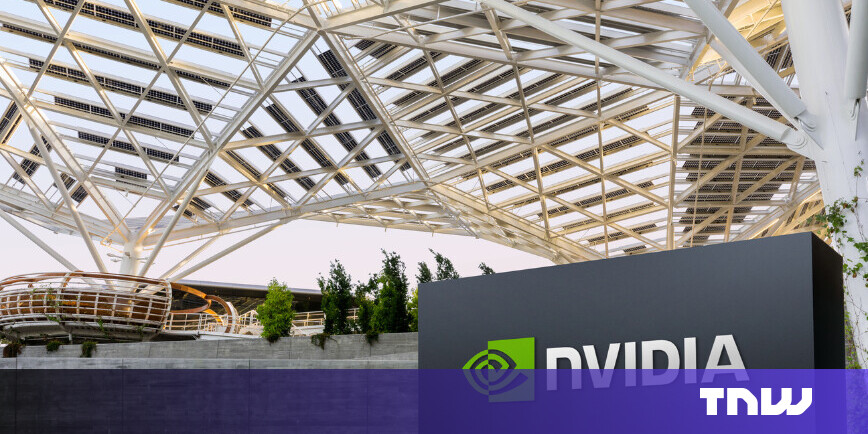
Nvidia’s Earnings Report: The Moment of Truth for AI’s Future
The AI revolution has a name, and it’s Nvidia. What began as a graphics card company has morphed into the undisputed backbone of artificial intelligence, with its GPUs powering everything from ChatGPT to autonomous vehicles. But as Nvidia prepares to release its latest earnings report, the tech world isn’t just watching for numbers—they’re watching for signs of whether the AI boom still has momentum or if we’re approaching peak enthusiasm.
The Numbers That Define an Era
Nvidia’s journey from gaming hardware specialist to AI juggernaut has been nothing short of spectacular. The company’s stock has skyrocketed over 1,500% since 2022, making it one of the most valuable companies on Earth. This transformation wasn’t accidental—it was the direct result of AI’s explosive growth and Nvidia’s perfect positioning to capture it.
Analysts are projecting another monster quarter, with revenue estimates hovering between $65-66 billion and gross margins maintaining an astonishing 75%. These figures would represent continued dominance in the high-end AI accelerator market, particularly among cloud providers and hyperscalers who form the foundation of modern AI infrastructure.
But here’s the thing: at this point, beating estimates has become almost routine for Nvidia. The company has exceeded revenue and earnings expectations for more than a dozen consecutive quarters. So why is this earnings report feeling different?
The Shifting Landscape of AI Competition
The AI hardware market is evolving rapidly, and Nvidia’s competitors aren’t sitting idle. Major AI users like Meta, Google, and other hyperscalers are investing billions in developing custom silicon or alternative accelerators. These aren’t just minor experiments—they represent a fundamental shift in how the industry thinks about AI infrastructure.
Companies are pursuing custom chips for several strategic reasons: reducing dependency on Nvidia’s ecosystem, optimizing costs for specific workloads, and gaining competitive advantages through specialized hardware. While these moves haven’t immediately dented Nvidia’s sales, they signal a competitive environment that simply didn’t exist three years ago.
This diversification matters because the entire AI industry has become remarkably dependent on a single architecture. When major players start hedging their bets, it creates ripples throughout the ecosystem—affecting everything from valuations to long-term strategic planning.
Market Psychology Has Changed
The broader market context adds another layer of complexity to Nvidia’s earnings narrative. AI stocks have been the engine driving tech sector growth, but sentiment has noticeably cooled in 2026. While Nvidia’s share price has remained relatively flat compared to the dramatic gains of previous years, other sectors are experiencing volatility under economic uncertainty.
This shift reflects a maturing market that’s increasingly focused on fundamentals rather than hype. Investors are asking tougher questions about profitability timelines, real-world deployment metrics, and when all this AI investment will translate into sustainable revenue growth.
Some market observers have begun questioning whether we’re in an “AI bubble,” where valuations have become disconnected from economic reality. Whether you agree with that assessment or not, it captures the genuine nervousness about AI’s sustainability and the timeline for seeing returns on massive investments.
What Investors Are Really Looking For
For Nvidia’s upcoming earnings, the market isn’t just interested in whether the company beat estimates—they want to understand the trajectory of the entire AI ecosystem. Here are the key signals investors will be scrutinizing:
Demand trajectory from hyperscalers: Are companies still accelerating their AI infrastructure investments, or are we seeing signs of plateauing?
Future guidance: Cautious outlooks could trigger significant market reactions, especially given how high growth has been priced into Nvidia’s valuation.
Competitive strategy: How is Nvidia planning to respond to the rise of custom silicon and alternative accelerators? What’s their strategy around partnerships and software ecosystems?
Geopolitical and supply chain risks: Export restrictions, memory pricing fluctuations, and manufacturing constraints all factor into Nvidia’s ability to maintain its market position.
A strong earnings beat with confident forward guidance could reinforce the narrative that AI spending remains robust and that Nvidia continues to be the primary beneficiary. Conversely, a modest beat or mixed signals could validate concerns about AI’s sustainability and trigger broader market reassessments.
Why This Report Matters Beyond Nvidia
Nvidia’s earnings have become the de facto barometer for AI infrastructure spending, which makes this report crucial for understanding the entire tech sector’s health. The company’s performance provides insights into:
- Whether enterprise AI adoption is accelerating or slowing
- The sustainability of current AI investment levels
- The competitive dynamics reshaping the hardware landscape
- The timeline for AI technologies moving from experimental to profitable
In essence, this isn’t just about one company’s quarterly results. It’s about confidence in AI’s long-term viability, in enterprise capital expenditure cycles, and in the growth narrative that has driven one of the most remarkable market stories of our time.
The stakes are enormous. If Nvidia demonstrates that demand remains robust and pricing power intact, it supports a bullish case for continued AI expansion. If the company signals any weakness, we could see a fundamental re-evaluation of AI as an investment theme, with consequences extending far beyond the semiconductor industry.
AI Revolution, Tech Dominance, Silicon Strategy, Market Confidence, Custom Chips, Hyperscaler Demand, Geopolitical Risks, Profitability Timeline, Investment Sustainability, Competitive Landscape, Infrastructure Spending, Growth Narrative, Earnings Expectations, Market Psychology, Supply Chain Dynamics
AI bubble burst, Custom silicon threat, Hyperscaler hedging bets, Geopolitical chip wars, Profitless AI hype, Market confidence crisis, Nvidia’s moment of truth, Silicon supremacy challenged, AI infrastructure plateau, Enterprise AI adoption reality check, Supply chain nightmare, Export restrictions impact, Custom chip revolution, Market re-rating incoming, Bubble about to pop, AI spending slowdown, Competitive pressure mounting, Strategic independence moves, Profitability timeline pressure, Investor nerves on edge
,


Leave a Reply
Want to join the discussion?Feel free to contribute!