
Earth’s Largest Land-Based Carbon Sink Has Sprung a Disturbing Leak
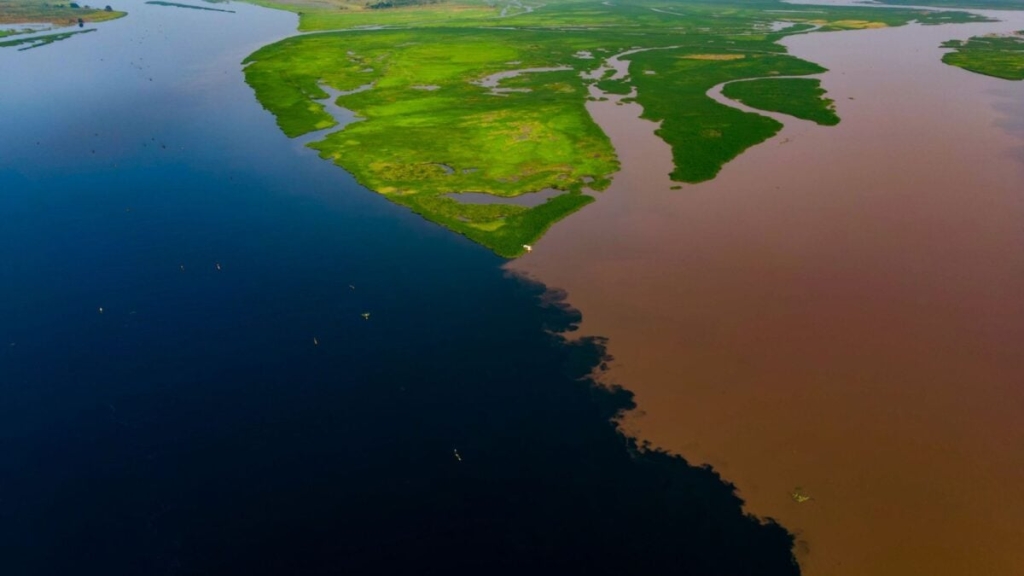
In a discovery that could reshape our understanding of global carbon cycles, scientists have uncovered a troubling phenomenon deep within the heart of Africa’s Congo Basin—a vast, ancient peatland ecosystem that has long been considered one of Earth’s most critical natural defenses against climate change.
Often referred to as the “lungs of Africa,” the Congo Basin spans across six countries and contains the world’s largest tropical peatland complex. For millennia, these waterlogged forests have quietly performed an extraordinary service for our planet, absorbing and storing massive quantities of carbon dioxide from the atmosphere. But new research published in Nature Geoscience suggests this vital carbon sink may be showing signs of instability.
The study, led by carbon biogeochemist Travis Drake of ETH Zürich, focused on two blackwater lakes—Lac Mai Ndombe and its smaller neighbor, Lac Tumba—located deep within the swamp forests of the central Congo Basin. These lakes, surrounded by dense vegetation and fed by the region’s complex river systems, have long been assumed to be stable components of the carbon cycle. What the researchers discovered, however, challenges this assumption in a profound way.
By collecting and analyzing water samples from both lakes, Drake and his team found that between 39% and 40% of the carbon dissolved in the lake waters originates not from recently fallen plant matter, but from ancient peat deposits buried deep beneath the swamp floor. This peat, accumulated over thousands of years as partially decomposed vegetation sank into oxygen-poor wetland conditions, represents carbon that was thought to be permanently locked away from the atmosphere.
The implications are staggering. The researchers estimate that Lac Mai Ndombe alone may be releasing more than 150 gigatons of ancient carbon into the atmosphere annually—carbon that had remained sequestered since the last Ice Age. While this represents only a fraction of the 30 billion metric tons stored across all tropical peatlands worldwide, it signals a potential shift in one of Earth’s most important carbon storage systems.
“This is the 30-billion-tonne question,” Drake told Gizmodo in an email. “It is entirely possible that this represents a natural, balanced cycle—the vast peatlands slowly releasing carbon from below while sequestering a comparable amount from above, resulting in no net loss.” However, he cautioned that the more alarming possibility is that climate change or land-use changes are actively destabilizing the system, causing it to lose its stored carbon at an accelerating rate.
The mechanism behind this carbon release appears to involve microbial activity deep within the peat layers. As microbes consume the ancient organic matter, they produce methane through methanogenesis. The researchers hypothesize that this subsurface methane then travels upward through deep soil flowpaths into the lake, where it encounters oxygen and converts to carbon dioxide before escaping to the atmosphere.
This discovery comes at a critical moment for climate science. The Congo Basin’s peatlands, despite covering only 0.3% of Earth’s land surface, store approximately one-third of all carbon held in tropical peatlands globally. Their stability has been viewed as crucial for maintaining global climate equilibrium, particularly as other major carbon sinks—including the Amazon rainforest—face increasing threats from deforestation, drought, and fire.
The research team’s journey to make this discovery was itself an adventure worthy of note. With the central Congo Basin largely inaccessible by road, Drake and his colleagues converted a large ship into both their living quarters and a floating laboratory. Navigating the Fimi River, a major tributary of the Kasaï, they traveled deep into the swamp forests to reach their study sites, demonstrating the extraordinary lengths scientists must go to understand these remote ecosystems.
What makes this finding particularly concerning is the potential for a climate feedback loop. If rising global temperatures and changing precipitation patterns are indeed causing the peatlands to release stored carbon, this could accelerate warming, which in turn could trigger more carbon release—a self-reinforcing cycle that could prove difficult to stop once initiated.
Paleoenvironmental evidence from regional peat cores suggests this may not be entirely unprecedented. Drake notes that similar climate-driven destabilization events have occurred in the past, leading to massive losses of organic carbon from the peatland system. The difference today is the unprecedented rate of human-caused climate change and the additional pressures from expanding agriculture, logging, and resource extraction in the region.
The Congo Basin faces multiple threats beyond climate change. Expanding palm oil plantations, industrial logging operations, and infrastructure development all pose risks to the delicate hydrological balance that keeps the peatlands waterlogged and their carbon stores stable. Road construction, in particular, can dramatically alter water flow patterns, potentially exposing peat to oxygen and accelerating decomposition.
Drake and his colleagues are already planning their next phase of research, which will investigate the mechanisms behind their findings and examine how these carbon emissions have evolved over the past 12,000 years. This longer-term perspective could help determine whether the current emissions represent a natural fluctuation or a concerning departure from historical patterns.
“Ultimately, our goal is to better constrain the carbon budget of these peatlands, establishing a baseline to assess future changes and determine their current stability,” Drake explained. This baseline will be crucial for monitoring whether the Congo Basin’s role as a carbon sink is indeed shifting toward becoming a carbon source—a transition that could have profound implications for global climate efforts.
The discovery also highlights the critical importance of protecting intact tropical ecosystems, particularly in regions that have historically received less scientific attention than their South American counterparts. The Congo Basin’s relative inaccessibility has, ironically, helped preserve it from some of the development pressures facing the Amazon, but this protection may be temporary as economic interests increasingly turn to Africa’s natural resources.
As the world grapples with the urgent need to reduce greenhouse gas emissions, understanding and protecting natural carbon sinks like the Congo Basin’s peatlands becomes increasingly critical. These ecosystems represent one of our most powerful natural allies in the fight against climate change—but only if we can ensure they remain stable and continue to store carbon rather than release it.
The findings from Lac Mai Ndombe and Lac Tumba serve as a sobering reminder that even Earth’s most ancient and seemingly stable systems may be more vulnerable to human influence than we previously understood. In an era of rapid climate change, the fate of these “lungs of Africa” may ultimately affect us all.
Tags:
Congo Basin peatlands, carbon sink collapse, ancient carbon release, climate feedback loop, tropical peatland emissions, Lac Mai Ndombe, Lac Tumba, ETH Zürich research, blackwater lakes, methane conversion, climate change tipping point, African carbon cycle, peatland destabilization, global warming acceleration, carbon biogeochemistry, Congo Basin ecosystem, Nature Geoscience study, greenhouse gas emissions, climate science breakthrough, environmental tipping points
Viral Sentences:
The Congo Basin’s 30 billion tons of carbon could be escaping faster than we thought!
Scientists discover ancient peat releasing CO2—is this Earth’s climate time bomb ticking?
150 gigatons of prehistoric carbon escaping annually from African lakes!
The “lungs of Africa” might be developing a carbon leak that could accelerate global warming!
New study reveals the hidden carbon crisis beneath Congo’s blackwater lakes!
Climate scientists uncover disturbing evidence of peatland destabilization in the heart of Africa!
Is climate change turning Earth’s biggest carbon sink into a carbon source?
Researchers find 40% of lake carbon comes from peat thousands of years old!
The Congo Basin’s secret carbon vault may be springing leaks as temperatures rise!
Ancient microbes eating prehistoric peat and burping out planet-warming gases!
Scientists navigate crocodile-infested waters to discover climate threat in remote Congo!
The 30-billion-tonne question: are Congo’s peatlands still our climate allies?
Climate feedback loop alert: warming could trigger carbon release from Africa’s swamps!
Roadless wilderness hides climate mystery that could affect every person on Earth!
African peatland research reveals Earth’s carbon cycle may be more fragile than we knew!
,


Leave a Reply
Want to join the discussion?Feel free to contribute!