
Life in Cuba Under Trump’s Pressure Campaign: No Electricity, No Oil, and Impossible Choices
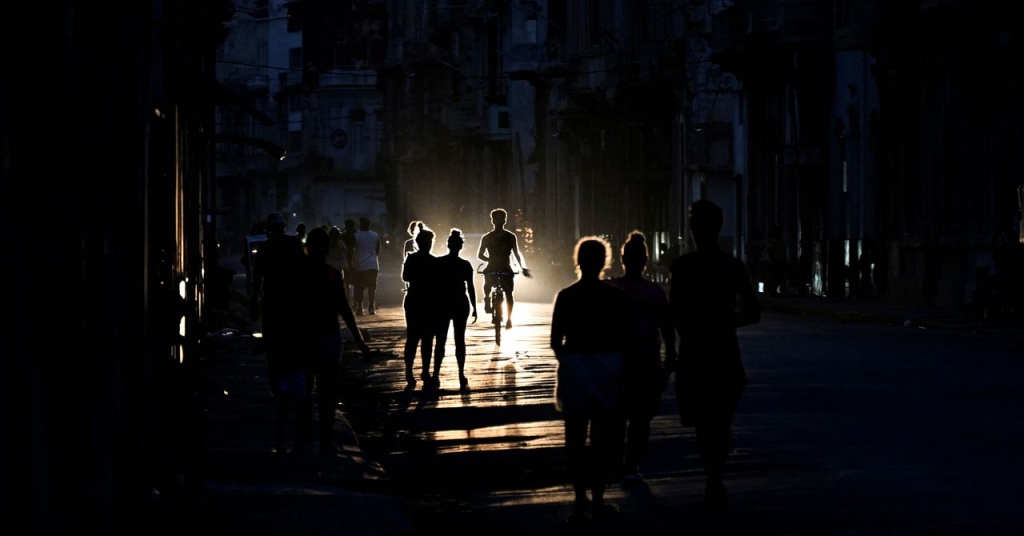
Trump’s Oil Blockade: Cuba’s Desperate Struggle as Castroism Faces Its Greatest Threat Yet
In a dramatic escalation of economic warfare, the Trump administration has delivered a crippling blow to Cuba’s already fragile economy by cutting off the island nation’s primary lifeline: Venezuelan crude oil. With the final tanker from Caracas docking in December 2025 carrying 598,000 barrels, and a meager 84,900 barrels from Mexico’s Pemex arriving just a week after Maduro’s capture, Havana now finds itself staring into the abyss of economic collapse.
The chessboard is set, and President Trump appears determined to checkmate Castroism once and for all. By imposing sweeping tariffs on any nation daring to supply oil to the Caribbean communist stronghold, Washington has effectively placed Cuba in a vice grip from which there may be no escape. The strategy is clear: isolate, suffocate, and force the regime to the negotiating table on American terms.
According to energy analytics firm Kpler, Cuba’s oil reserves have deteriorated to a critical state. This isn’t merely about fuel for vehicles—imported crude oil represents the very heartbeat of Cuban infrastructure. The electrical grid depends on it, transportation networks rely on it, and by extension, the entire economy teeters on this precarious foundation. Without immediate intervention, experts warn of cascading failures that could paralyze the nation within weeks.
The regime had pinned hopes on Mexico’s support, but President Claudia Sheinbaum’s recent pivot under intense pressure from Washington has left Havana exposed. While promising humanitarian aid in the form of food and medicine, Mexico has drawn a firm line at crude oil shipments—a distinction that may prove fatal for Cuba’s economic survival.
This calculated economic strangulation represents more than just policy—it’s a high-stakes gamble that Castroism cannot withstand the pressure. The Trump administration appears convinced that when faced with the choice between negotiation and national paralysis, the Cuban leadership will choose dialogue, potentially opening the door to sweeping reforms that could fundamentally alter the island’s political landscape.
The Digital Battlefield: Internet Freedom as the Ultimate Bargaining Chip
As negotiations loom on the horizon, one issue stands poised to dominate discussions: internet access. The Trump administration has made no secret of its priorities, explicitly calling for “the expansion of internet services, free press, free enterprise, free association, and lawful travel” in its June 2025 policy directive.
The internet represents far more than mere connectivity in Cuba—it symbolizes the regime’s lost monopoly on truth. For decades, the Communist Party controlled every narrative through state-controlled media outlets, constructing a carefully curated reality that served its interests. That monopoly shattered in 2015 when internet services began expanding across the island.
The transformation was nothing short of revolutionary. For the first time in their lives, ordinary Cubans gained access to the global information ecosystem. Social media platforms became digital town squares where activists, artists, and opposition voices could share their perspectives without the regime’s editorial filter. Independent media outlets emerged from the shadows, empowered by the ability to reach audiences directly.
This digital awakening catalyzed a political earthquake. By 2021, the opposition had grown sufficiently emboldened to challenge the status quo directly. Citizens flooded the streets of nearly every major city, demanding an end to repression, human rights abuses, and the decades-long dictatorship. Their calls for freedom and national renewal represented the most significant challenge to Castroism in generations.
The regime’s response was swift and brutal. Security forces killed at least one protester, arrested over a thousand political dissidents, and forced others into exile. But perhaps most telling was the immediate crackdown on internet access—the very tool that had enabled the uprising. By restricting connectivity, the government effectively silenced the digital opposition, demonstrating an acute understanding of the internet’s power as a catalyst for political change.
Since that pivotal moment, Castroism has evolved into a surveillance state obsessed with controlling the digital sphere. The regime recognizes that another mass uprising is possible only if citizens can communicate, organize, and share information freely. Thus, internet restrictions have become central to its survival strategy, representing the digital equivalent of the Berlin Wall—a barrier between Cubans and the free flow of information.
The Coming Reckoning
As Cuba’s oil reserves dwindle and economic pressure mounts, the regime faces an existential choice. Negotiate with Trump and potentially open the floodgates to political reform, free press, and internet freedom—or cling to power as the country descends into chaos.
The stakes could not be higher. For Trump, this represents a signature foreign policy victory that could reshape the Western Hemisphere. For Castroism, it threatens the very foundation of its authoritarian control. And for the Cuban people, it offers a glimmer of hope after decades of economic hardship and political repression.
The world watches as this high-stakes drama unfolds, knowing that the outcome will reverberate far beyond the shores of Cuba. The death of Castroism, if it comes, won’t be marked by gunfire or revolution, but by an oil tanker’s final voyage and the quiet click of a computer mouse connecting to a free and open internet.
Tags & Viral Phrases:
Cuba oil crisis, Trump sanctions Cuba, Venezuelan crude embargo, Castroism collapse, internet freedom Cuba, digital revolution Cuba, economic warfare Trump, oil blockade Cuba, Pemex Cuba shipments, Kpler Cuba reserves, Claudia Sheinbaum Mexico, internet restrictions Cuba, 2021 Cuban protests, political prisoners Cuba, free press Cuba, digital town squares Cuba, surveillance state Cuba, Western Hemisphere policy, authoritarian control internet, Cuban economic paralysis, negotiation Trump Castro, energy analytics Cuba, humanitarian aid Cuba, digital awakening Cuba, political earthquake Cuba, regime survival strategy, signature foreign policy Trump, high-stakes diplomacy Cuba, digital revolution Western Hemisphere, oil tanker diplomacy, computer mouse freedom, Castroism death knell, economic strangulation Cuba, critical state oil reserves, cascading failures Cuba, vice grip Cuba, checkmate Castroism, lifeline Venezuela Cuba, humanitarian aid Mexico, digital opposition silenced, Berlin Wall internet Cuba, floodgates political reform, economic hardship Cuba, political repression Cuba, global information ecosystem Cuba, state-controlled media monopoly, social media activism Cuba, independent media Cuba, dissident civil society Cuba, digital town squares, surveillance state, economic warfare, political earthquake, regime survival, digital awakening, authoritarian control, signature foreign policy, high-stakes diplomacy, digital revolution, oil tanker diplomacy, computer mouse freedom, Castroism death knell, economic strangulation, critical state, cascading failures, vice grip, checkmate, lifeline, humanitarian aid, digital opposition, Berlin Wall, floodgates, economic hardship, political repression, global information ecosystem, state-controlled media, social media activism, independent media, dissident civil society.
,

Leave a Reply
Want to join the discussion?Feel free to contribute!