
World’s largest SSD has tripled in price in just nine months and now costs more than a new car
Solidigm’s 122.88TB SSD Price Surge: From Bargain to Bank-Breaker in Nine Months
In what can only be described as one of the most dramatic price swings in enterprise storage history, Solidigm’s monstrous 122.88TB D5-P5336 SSD has seen its price skyrocket by nearly 200% in just nine months, transforming from what was considered a relative bargain to a bank-breaking investment that’s sending shockwaves through data centers worldwide.
The Bargain That Wasn’t: From $12,399 to $37,128
When Solidigm first launched this storage behemoth back in November 2024, industry analysts speculated the drive might retail for around $14,000. Fast forward to May 2025, and Tech-America began offering the enterprise-grade SSD for what seemed like a steal at $12,399 – seriously undercutting expectations and creating genuine excitement among data center operators looking to maximize storage density without breaking the bank.
But the honeymoon was short-lived. Today, that same drive commands a staggering $37,128 on Tech-America’s platform – a near 200% increase in approximately nine months that has left many IT buyers questioning whether they should have pulled the trigger when prices were still somewhat reasonable.
What You’re Actually Getting for Your $37,128
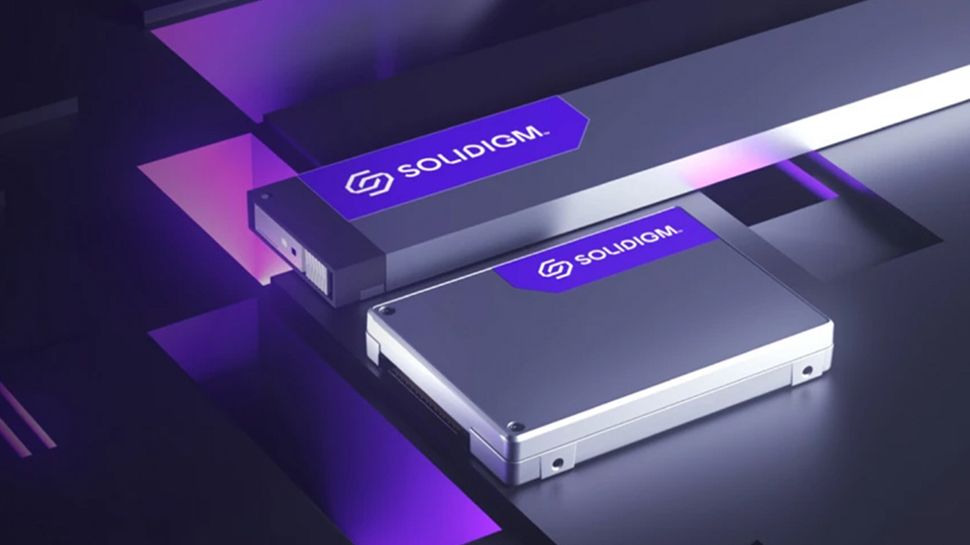
Before you dismiss this as pure insanity, let’s examine what makes this drive worth its astronomical price tag. The D5-P5336 is no ordinary storage device – it’s an engineering marvel that packs 122.88TB of raw storage into a standard 2.5-inch U.2 form factor with a 15mm chassis that weighs approximately 5.87 ounces.
This isn’t your gaming rig SSD; it’s built for the most demanding enterprise environments including servers, storage arrays, cloud infrastructure, and hyperscale data centers where space, power efficiency, and reliability trump cost considerations.
Performance-wise, the drive delivers sequential read speeds up to 6.84GB/s and sequential writes at 2.93GB/s. For random operations, it achieves an impressive 900,000 IOPS for 4KB reads, though random writes top out at 19,000 IOPS – clearly optimized for read-heavy workloads that dominate many enterprise applications.
The Economics of Extreme Storage
At its current $37,128 price point, the cost per terabyte works out to approximately $302 – a figure that’s two to six times higher than what most enterprise buyers typically pay for high-capacity SSDs in the 7.68TB to 30.72TB range.
To put this in perspective, high-capacity consumer NVMe drives generally fall between $40 and $80 per terabyte, while many enterprise SSDs in smaller capacities can land under $150 per terabyte when purchased in volume. Solidigm’s monster SSD now sits at a significant premium that’s hard to justify on a pure cost-per-gigabyte basis.
However, the economics become more nuanced when you consider the consolidation benefits. A single 122.88TB drive eliminates the need for multiple smaller drives, reducing the number of slots, ports, cables, and associated infrastructure required in a rack. For data centers where space and power are at a premium, this consolidation can offer genuine value despite the higher per-terabyte cost.
Why the Price Surge? Supply, Demand, and Market Realities
Several factors likely contributed to this dramatic price increase. Ultra-high-capacity NAND flash isn’t produced at the same scale as mainstream flash memory, making supply inherently more volatile. When hyperscale customers place large orders for these specialized drives, it can quickly tighten available inventory and drive prices upward.
Enterprise SSD pricing often operates on a different model than consumer products, with contracts and negotiated pricing playing a larger role than public listings. The retail price you see may reflect limited stock availability, distributor adjustments, or corrections to earlier promotional pricing that was perhaps too aggressive.
The drive’s specifications also tell a story about its intended use case. With endurance rated at 0.6 drive writes per day and total bytes written listed at 137,523.20TB, this SSD is designed for specific enterprise workloads rather than general-purpose storage. The five-year warranty and impressive mean time between failures rating of 228.2 years (a statistical projection rather than literal lifespan) further emphasize its enterprise focus.
The Market Context: A Shifting Storage Landscape
This price surge comes amid broader changes in the storage market. The demand for high-capacity enterprise storage continues to grow exponentially as organizations grapple with increasing data volumes from AI training, machine learning, video content, and other data-intensive applications.
However, the NAND flash supply chain remains complex and subject to various pressures including manufacturing yields, market demand fluctuations, and geopolitical factors that can impact component availability and pricing.
For organizations that need to store massive amounts of data in minimal physical space, the D5-P5336 still represents a compelling option despite its premium pricing. The ability to fit nearly 123TB into a single U.2 slot can significantly reduce the physical footprint and power consumption of storage arrays, potentially offsetting some of the higher per-terabyte costs through infrastructure savings.
Is It Worth It? The Bottom Line for Enterprise Buyers
At $37,128, Solidigm’s 122.88TB SSD represents a significant investment that requires careful consideration of total cost of ownership rather than just upfront price. Organizations must weigh the benefits of storage consolidation and reduced infrastructure requirements against the substantial premium being charged.
For hyperscale operators and cloud service providers dealing with petabyte-scale deployments, the economics might still work out favorably when considering the reduced number of drives, connectors, and management overhead. However, for smaller enterprises or those with more flexible storage requirements, the price surge may push this solution out of reach.
The dramatic price increase also raises questions about the stability of high-capacity SSD pricing and whether we might see similar surges across other ultra-high-capacity drives as demand continues to outstrip supply in certain segments of the market.
The Future of Extreme Storage: What’s Next?
As data volumes continue their exponential growth trajectory, the demand for ultra-high-capacity storage solutions like Solidigm’s D5-P5336 is unlikely to diminish. However, this price surge serves as a reminder that cutting-edge storage technology often comes with significant volatility in pricing and availability.
Manufacturers and data center operators alike will be watching closely to see how the market responds to these pricing levels. Will the premium eventually moderate as production scales up, or are we entering an era where extreme storage capacity commands extreme prices?
One thing is certain: as organizations continue to grapple with unprecedented data growth, the quest for ever-larger, more efficient storage solutions will remain a critical priority, even if the price tags sometimes seem to defy gravity.
Tags & Viral Phrases:
- Storage price surge
- 122TB SSD costs $37k
- Enterprise storage inflation
- Data center hardware shock
- SSD price increase 2025
- Solidigm D5-P5336 pricing
- Extreme capacity storage
- Enterprise SSD market trends
- High-capacity NAND flash
- Storage density revolution
- Cloud infrastructure costs
- Data center economics
- Ultra-high-capacity SSD
- Enterprise storage premium
- 200% price increase
- Tech hardware price shock
- Storage consolidation benefits
- Hyperscale storage solutions
- NAND flash supply chain
- Enterprise SSD pricing volatility
- Data growth storage challenges
- Server storage capacity limits
- U.2 SSD enterprise market
- PCIe 4.0 enterprise storage
- Storage infrastructure optimization
- Data center space efficiency
- Enterprise hardware investment
- Storage technology economics
- Cloud storage capacity demands
- Enterprise data management costs
,

Leave a Reply
Want to join the discussion?Feel free to contribute!