
Cannibalism may explain why some orcas stay in family groups
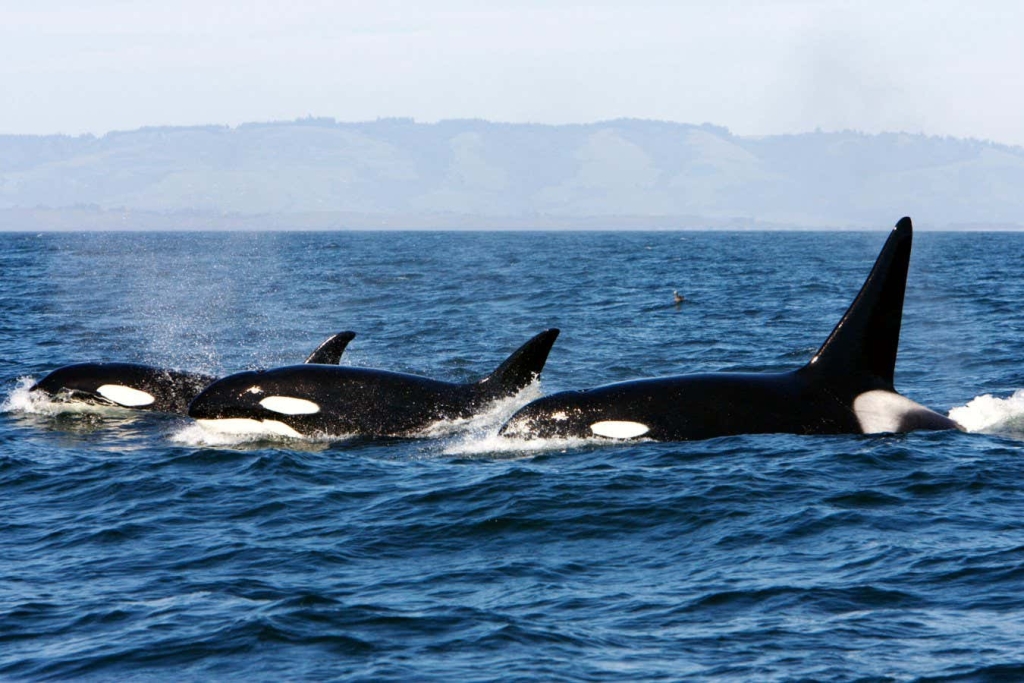
Shocking Discovery: Killer Whales Turning on Their Own Kind in the North Pacific
In a jaw-dropping revelation that has marine biologists on edge, scientists have uncovered evidence suggesting that orcas—the ocean’s most feared apex predators—may be preying on their own kind. This unprecedented behavior, observed in the North Pacific, could rewrite everything we thought we knew about these magnificent creatures and their complex social structures.
The Discovery That Shook the Scientific Community
The story begins on the remote shores of Bering Island, located in Russia’s Far East. Sergey Fomin, a researcher at the Pacific Institute of Geography, was conducting his routine beach surveys when he made a discovery that would send ripples through the marine biology world. While examining the remains of typical orca prey—Baird’s beaked whales and minke whales—he stumbled upon something extraordinary: a dorsal fin unlike any he’d seen before.
This wasn’t just any dorsal fin. It was unmistakably that of an orca, but what made it truly remarkable were the unmistakable tooth marks that covered its surface. The fin was bloodied, mangled, and bore the clear signature of another orca’s bite. Fomin was stunned. In all his years of research, he had never encountered such evidence of orca-on-orca predation.
But the surprises didn’t end there. Two years later, in what can only be described as an eerie coincidence, Fomin discovered yet another orca dorsal fin on the same beach, bearing similar marks of violence. The scientific community was about to be rocked to its core.
The Genetic Revelation
To confirm their suspicions, Fomin and his team conducted genetic testing on the mysterious fins. The results were nothing short of astonishing. The fins belonged to southern resident orcas, a subspecies known for its tight-knit family structures and unique social behavior. This discovery led to a chilling hypothesis: these orcas may have fallen victim to their more nomadic cousins, the Bigg’s orcas, also known as transient orcas.
This revelation has profound implications for our understanding of orca behavior and ecology. For years, scientists have marveled at the complex social structures of resident orcas, which live in large, stable family groups based on maternal lines. These groups, known as pods, are among the most stable social structures in the animal kingdom. But why do resident orcas form such tight-knit groups while their transient cousins roam in fluid, ever-changing hunting parties?
A Theory Emerges
Enter Olga Filatova, a researcher at the University of Southern Denmark, who has long puzzled over this very question. When she learned about Fomin’s discovery, a lightbulb went off. Could it be that the unique social structure of resident orcas is a defense mechanism against predation by other orcas?
Filatova’s theory, which she has outlined in a groundbreaking paper co-authored with Fomin and Ivan Fedutin, suggests that resident orcas stay in large family groups for safety in numbers. In the dangerous world of the North Pacific, where even apex predators like orcas can fall prey to their own kind, there truly is safety in numbers.
This theory is supported by observations of other marine mammals. While orcas are at the top of the food chain, they are not invincible. Groups of smaller pilot whales have been known to mob and chase away orcas, demonstrating that even the ocean’s top predator can be vulnerable to collective action by other species.
The Dark Side of Orca Behavior
But the story gets even darker. In 2016, Jared Towers, a researcher at marine research firm Bay Cetology in Canada, witnessed a pod of Bigg’s orcas chase down and kill a newborn orca calf. This behavior, known as infanticide, is not uncommon in the animal kingdom, but it’s particularly shocking when observed in such intelligent and socially complex creatures as orcas.
Towers explains that this infanticide was likely not for food but rather a reproductive strategy. By killing the calf, the male orcas may have been attempting to force the mother back into estrus, making her available for mating. This brutal behavior underscores the complex and sometimes violent nature of orca social dynamics.
The Cannibalism Question
While the evidence strongly suggests that the orcas found on Bering Island were victims of cannibalism, some researchers remain cautious. Towers points out that there are other possible explanations for the tooth marks on the fins. They could have been inflicted during sparring matches between podmates or after the whales had already died.
However, Filatova argues that post-mortem scavenging is less likely, as orcas typically sink when they die, making it difficult for other orcas to feed on their remains. The fact that the fins were found on the beach suggests that the orcas were likely killed and then dismembered near the surface.
Why Would Orcas Turn to Cannibalism?
The question on everyone’s mind is: why would orcas resort to cannibalism? Filatova speculates that it may simply be a matter of circumstance. In the waters around Bering Island, orcas typically feed on fur seals and sea lions. But when these prey animals are scarce, orcas may be forced to seek alternative food sources.
“If they can’t find any food, and there’s a young, tasty resident killer whale alone, why not?” Filatova posits. This chilling statement underscores the harsh realities of life in the ocean, where even the most intelligent and socially complex creatures must sometimes make difficult choices to survive.
Implications for Orca Conservation
This discovery has significant implications for orca conservation efforts. If resident orcas are indeed forming large family groups as a defense mechanism against predation by other orcas, it suggests that their social structures are even more critical to their survival than previously thought.
Conservationists may need to rethink their strategies for protecting these vulnerable populations. Ensuring that resident orcas can maintain their complex social structures could be key to their long-term survival in an increasingly hostile ocean environment.
The Future of Orca Research
As scientists continue to unravel the mysteries of orca behavior, one thing is clear: these animals are far more complex and their social dynamics far more intricate than we ever imagined. The discovery of potential orca-on-orca predation opens up a whole new avenue of research into the dark side of these magnificent creatures.
Future studies will likely focus on understanding the frequency and circumstances under which such predation occurs, as well as its impact on orca populations and social structures. Researchers may also investigate whether similar behaviors are observed in other orca populations around the world.
Conclusion
The discovery of evidence suggesting orca-on-orca predation in the North Pacific is a stark reminder of the brutal realities of life in the ocean. It challenges our perceptions of these intelligent, socially complex creatures and raises new questions about their behavior, ecology, and conservation.
As we continue to explore the depths of the ocean and unravel its mysteries, we must be prepared for more surprises. The ocean is a vast, largely unexplored frontier, and its inhabitants are full of secrets waiting to be discovered. The story of the orcas of the North Pacific is just one chapter in the ongoing saga of our quest to understand the natural world.
In the end, this discovery serves as a powerful reminder of the complexity of nature and the importance of continued scientific inquiry. As we strive to protect and conserve these magnificent creatures, we must remain open to new discoveries and be willing to challenge our preconceptions. The orcas of the North Pacific have much to teach us, if only we’re willing to listen.
Tags: orca cannibalism, killer whale predation, North Pacific orcas, marine biology breakthrough, orca social structures, apex predator behavior, cetacean research, orca conservation, Bering Island discovery, transient vs resident orcas, orca infanticide, marine ecosystem dynamics, ocean predator-prey relationships, cetacean social behavior, orca pod dynamics
Viral Sentences:
- “Killer whales eating their own kind? Scientists shocked by gruesome discovery!”
- “The dark side of orcas revealed: Cannibalism in the North Pacific”
- “Why your favorite ocean predator might be its own worst enemy”
- “Orcas form family groups to avoid being eaten by other orcas”
- “Marine biologists uncover evidence of orca-on-orca violence”
- “The ocean’s top predator has a terrifying secret”
- “How scarcity drives even the most intelligent creatures to cannibalism”
- “Orca social structures more complex than we ever imagined”
- “Bering Island becomes ground zero for orca cannibalism research”
- “From apex predator to prey: The surprising vulnerability of orcas”
- “The brutal truth about orca infanticide and its evolutionary purpose”
- “How safety in numbers shapes the social lives of resident orcas”
- “Orca conservation efforts may need a complete overhaul”
- “The hidden world of orca aggression and its ecological implications”
- “What orca cannibalism tells us about the harsh realities of ocean life”
,


Leave a Reply
Want to join the discussion?Feel free to contribute!