
The Last Mystery of Antarctica’s ‘Blood Falls’ Has Finally Been Solved
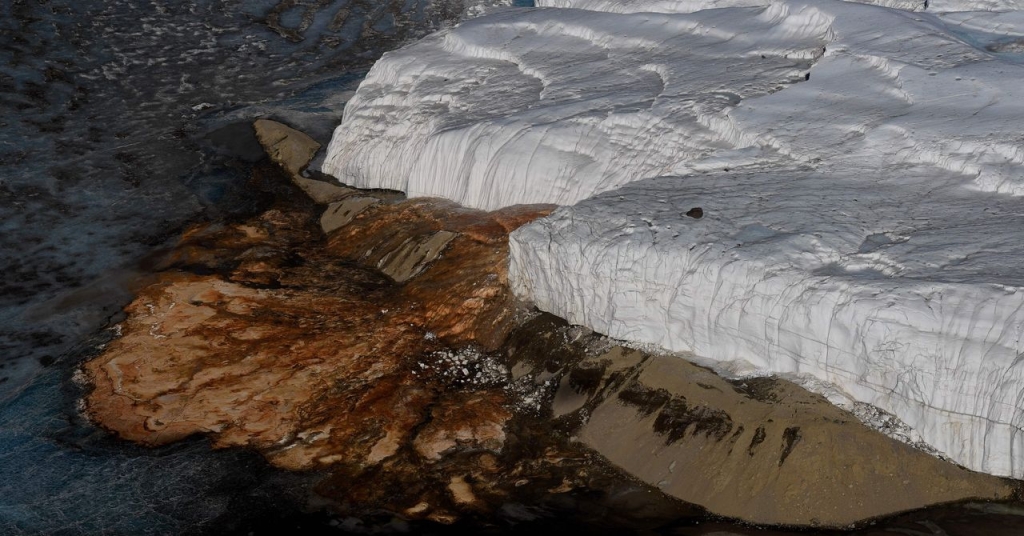
The Blood Falls of Antarctica: The Final Piece of the Puzzle Has Been Solved
In the heart of Antarctica’s McMurdo Dry Valleys lies a phenomenon so eerie and otherworldly that it feels ripped straight from the pages of a science fiction horror novel. Known as the Blood Falls, this crimson cascade erupts from the gleaming white face of Taylor Glacier, staining the pristine ice with its unsettling red hue. Discovered in 1911 by geologist Thomas Griffith Taylor, these falls have captivated scientists and the public alike for over a century, spawning countless theories and speculations. Now, thanks to groundbreaking research, the final mystery behind this natural wonder has been unraveled.
A Century of Speculation
When Taylor first stumbled upon the Blood Falls, he attributed the blood-red color to the presence of red microalgae. It was a reasonable assumption for the time, but as science advanced, so did our understanding. By the 21st century, researchers had determined that the red hue was not due to biological activity but rather to iron particles trapped in nanospheres. These nanospheres, composed of elements like silicon, calcium, aluminum, and sodium, were likely produced by ancient bacteria trapped underground. When exposed to air, the iron oxidizes, creating the characteristic rust color that gives the falls their ominous appearance.
But the mystery didn’t end there. How could liquid water exist in one of the coldest and driest places on Earth, where temperatures can plummet to nearly -20 degrees Celsius? The answer lay in the unique composition of the water itself. The Blood Falls are fed by a hypersaline brine, formed approximately 2 million years ago when the waters of the Antarctic Ocean receded from the valleys. The extreme salinity of this brine prevents it from freezing, allowing it to remain liquid and periodically gush forth from beneath the glacier.
The Final Piece of the Puzzle
While the source of the red color and the liquid state of the water had been explained, one question remained: What physically drives the fluid to erupt from the glacier? The answer, it turns out, lies in the complex interplay of pressure and ice dynamics.
A series of observations conducted since 2018, culminating in a study published this week in the journal Antarctic Science, has shed light on this final mystery. By cross-referencing GPS data, thermal sensors, and high-resolution images collected during an eruption in 2018, researchers were able to piece together the mechanism behind the Blood Falls.
As Taylor Glacier slowly slides downstream, the overlying ice mass compresses the subglacial channels, building up tremendous pressure. When this pressure becomes too great, the ice gives way, and the pressurized brine is forced into the crevices and shot out in short, dramatic bursts. Interestingly, this release acts as a hydraulic brake, temporarily slowing the glacier’s march. This discovery not only solves the last remaining mystery of the Blood Falls but also provides valuable insights into the behavior of glaciers and subglacial systems.
A Glimpse into Earth’s Past
The Blood Falls are more than just a geological curiosity; they are a window into Earth’s ancient past. The hypersaline brine that feeds the falls has been trapped beneath the glacier for millions of years, isolated from the outside world. Within this brine, scientists have discovered extremophile microbes that have survived in this harsh, oxygen-free environment, offering clues about the potential for life in similarly extreme conditions elsewhere in the solar system, such as on Mars or the icy moons of Jupiter and Saturn.
The Future of the Blood Falls
While the mysteries of the Blood Falls may have been solved for now, the impact of global warming on this delicate system remains uncertain. As temperatures rise and ice melts, the dynamics of the glacier and its subglacial brine could change, potentially altering the frequency and intensity of the falls’ eruptions. Scientists will continue to monitor this unique phenomenon, ensuring that we remain informed about the changes occurring in one of the most remote and inhospitable places on Earth.
The Blood Falls of Antarctica are a testament to the power of scientific inquiry and the enduring allure of the natural world. From their initial discovery to the latest breakthroughs, these crimson cascades have captured our imagination and expanded our understanding of the planet we call home. As we continue to explore and study this extraordinary phenomenon, we are reminded of the countless mysteries that still await discovery in the frozen wilderness of Antarctica.
Tags: Antarctica, Blood Falls, Taylor Glacier, McMurdo Dry Valleys, iron oxidation, hypersaline brine, subglacial outflow, glacier dynamics, extremophile microbes, global warming, Antarctic Science journal, geological mystery, scientific discovery, environmental research
Viral Sentences:
- “The Blood Falls of Antarctica: A crimson cascade that looks straight out of a horror movie.”
- “Scientists finally solve the 100-year-old mystery of Antarctica’s Blood Falls.”
- “Ancient bacteria and iron particles create the eerie red hue of the Blood Falls.”
- “How does liquid water flow in Antarctica’s frozen desert? The answer lies in hypersaline brine.”
- “The Blood Falls act as a hydraulic brake, slowing the march of Taylor Glacier.”
- “Extremophile microbes in the Blood Falls offer clues about life on Mars and beyond.”
- “Global warming could change the dynamics of Antarctica’s Blood Falls forever.”
- “From red microalgae to iron oxidation: The evolving theories behind the Blood Falls.”
- “A window into Earth’s past: The hypersaline brine of the Blood Falls has been trapped for 2 million years.”
- “The Blood Falls: Where science meets science fiction in the heart of Antarctica.”
,


Leave a Reply
Want to join the discussion?Feel free to contribute!