
As AI reshapes work, Microsoft and UW expand partnership for training, research — and a looming jobs gap
University of Washington and Microsoft Forge Bold New Alliance to Prepare Washington for AI-Driven Future
In a landmark announcement that signals a seismic shift in how academia and industry will collaborate to shape the workforce of tomorrow, the University of Washington and Microsoft have unveiled an ambitious expansion of their decades-long partnership. This initiative isn’t just another corporate-university collaboration—it’s a comprehensive blueprint for ensuring Washington state remains competitive in an economy being rapidly transformed by artificial intelligence.
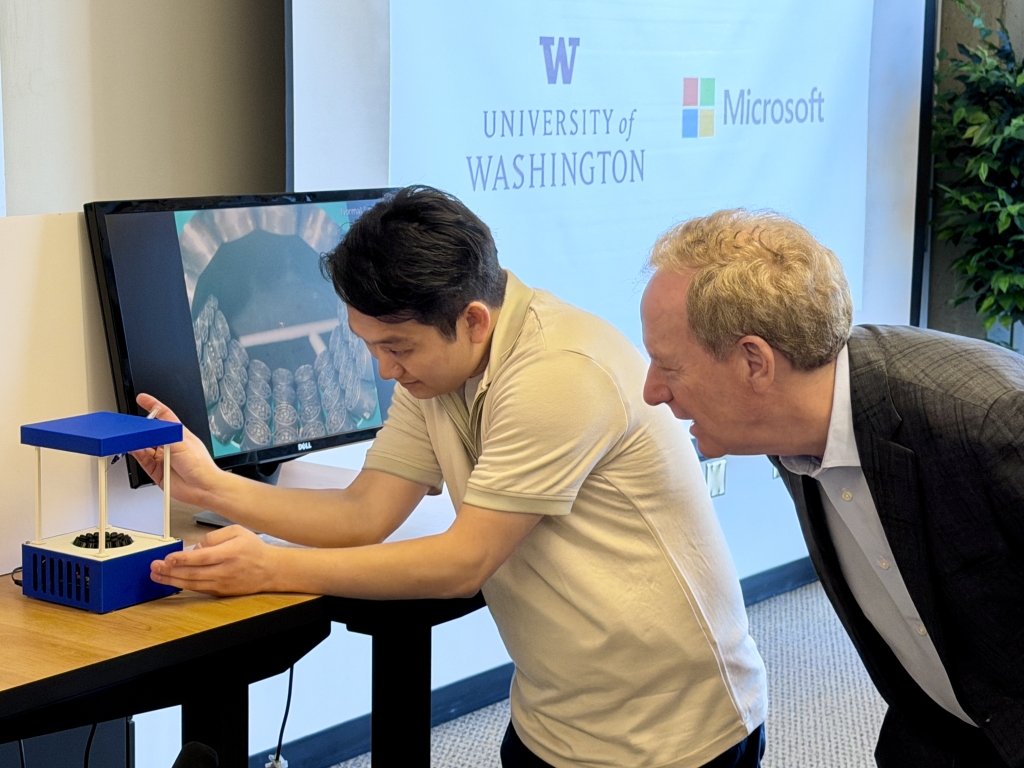
The announcement came Tuesday during a high-profile event at the UW’s Paul G. Allen School of Computer Science & Engineering, where UW President Robert J. Jones and Microsoft President Brad Smith stood side-by-side to unveil what both leaders described as a critical investment in the state’s economic future.
“The First Age of Computing is Over”
Brad Smith didn’t mince words when describing the magnitude of this transformation. “The first age of computing is over. A new age of computing has begun,” he declared, his voice carrying through the auditorium where students, faculty, and tech leaders had gathered. The Microsoft president’s statement wasn’t hyperbole—it was a recognition that generative AI, machine learning, and automation are fundamentally rewriting the rules of work across every industry.
What makes this partnership particularly significant is its scope. Microsoft isn’t simply writing a check and walking away. The tech giant is committing “many millions of dollars of additional compute” through a combination of donated and discounted resources, according to Smith. This translates to advanced AI computing access for UW faculty, researchers, and students—resources that will be crucial for training the next generation of AI practitioners and researchers.
A Perfect Storm of Workforce Challenges
The timing of this announcement couldn’t be more critical. Washington state faces a perfect storm of workforce challenges that threaten its economic vitality. The Partnership for Learning projects approximately 1.5 million job openings by 2032—a combination of 640,000 new positions and 910,000 openings created by retirements. Even more concerning, up to 75% of these roles will require education or training beyond high school.
“We have a real problem here that needs to be addressed,” Jones said bluntly. “It really does pose a serious threat to the economic vitality of the state of Washington by not having the workforce with the skills and the training and the education that’s going to add to the prosperity of the state.”
The numbers paint a stark picture: only about 40% of Washington high school graduates complete a higher education credential within seven years. If current trends continue, the state could fall short by nearly 600,000 credentialed workers over the coming decade. This isn’t just an educational challenge—it’s an economic emergency.
AI: The Great Disruptor and Creator
The announcement comes against the backdrop of growing anxiety about AI’s impact on employment. The World Economic Forum reported last year that 40% of employers anticipate reducing their workforce where AI can automate tasks. Anthropic CEO Dario Amodei recently warned that AI will lead to an “unusually painful” short-term transition in the labor market compared to past technologies.
Jones acknowledged these concerns directly. “AI will inevitably transition some jobs,” he admitted, “but it will also make many roles more effective and create new kinds of opportunities, including for people who may not pursue a traditional college degree.”
This nuanced understanding of AI’s dual nature—as both destroyer and creator of jobs—appears to be at the heart of the partnership’s philosophy. Rather than resisting technological change, the UW and Microsoft are positioning themselves to help workers and students navigate this transformation actively.
Beyond the Hype: A Pragmatic Approach to AI’s Promise
Smith offered a particularly insightful perspective on the current AI conversation. “The biggest problem right now with the conversation about AI and jobs is that it’s woefully incomplete,” he said. “People—especially some folks in the tech sector—are spending all of their time talking exclusively about what AI might be able to do better than people. But they are spending none of their time talking about what AI might help people do better than the things they can do today.”
This pragmatic view acknowledges AI’s disruptive potential while emphasizing its capacity to augment human capabilities rather than simply replace them. It’s a message that resonates with educators who see technology as a tool for empowerment rather than a threat to be feared.
A Public-Private Playbook for Economic Resilience
The partnership is being framed not just as a collaboration between two institutions, but as a public-private playbook for regional competitiveness. This framing carries important implications for state policymakers, who are currently debating how to balance Washington’s budget.
In their press release, Smith urged policymakers to avoid cuts to “core state funding” that could make college less accessible. The message is clear: investments in higher education aren’t just about individual opportunity—they’re about maintaining the state’s competitive edge in an AI-driven global economy.
Jones highlighted that about 71% of in-state UW students already graduate debt-free, and he’s pushing to increase that to 75% or 80% with help from partners and policymakers. This focus on affordability reflects an understanding that economic mobility through education is crucial for maintaining social stability during technological transitions.
The Comprehensive Partnership: What’s Actually Included
The expanded collaboration encompasses several interconnected initiatives designed to address workforce challenges from multiple angles:
Advanced Computing Access: Faculty, researchers, and students will gain access to advanced AI computing resources for training, experimentation, research, and instruction. Microsoft is donating Azure cloud computing credits to accelerate development of a UW research cloud platform—essentially providing the computational horsepower needed for cutting-edge AI research.
Real-World Research Opportunities: A new effort will connect UW faculty, visiting professors, and students with “real-world research opportunities” at Microsoft via a research marketplace supported by Microsoft’s AI for Good Lab. The partnership will add 10 additional graduate student-researcher slots per year—eight through Microsoft Research and two through the AI for Good Lab.
Undergraduate Education Enhancement: New work focused on undergraduate students will emphasize ethical judgment, digital citizenship, and shaping how emerging technologies serve communities and democracy. This reflects an understanding that technical skills alone aren’t sufficient—students need frameworks for thinking about technology’s broader societal implications.
Workforce Transition Support: Collaboration with UW Continuum College—which serves more than 50,000 learners annually across about 400 programs—will develop programming to help Washingtonians navigate AI-related workforce transitions. This includes courses and learning pathways focused on “career resilience” and shifting job demands, acknowledging that many affected workers won’t be traditional college students.
Reimagined Industry-University Collaboration: A new collaboration launching this fall on Microsoft’s Redmond campus aims to “reimagine” how universities and industry work together. UW and Microsoft will co-develop select courses and learning experiences for Microsoft employees dealing with AI-driven change, while enabling UW students to learn alongside industry professionals as part of their academic experience.
Smith expressed enthusiasm about the research marketplace and internships potentially creating “opportunities for 1,000 more people” over the next year—a concrete goal that suggests measurable accountability for the partnership’s success.
A Legacy of Innovation Continues
Speaking from a building named after Microsoft’s co-founder, Smith pointed to the continuation of a long Seattle tech lineage. “Microsoft was first founded as a company in Albuquerque, New Mexico—but it was born on this campus,” he said, alluding to Bill Gates and Paul Allen tinkering with university computers as high schoolers—a key step in the journey that led them to launch Microsoft.
This historical connection underscores the deep roots of the tech industry in Seattle’s academic institutions. The partnership represents not just a business arrangement but a continuation of the region’s innovative spirit.
Looking Forward: A Strategic Vision for Regional Leadership
For Jones, the announcement fits into a broader agenda that includes creating “radical collaborations” with businesses and communities. He described the UW as “blessed by proximity” to companies like Microsoft and sitting “at the core of one of the most innovative cities in the world.”
“This is not just some pipe dream,” Jones emphasized. “This is a strategic vision that’s absolutely necessary for us to help move this city, this state, and I would say the whole region—because the UW in partnership with companies like Microsoft really shapes the whole region, and in many ways influences the whole nation, if not the world.”
The partnership also aligns with Microsoft’s broader commitment to Washington state education. Last year, the company unveiled Microsoft Elevate Washington, a new initiative that will provide free access to AI-powered software and training for all 295 public school districts and 34 community and technical colleges across the state. This is part of Microsoft Elevate, the company’s broader $4 billion, five-year commitment to support schools and nonprofits with AI tools and training.
The Stakes Couldn’t Be Higher
As the event concluded, one thing became abundantly clear: the stakes for Washington state couldn’t be higher. The partnership between UW and Microsoft represents more than just an academic-industry collaboration—it’s a strategic bet on the state’s future economic competitiveness.
In an era where technological change is accelerating and workforce demands are shifting rapidly, this partnership offers a model for how regions can proactively prepare rather than reactively respond. It acknowledges the challenges ahead while maintaining an optimistic vision of what’s possible when institutions work together toward shared goals.
As Smith put it, the conversation about AI and jobs has been “woefully incomplete.” This partnership represents an effort to complete that conversation—not by minimizing the challenges, but by actively working to ensure that Washington state’s residents are prepared to thrive in the AI-driven economy of tomorrow.
Tags & Viral Phrases
AI revolution, workforce transformation, future of work, tech education, Washington state economy, AI readiness, digital skills gap, Microsoft partnership, University of Washington innovation, economic competitiveness, technology disruption, job market evolution, AI literacy, career resilience, educational equity, public-private collaboration, tech workforce development, cloud computing access, research opportunities, ethical AI, digital citizenship, community impact, strategic vision, regional leadership, innovation ecosystem, talent pipeline, skills development, AI-powered economy, workforce preparation, educational transformation, technology adaptation, economic vitality, credential gap, AI augmentation, job creation, technological change, industry partnership, academic collaboration, future skills, AI implementation, workforce strategy, educational investment, technology adoption, regional competitiveness, economic mobility, AI ethics, digital transformation, workforce resilience, technology integration, educational access, AI training, career development, technology education, workforce readiness, AI implementation, educational innovation, technology partnership, economic development, AI revolution, workforce evolution, technology transformation, educational advancement, AI preparation, workforce future, technology leadership, educational excellence, AI opportunity, workforce growth, technology progress, educational success, AI advancement, workforce prosperity, technology achievement, educational breakthrough, AI milestone, workforce triumph, technology victory, educational win, AI success, workforce achievement, technology accomplishment, educational progress, AI development, workforce improvement, technology enhancement, educational growth, AI expansion, workforce enhancement, technology evolution, educational evolution, AI transformation, workforce transformation, technology transformation, educational transformation, AI innovation, workforce innovation, technology innovation, educational innovation, AI breakthrough, workforce breakthrough, technology breakthrough, educational breakthrough, AI revolution, workforce revolution, technology revolution, educational revolution, AI renaissance, workforce renaissance, technology renaissance, educational renaissance, AI awakening, workforce awakening, technology awakening, educational awakening, AI enlightenment, workforce enlightenment, technology enlightenment, educational enlightenment, AI discovery, workforce discovery, technology discovery, educational discovery, AI exploration, workforce exploration, technology exploration, educational exploration, AI journey, workforce journey, technology journey, educational journey, AI adventure, workforce adventure, technology adventure, educational adventure, AI quest, workforce quest, technology quest, educational quest, AI mission, workforce mission, technology mission, educational mission, AI vision, workforce vision, technology vision, educational vision, AI dream, workforce dream, technology dream, educational dream, AI aspiration, workforce aspiration, technology aspiration, educational aspiration, AI goal, workforce goal, technology goal, educational goal, AI objective, workforce objective, technology objective, educational objective, AI target, workforce target, technology target, educational target, AI aim, workforce aim, technology aim, educational aim, AI purpose, workforce purpose, technology purpose, educational purpose, AI meaning, workforce meaning, technology meaning, educational meaning, AI significance, workforce significance, technology significance, educational significance, AI importance, workforce importance, technology importance, educational importance, AI value, workforce value, technology value, educational value, AI worth, workforce worth, technology worth, educational worth, AI merit, workforce merit, technology merit, educational merit, AI excellence, workforce excellence, technology excellence, educational excellence, AI superiority, workforce superiority, technology superiority, educational superiority, AI dominance, workforce dominance, technology dominance, educational dominance, AI leadership, workforce leadership, technology leadership, educational leadership, AI mastery, workforce mastery, technology mastery, educational mastery, AI expertise, workforce expertise, technology expertise, educational expertise, AI proficiency, workforce proficiency, technology proficiency, educational proficiency, AI competence, workforce competence, technology competence, educational competence, AI skill, workforce skill, technology skill, educational skill, AI ability, workforce ability, technology ability, educational ability, AI capability, workforce capability, technology capability, educational capability, AI talent, workforce talent, technology talent, educational talent, AI gift, workforce gift, technology gift, educational gift, AI blessing, workforce blessing, technology blessing, educational blessing, AI advantage, workforce advantage, technology advantage, educational advantage, AI benefit, workforce benefit, technology benefit, educational benefit, AI profit, workforce profit, technology profit, educational profit, AI gain, workforce gain, technology gain, educational gain, AI reward, workforce reward, technology reward, educational reward, AI prize, workforce prize, technology prize, educational prize, AI trophy, workforce trophy, technology trophy, educational trophy, AI medal, workforce medal, technology medal, educational medal, AI honor, workforce honor, technology honor, educational honor, AI distinction, workforce distinction, technology distinction, educational distinction, AI recognition, workforce recognition, technology recognition, educational recognition, AI acknowledgment, workforce acknowledgment, technology acknowledgment, educational acknowledgment, AI appreciation, workforce appreciation, technology appreciation, educational appreciation, AI gratitude, workforce gratitude, technology gratitude, educational gratitude, AI thanks, workforce thanks, technology thanks, educational thanks, AI acknowledgment, workforce acknowledgment, technology acknowledgment, educational acknowledgment, AI recognition, workforce recognition, technology recognition, educational recognition, AI appreciation, workforce appreciation, technology appreciation, educational appreciation, AI gratitude, workforce gratitude, technology gratitude, educational gratitude, AI thanks, workforce thanks, technology thanks, educational thanks, AI acknowledgment, workforce acknowledgment, technology acknowledgment, educational acknowledgment, AI recognition, workforce recognition, technology recognition, educational recognition, AI appreciation, workforce appreciation, technology appreciation, educational appreciation, AI gratitude, workforce gratitude, technology gratitude, educational gratitude, AI thanks, workforce thanks, technology thanks, educational thanks
,

Leave a Reply
Want to join the discussion?Feel free to contribute!