
IBM's $40B stock wipeout is built on a misconception: Translating COBOL isn't the same as modernizing it
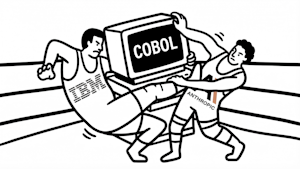
Here’s a rewritten, detailed, and viral version of the tech news article, followed by the list of tags and viral sentences at the end:
Anthropic’s COBOL Breakthrough Shakes IBM’s Mainframe Empire: Is This the End of an Era?
In a seismic shift that sent shockwaves through the tech industry, Anthropic’s groundbreaking COBOL translation tools have triggered a staggering $40 billion sell-off in IBM’s market cap, marking the company’s most significant single-day drop in a quarter of a century. But is this the beginning of the end for IBM’s mainframe dominance, or merely a case of market overreaction to a misunderstood technological advancement?
On Tuesday, Anthropic unveiled a suite of AI-powered tools that enable Claude, their advanced language model, to read, analyze, and translate legacy COBOL code into modern programming languages such as Java and Python. This announcement sent investors into a frenzy, with IBM’s stock plummeting as market participants priced in the potential disruption to the company’s core mainframe business.
However, a closer examination reveals that the market’s reaction may be based on a fundamental misunderstanding of the complexities surrounding mainframe computing and the true value proposition of IBM’s offerings.
COBOL, short for Common Business-Oriented Language, is a 66-year-old programming language designed in 1959 specifically for IBM mainframes. Despite its age, COBOL continues to power an estimated 250 billion lines of code in active production, according to the Open Mainframe Project. This longevity is a testament to the language’s reliability and the critical nature of the systems it supports.
The real challenge facing enterprises isn’t the technical ability to translate COBOL, but rather the high costs and low return on investment (ROI) associated with modernization efforts. Matt Brasier, an analyst at Gartner, emphasizes this point: “Modernizing COBOL has been a technically solved problem for a while. The real problem is that the costs of modernization are high and the ROI is low.”
IBM has been acutely aware of this challenge and has been working on AI-powered solutions since at least 2023. The company launched watsonx Code Assistant for Z, a tool designed to help migrate COBOL to modern Java, recognizing the need to address the skills gap created by retiring COBOL programmers and the reluctance of new developers to learn the aging language.
Anthropic’s Claude Code represents a significant advancement in this space, offering the ability to analyze entire codebases, map hidden dependencies, and generate working translations of code that most engineers today cannot read. For enterprises running COBOL on distributed platforms such as Windows and Linux, this capability is genuinely useful and increasingly practical.
However, the actual barrier to mainframe migration has never been purely technical. Steve McDowell, chief analyst at NAND Research, cuts to the heart of the matter: “Applications don’t run on mainframes because they’re written in COBOL. They run on mainframes because mainframes deliver a class of determinism, scalable compute, and reliability that general-purpose servers can’t match.”
This insight highlights the critical difference between simply translating code and truly modernizing a system. IBM’s mainframes offer a unique combination of hardware and software integration, providing performance, security, and reliability that is difficult to replicate in other environments.
Moreover, the non-deterministic nature of AI-generated code presents its own set of challenges. As Brasier points out, “GenAI tools are helpful, but their non-deterministic nature means the resulting code is not consistent — the same operation will be implemented in different ways in different parts of the code.”
IBM’s response to Anthropic’s announcement underscores the company’s deep understanding of the complexities involved in mainframe modernization. Steven Tomasco, IBM’s communications director, states, “Translating COBOL is the easy part. The real work is data architecture redesign, runtime replacement, transaction processing integrity, and hardware-accelerated performance built over decades of tight software and hardware coupling.”
This perspective is echoed by the experiences of companies like Royal Bank of Canada, the National Organization for Social Insurance, and ANZ Bank, which have all used IBM’s watsonx Code Assistant for Z to accelerate modernization efforts without abandoning their IBM Z mainframes.
While Anthropic’s tools may pose a threat to IBM’s market share in the COBOL translation space, particularly for distributed systems, the company’s vertical integration and deep expertise in mainframe technology provide a significant competitive advantage. As McDowell notes, “IBM understands mainframe technology at a level that others can’t match. If I’m only looking at COBOL, I’m using IBM’s watsonx.”
For enterprise buyers and IT leaders, the key takeaway from this development should not be panic or a rush to abandon IBM’s solutions. Instead, it should serve as a catalyst for a more measured approach to modernization. Chirag Mehta, an analyst at Constellation Research, advises, “Treat this as a reason to run a small, bounded pilot to measure outcomes, not as a reason to rip and replace vendors.”
Mehta suggests that enterprises should focus on well-scoped application slices or workflows with clear inputs and outputs, evaluating approaches on factors such as dependency mapping quality, recovered business logic documentation, test coverage, and performance and reliability regressions.
The bigger picture that emerges from this situation is that modernization is about more than just converting code. It involves extracting institutional knowledge, reworking processes and controls, managing change, and containing operational risk in systems that cannot break. While AI can significantly accelerate the analysis and translation work, it does not eliminate the governance and accountability burden.
In conclusion, while Anthropic’s COBOL translation tools represent a significant technological advancement, they are unlikely to spell the end of IBM’s mainframe business. Instead, they may serve as a powerful complement to existing solutions, accelerating modernization efforts while highlighting the continued value of IBM’s deep expertise in mainframe computing. The teams that will ultimately succeed in this evolving landscape will be those that treat AI as an accelerator within a disciplined modernization program, with measurable checkpoints and risk guardrails, rather than as a magic conversion button.
Tags
Anthropic #IBM #COBOL #Mainframes #AI #Technology #MarketCap #Modernization #EnterpriseIT #ProgrammingLanguages #CloudComputing #SoftwareDevelopment #TechIndustry #VentureBeat #Gartner #NANDResearch #ConstellationResearch
ViralSentences
“Market panic or technological breakthrough? Anthropic’s COBOL tools trigger $40B IBM sell-off”
“COBOL’s 66-year reign faces AI challenge: Is IBM’s mainframe empire crumbling?”
“Beyond code translation: The real barriers to mainframe modernization revealed”
“AI meets legacy: Anthropic’s Claude Code promises COBOL revolution, but is it enough?”
“IBM’s secret weapon: Why mainframe expertise still trumps AI translation tools”
“The COBOL conundrum: Why enterprises are stuck between a rock and a hard place”
“Generative AI in enterprise: Promise, pitfalls, and the path forward”
“Mainframe modernization: More than just swapping out old code for new”
“The $40 billion question: Is IBM’s mainframe business under existential threat?”
“AI-powered COBOL translation: Game-changer or market overreaction?”
,


Leave a Reply
Want to join the discussion?Feel free to contribute!