
Uber previews its Dubai air taxi service
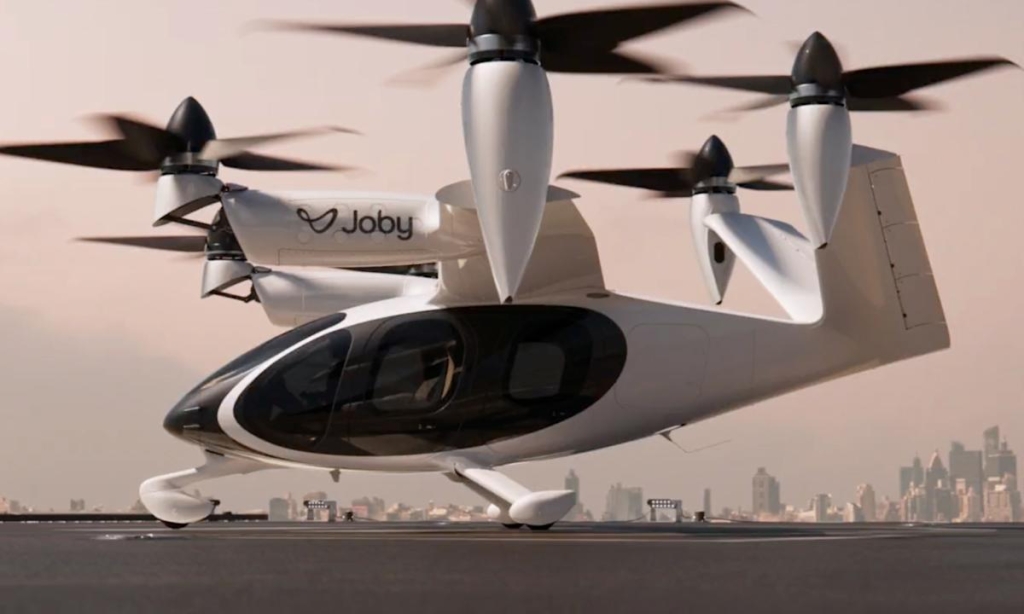
Uber Air: The Future of Urban Mobility Takes Flight
In a groundbreaking move that blurs the lines between science fiction and reality, Uber has unveiled its highly anticipated air taxi booking service, bringing us one step closer to a world where flying cars are no longer just a fantasy. The ride-hailing giant has partnered with Joby Aviation to offer electric air taxis through the familiar Uber app, promising a seamless experience that could revolutionize urban transportation as we know it.
The concept of air taxis has long been a staple of futuristic visions, but now, thanks to advancements in electric propulsion and autonomous flight technology, it’s becoming a tangible reality. Uber’s foray into this new frontier of mobility is set to launch in Dubai later this year, with plans to expand to other major cities like New York, Los Angeles, the UK, and Japan in the near future.
The process of booking an air taxi through the Uber app is designed to be as intuitive as hailing a traditional ride. Users will simply enter their destination, and if their route is eligible for air taxi service, the option will appear alongside other Uber services. From there, passengers can book their flight and an Uber Black car to transport them to and from designated “vertiports” – specialized takeoff and landing zones for these electric aircraft.
Joby Aviation’s air taxis are engineered specifically for urban travel, capable of carrying up to four passengers and their luggage. The interior is comparable in size to a luxury SUV, featuring “comfortable seating” and panoramic windows that offer breathtaking views of the cityscape below. These futuristic vehicles can reach speeds of up to 200 mph and have a range of up to 100 miles, making them ideal for short to medium-distance trips within metropolitan areas.
Safety is a top priority for both Uber and Joby, and the air taxis are equipped with multiple layers of redundancy. Four battery packs and a triple-redundant flight computer ensure that even in the unlikely event of a system failure, the aircraft can still operate safely. However, it’s worth noting that these early models are not autonomous and will be piloted by human operators, which raises questions about cost and scalability.
One of the most intriguing aspects of Uber’s air taxi service is the company’s claim that fares will be comparable to those of an Uber Black trip. This assertion is particularly noteworthy given the high costs typically associated with helicopter and private jet travel. If Uber can indeed offer competitive pricing, it could open up a new era of affordable urban air mobility.
The partnership between Uber and Joby Aviation dates back to 2019, with Joby acquiring Uber’s air taxi division, Uber Elevate, in 2021. This move effectively integrated the two companies’ services, paving the way for the current offering. Last year, Joby further expanded its reach by acquiring Blade Air Mobility’s passenger business, potentially setting the stage for electrifying existing routes.
Despite the excitement surrounding this new mode of transportation, there are significant challenges and concerns that need to be addressed. Aviation experts like Robert Ditchey have raised red flags about the safety and economic viability of air taxis in urban environments. Ditchey points out the potential dangers of aircraft failures, citing incidents of helicopters crashing into buildings or failing during takeoff and landing. He also questions whether air taxis can be produced in sufficient numbers to make them economically viable without government subsidies.
The regulatory landscape for air taxis is still evolving, with the US Federal Aviation Administration (FAA) in the final stages of type certification for Joby’s aircraft. In November 2024, President Trump signed executive orders to create a pilot program for testing such aircraft, which could accelerate the development and deployment of air taxi services in the United States.
As Uber and Joby prepare for their Dubai launch, the world watches with bated breath to see if this ambitious venture will take off as planned. The success of this initiative could have far-reaching implications for urban planning, transportation infrastructure, and even the way we conceptualize distance and time in our daily lives.
The video below showcases one of Joby’s air taxis taking a test flight in Dubai, offering a tantalizing glimpse into what our future commutes might look like:
[Insert video link here]
As we stand on the brink of this new era in transportation, it’s clear that the sky is no longer the limit for urban mobility. Whether Uber Air will truly revolutionize the way we move through cities remains to be seen, but one thing is certain: the race to conquer the urban airspace is on, and the world will never be the same.
Tags and Viral Phrases:
– Flying taxis are here!
– Uber takes to the skies
– The future of urban mobility
– Electric air taxis: Coming to a city near you
– Dubai leads the way in air taxi innovation
– Will flying cars solve urban congestion?
– The sky’s the limit for Uber’s ambitions
– Air taxi service: A game-changer for commuters
– Joby Aviation and Uber: A match made in the clouds
– Vertical takeoff and landing (VTOL) technology
– Urban air mobility: The next frontier
– Electric vertical aircraft (EVA) revolution
– Air taxis: The new luxury commute?
– From sci-fi to reality: Air taxis take flight
– The race to dominate urban airspace
– Flying taxis: Are they safe?
– Air taxi economics: Can it really be affordable?
– The vertiport revolution: New infrastructure for a new era
– Air taxis vs. helicopters: The battle for urban skies
– The environmental impact of electric air taxis
– Air taxi regulations: Navigating the legal landscape
– The pilot shortage: A challenge for air taxi services
– Air taxis and noise pollution: A growing concern
– The social implications of flying taxis
– Air taxi insurance: A new frontier in risk assessment
– The technology behind air taxis: Batteries, motors, and more
– Air taxis and the sharing economy: A perfect match?
– The psychology of flying taxis: Overcoming fear of heights
– Air taxis and accessibility: Who benefits from this technology?
– The global race for air taxi dominance
– Air taxis: A solution to urban sprawl?
– The impact of air taxis on real estate values
– Air taxis and emergency services: A new tool for first responders
– The role of AI in air taxi operations
– Air taxis and tourism: A new way to sightsee
– The cultural impact of flying taxis: Changing our perception of distance
– Air taxis and privacy concerns: Big Brother in the sky?
– The energy demands of a fleet of air taxis
– Air taxis and the gig economy: New opportunities for pilots?
– The aesthetics of air taxis: Designing for the future
– Air taxis and weather: How do they perform in adverse conditions?
– The maintenance challenges of air taxi fleets
– Air taxis and cybersecurity: Protecting against hacking
– The potential for air taxi networks: Connecting cities like never before
– Air taxis and the elderly: A new lease on mobility
– The impact of air taxis on traditional taxi and ride-sharing services
– Air taxis and the military: Potential applications beyond civilian use
– The economics of air taxi infrastructure: Who pays for vertiports?
– Air taxis and the environment: A net positive or negative?
– The future of air taxis: Autonomous flight and beyond,


Leave a Reply
Want to join the discussion?Feel free to contribute!